

It started the way a lot of road rage stories start: a normal errand run, a light that stayed red a little too long, and one guy who decided the universe was personally disrespecting him. The driver with the dash cam—mid-30s, commuting across town for a quick hardware store stop—noticed the SUV behind him creeping up so close he couldn’t see the front grille anymore. The SUV’s driver was already throwing his hands around like he was auditioning for a silent film about injustice.
The dash-cam guy didn’t do anything dramatic. He didn’t brake-check, he didn’t flip anyone off, he didn’t pull out a phone to record with a shaky hand. He just kept moving with traffic, assuming the SUV would eventually find another target or get bored.
Instead, the SUV latched onto him like a bad idea that won’t let go. A few blocks later, when the dash-cam guy changed lanes to avoid a bus pulling out, the SUV followed him over immediately, matching his speed like it was trying to draft him in NASCAR. That’s when the driver realized this wasn’t just “someone’s having a rough day.” This was personal now, for reasons that only made sense to the person behind the wheel.
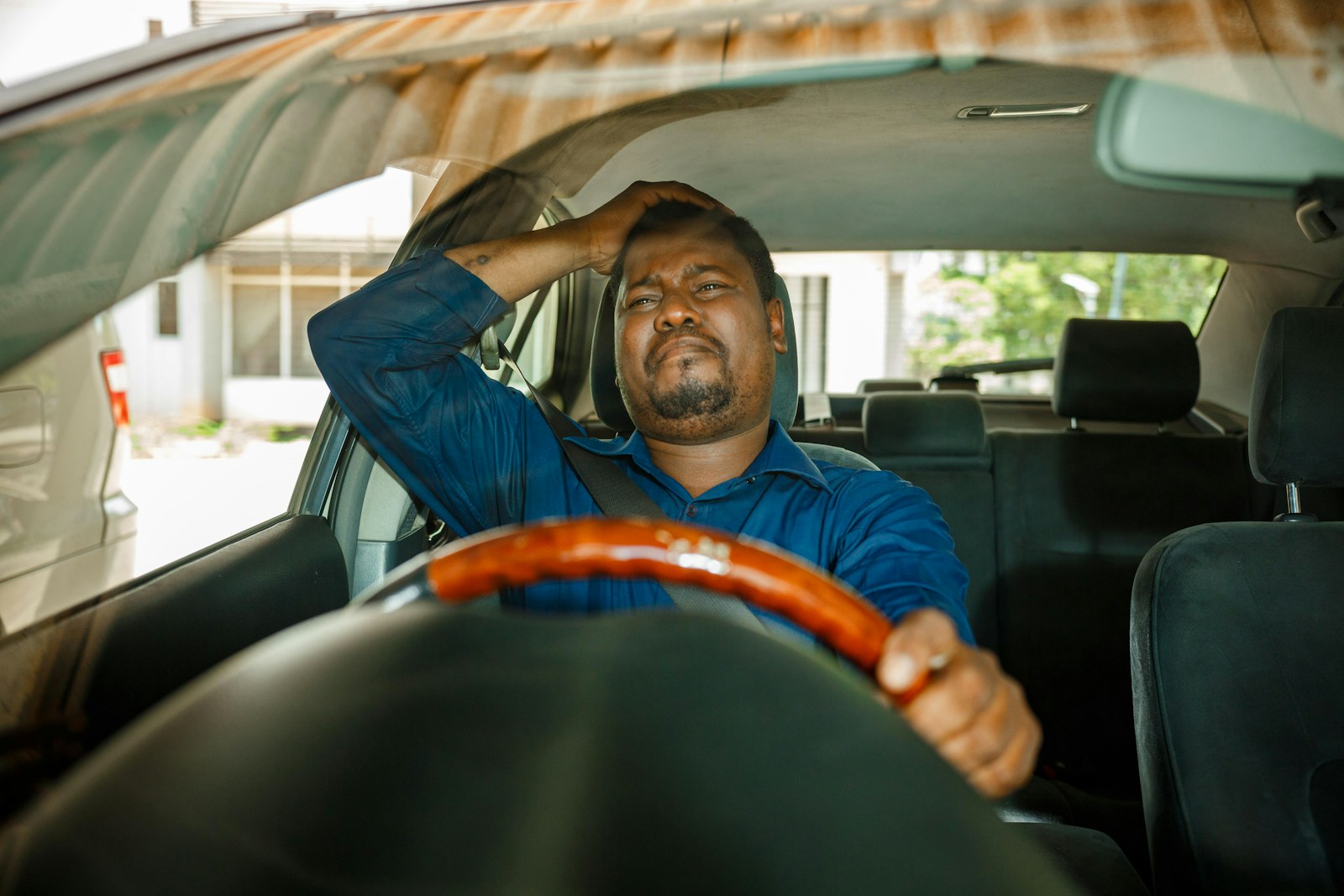
The tiny “offense” that lit the fuse
The whole thing kicked off at a four-way intersection where everyone was doing that hesitant, half-assertive dance. The dash-cam driver rolled forward when it was clearly his turn, and the SUV behind him must’ve expected him to launch like a drag racer the moment the other car cleared. He didn’t. He moved normally, which—apparently—was unforgivable.
The SUV immediately laid on the horn, long and aggressive, like the horn was a language and the driver was delivering a speech. In the footage, you can even hear the dash-cam driver mutter something along the lines of, “Okay, man,” in that tired voice people use when they’re trying not to get pulled into someone else’s emotional hurricane.
The SUV then swerved out as if to pass, but traffic was tight, so it just ended up alongside him for a second. The SUV driver leaned over the wheel, shouting through a closed window, face scrunched in rage, and pointed forward like he was ordering the other car to disappear. Then the light ahead caught both of them, and they got boxed back into the same lane, together, again.
Across town, like a personal mission
Once it was clear the SUV wasn’t just impatient but committed, the dash-cam driver tried something simple: he altered his route. Instead of the straight shot to the hardware store, he took a right he didn’t need, then another left, then slowed down slightly to create space. The SUV mirrored every move, staying close enough that the dash cam caught its headlights bobbing in the rearview reflection.
The scary part wasn’t any single maneuver. It was the persistence—how the SUV driver kept choosing the most inconvenient option just to stay attached. The dash-cam driver stopped at a yellow he probably could’ve made. The SUV stopped too, then revved, like the pause was an insult.
At one point, the dash-cam driver pulled into a strip mall entrance, not even committing to a parking spot, just testing the theory. The SUV followed in, cut the corner hard, and ended up half in the wrong lane of the lot for a second. The dash-cam driver didn’t even fully enter; he rolled out the other side and rejoined the road. The SUV came out right behind him, as if the only thing it cared about was keeping the chase alive.
The dash-cam driver’s body language in the clip is what makes it believable. He’s not heroic, he’s not cracking jokes, he’s not narrating for clout. He’s doing that quiet, controlled breathing people do when they realize they may have accidentally become someone’s fixation.
When the SUV driver tried to force a confrontation
The situation finally reached that point every cautious driver tries to avoid: the moment where the other person wants you to stop. The SUV began pulling up beside him again, this time lingering, trying to sit in his blind spot and then surge forward. The SUV driver kept making these jerky little lunges toward the lane line, like he was testing whether intimidation would work.
The dash-cam driver stayed steady and didn’t engage, which seemed to make the SUV driver even angrier. Then, in the footage, the SUV suddenly darts ahead, squeezes in front with barely a car length to spare, and taps the brakes. Not a full brake-check slam, but a pointed “I can control you” jab.
That’s when the dash-cam driver made his decision: no more trying to “lose” the guy by random turns. He headed for somewhere public and obvious, aiming toward a well-lit gas station near a busy intersection. If the SUV wanted a scene, fine—let it happen where there are cameras and witnesses.
As they got close, the SUV driver swerved like he was going to block the entrance, then changed his mind and followed him into the station anyway. The dash-cam driver pulled up near a pump but didn’t get out. The SUV pulled in diagonally behind him, not even pretending to fuel up, just planting the vehicle like a barricade.
The “victim” performance begins
The SUV driver got out fast. The dash-cam caught the door fling open and the guy stepping out with that puffed-chest energy, arms wide like he couldn’t believe what was happening to him. He approached the dash-cam driver’s window and started talking with his hands, jabbing the air, pointing at the car, pointing back at himself, playing the role of someone who’d been gravely wronged.
Here’s the odd part: even in the moment, he kept looking around. He glanced toward other cars, toward the storefront, toward anyone who might be watching. It had the vibe of someone who wants an audience more than an answer.
The dash-cam driver cracked the window just enough to speak, not enough for anything else. You can hear him say something like, “You followed me,” which is a simple statement, not a challenge. The SUV driver immediately pivoted, insisting the dash-cam driver “cut him off,” “almost hit him,” “drove like a maniac,” stacking accusations like he was building a legal case out of vibes.
Then the SUV driver’s tone shifted again—suddenly softer, suddenly wounded. He pointed at the dash cam on the windshield like he’d just noticed it and started doing that weird nervous half-smile some people do when they realize they might be recorded. He tried to reframe it as a misunderstanding, like he was only angry because he was “scared,” like he’d been forced into chasing someone across town for his own safety.
Dash cam footage changes the math
The dash-cam driver didn’t yell back. He just said he had everything on video, and the effect was immediate. The SUV driver’s shoulders dropped a fraction, not in relief—more like recalculating.
He started talking faster, trying to narrate the story before the footage could. He kept repeating the original “offense,” making it sound bigger each time: first it was a “cut off,” then it was “you came right into my lane,” then it was “I had to swerve or you’d have hit me.” Meanwhile, the dash cam shows ordinary lane changes and a guy in an SUV tailgating like he’s attached by rope.
When the dash-cam driver mentioned calling the police, the SUV driver threw his hands up and backed away two steps, suddenly acting like he was the reasonable one being threatened. He did that classic road rage pivot: “You’re crazy,” “You’re trying to ruin my day,” “I’m just trying to get home.” And yet, he was the one who’d parked crooked behind a stranger at a gas station to continue the argument.
Eventually, the SUV driver got back in his vehicle and peeled out of the station like leaving quickly would rewrite the previous twenty minutes. The dash-cam driver stayed put, waited a beat, and then drove off in the opposite direction, still checking mirrors like he didn’t trust the story to be over just because the guy left first.
The messy part is what didn’t happen: there wasn’t a clean moment of accountability, no apology, no satisfying consequences captured on-screen. The SUV driver got to sprint away from the truth he’d created, while the dash-cam driver was left with that lingering, sour feeling of being hunted over something that barely counted as a traffic interaction. The footage didn’t fix the fact that, for a stretch of city streets, one stranger decided another stranger was his enemy—and the only thing that stopped him from winning the narrative was a tiny camera quietly recording the whole thing.
More from Steel Horse Rides: