
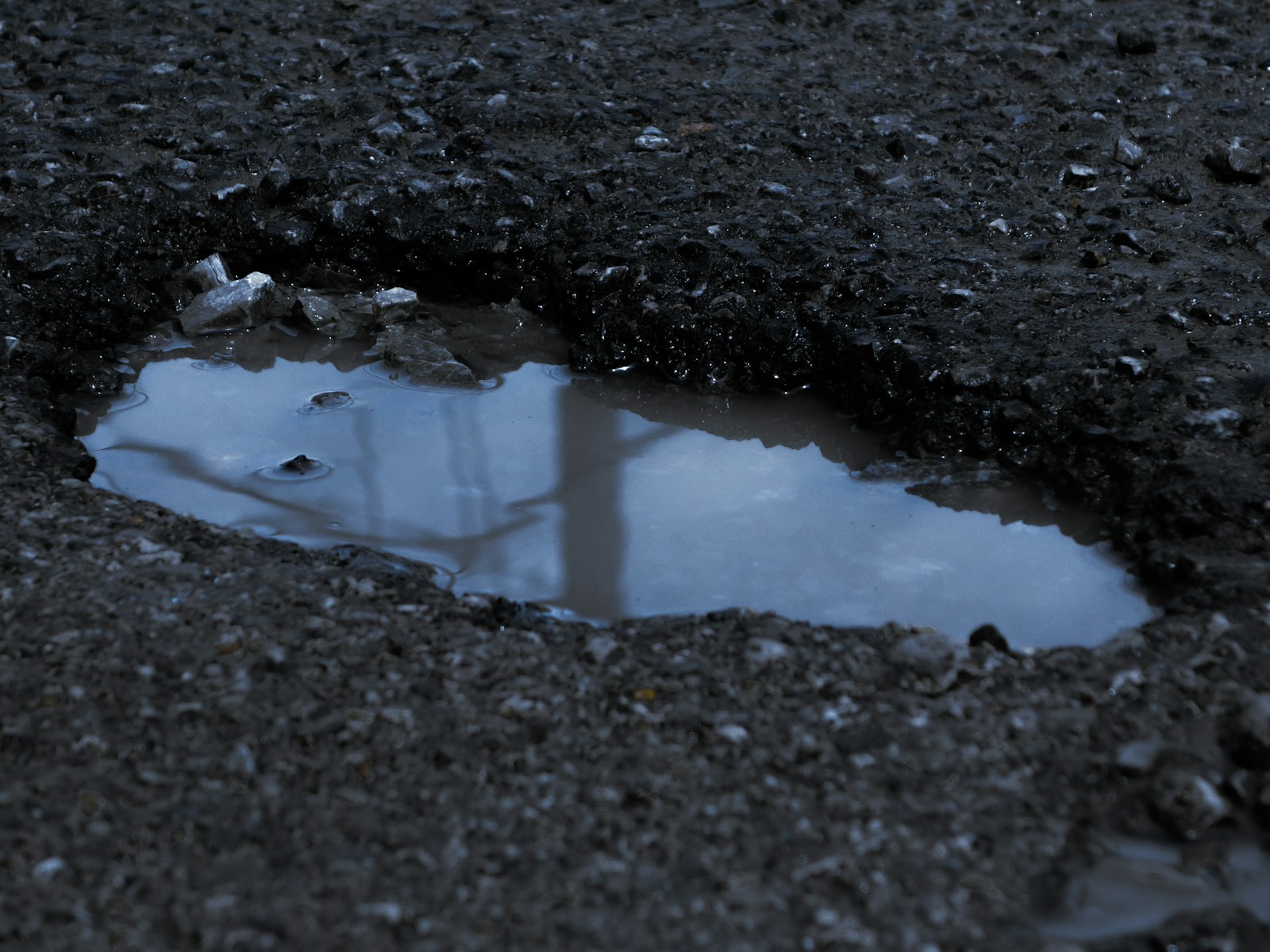

He didn’t even see the pothole until it was too late, which is kind of the point. One second he was rolling through a dim stretch of city street after work, radio low, thinking about dinner. The next second the front end of his sedan dropped like it hit a step that wasn’t there, and the impact came up through the steering wheel with that sickening, metallic thud that makes your stomach clamp.
He managed to keep it straight, but the car immediately started doing that uneven wobble that tells you something expensive just happened. He eased onto the shoulder with his hazards blinking, stepped out, and the scene looked like a prank someone set up to mess with drivers: two tires flattened and shredded along the sidewalls, and a rim that wasn’t just scuffed—it was bent like it got kissed by a hammer. The pothole itself sat back there like a dark mouth in the asphalt, deep enough that his phone flashlight couldn’t find the bottom right away.
By the time he got the car limping onto a tow truck, he was already doing the mental math. Two tires, maybe four if the shop insisted on matching tread. A rim that might be repairable, might not. Alignment, suspension check, the whole domino chain of “you hit something hard.” And then, because he pays taxes in the same city that apparently lets roads eat cars, he figured he’d at least try to file a claim.
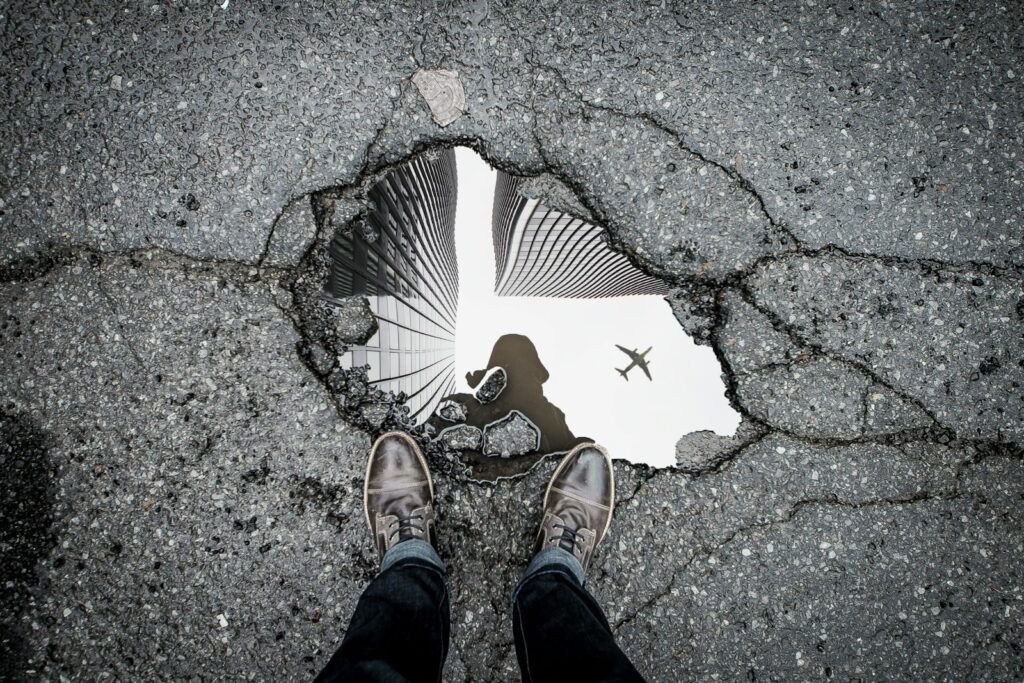
The pothole that didn’t look real until it ate his car
The stretch of road wasn’t some remote backroad, either. It was one of those in-between city streets that everyone uses because it cuts five minutes off the main route, and it’s lined with a weird mix of closed storefronts, auto shops, and a couple late-night drive-thrus. The lighting was patchy, and the asphalt had that worn, rippled texture that makes puddles look like shadows and shadows look like potholes.
He went back the next morning, partly out of spite and partly because he knew nobody believes a pothole story without proof. In daylight it looked even worse: the edges were jagged and crumbling, like it had been growing for months, and there were old scrape marks around it. Someone had apparently tried to shove gravel into it at some point, because there were loose stones scattered inside like a halfhearted patch that got chewed out again.
He took photos from every angle the way people do when they’re trying to build a case—wide shot for context, close-up for depth, a shot with his shoe next to it to show scale. He even measured it with a tape measure from his garage, because once you’ve bent a rim you start behaving like an amateur accident investigator. The deeper he got into documenting it, the more it stopped feeling like “bad luck” and started feeling like “this thing has been here, waiting.”
Two tires, one bent rim, and the slow realization of what it costs
The tire shop didn’t dramatize it, which somehow made it worse. The guy behind the counter took one look at the wheel and made that “oof” face mechanics try not to make. Two tires were toast, the rim was bent enough that it wouldn’t hold a seal properly, and the tech recommended checking the suspension because hits like that love to mess with control arms and tie rods in ways you don’t feel until you’re doing 70 on the highway.
The bill started stacking itself in his head before the invoice even printed. Tires aren’t cheap anymore, and neither are wheels, and the shop wasn’t going to gamble his safety on a “maybe” repair. He got the car drivable again, but it wasn’t the kind of fix that leaves you feeling restored—more like you paid a chunk of money to return to “functional.”
That’s when he started thinking about the pothole like it was a civic problem, not a personal one. Cities love to put up signs about “Report road hazards” and “We’re improving infrastructure,” and he’d seen enough people say, “File a claim, they’ll reimburse you if it was their negligence.” He wasn’t expecting a windfall; he just didn’t want to eat the entire cost of what looked like a long-neglected crater.
Trying to do it the “right way” with the city
He went through the official channels first, because he knew if he skipped steps he’d get bounced around. There was an online form with that familiar vibe: dropdown menus, a tiny text box for “Describe incident,” and the promise that someone would contact him. He attached photos, listed the intersection, the date and time, the damage, and the towing information like he was submitting evidence to a very bored jury.
Then came the waiting, which is where frustration has room to ferment. A couple days passed, then a week, and when he finally got a response it wasn’t a person calling with questions. It was an email with a PDF attached, a formal-looking letter that managed to say “no” in the most sterile way possible.
The line that stuck in his throat was simple and brutal: “Road conditions are your responsibility.” Not “We’re sorry this happened,” not “We’ll investigate,” not even a vague “we can’t determine fault.” It was basically, “You drove on it, that’s on you,” as if he’d chosen to test his suspension by aiming for a crater at night.
He called the number on the letter, thinking maybe the email was a template and a human being would be more reasonable. The person who answered didn’t sound cruel, just unmoved, like they’d said the same thing a hundred times that day. If the city hadn’t been formally notified about the pothole before his incident, they weren’t liable, and drivers are expected to “operate with due care” and adjust for road conditions.
The part where it gets personal (and a little humiliating)
That’s when the conversation turned into a weird tug-of-war over reality. He tried to explain that it was nighttime, that the road lighting was uneven, that traffic boxed him in so swerving wasn’t an option, that the hole blended into the patchwork of old asphalt repairs. The response kept circling back to the same idea: if you hit it, you should’ve avoided it.
There’s something uniquely irritating about being blamed for not anticipating a hazard you couldn’t see. It’s like being told you should’ve dodged a falling branch you didn’t know was falling. He asked if there was any record of complaints, any maintenance schedule, anything that showed how long it had been there.
He got a version of “We can’t speak to that,” which is bureaucratic for “This conversation isn’t going where you want.” And when he asked what exactly counts as “formal notification,” the answer sounded almost absurd: someone has to report it, the city has to log it, and then they have a window of time to address it. Until that chain exists on paper, the pothole is basically a ghost—real enough to wreck your car, not real enough to be the city’s problem.
He hung up feeling like he’d just been scolded for stepping in a hole in the sidewalk. The cost was still on him, but now he also had the extra sting of being told it was his fault for driving on a road that the city maintains. It’s the kind of interaction that makes you replay the call in your head, coming up with the better sentence you wish you’d said.
What he did next, and why the whole thing stayed messy
He didn’t drop it, but he also didn’t get a clean “win.” He filed a pothole report separately—because now he was determined to make that hole officially exist—and he forwarded the photos again like he was forcing the system to acknowledge the obvious. He started gathering receipts, alignment reports, the tow bill, and the tire shop’s notes in case he decided to push it further.
He also did the thing people do when they’re trying to sanity-check a situation: he asked around. Coworkers had their own pothole horror stories, and a couple people swore they’d gotten reimbursed, but only after months of back-and-forth or after proving the city had been alerted previously. Somebody mentioned small-claims court like it was a magic word, and someone else warned him that you can spend more time fighting than the repair is worth.
The most maddening detail was that once he started paying attention, he noticed how many drivers slowed down hard in that exact spot, like the pothole was already infamous. He watched one SUV dip into it and bounce out with a jolt that made the rear end shimmy, and he wondered how many people had been hit before him and just ate the cost because they didn’t have the time or energy to argue with a PDF.
He drove home that day on the main roads, taking the longer route on purpose, and caught himself scanning every dark patch of pavement like it might be another trap. The city’s letter didn’t just deny his claim; it changed how he drove, like the streets had quietly become something you survive rather than use. And the pothole, whether it got fixed tomorrow or sat there another month, had already done the thing it does best—turning an ordinary commute into a bill, an argument, and a lingering sense that the rules are written so the damage always lands in the same place.
More from Steel Horse Rides: