

He’d been doing that mindless interstate math people do when they’re trying to get somewhere without thinking too hard about it. Seventy on the dot, cruise control set, big full-size SUV floating along like it was built to eat highway miles. The air conditioning was finally winning against the Texas heat, and the road ahead had that long, flat shimmer that makes you feel like you’re barely moving.
Then the front edge of the hood twitched. Not a full lift—more like a quick, wrong little nod, like a hinge flinching. He noticed it the way you notice a weird noise in your house at night: your brain tries to file it under “probably nothing,” but your hands tighten anyway.
Two seconds later, “probably nothing” turned into a metal panel the size of a mattress popping free and slamming back into the windshield with the kind of violence you don’t expect from a vehicle you were trusting with your life. The hood folded up, the windshield turned into a spiderweb, and his view became a bright blur of sky and steel.
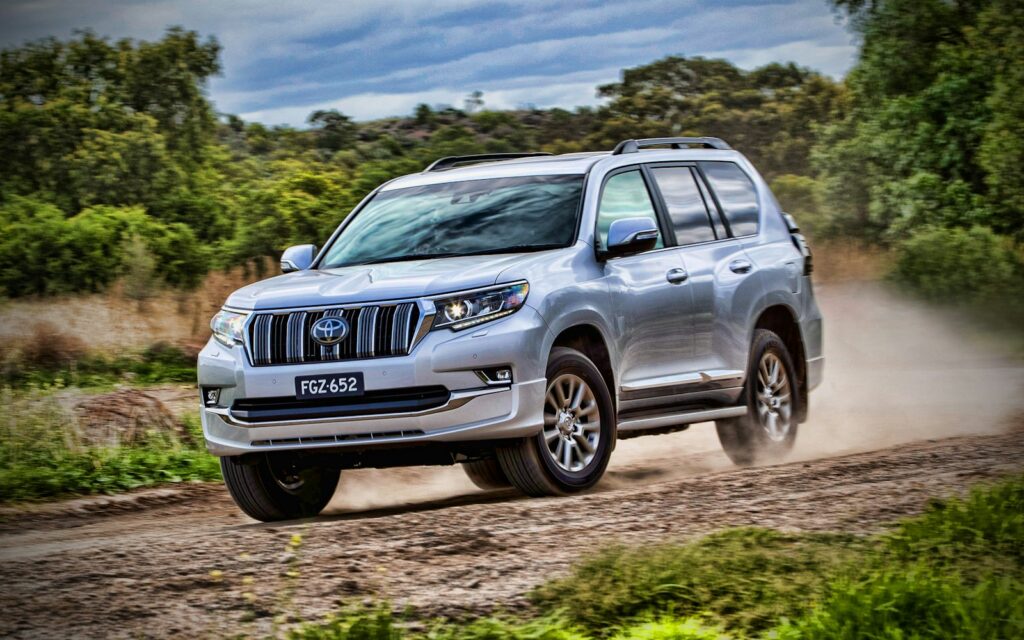
The moment the hood came up
It didn’t peel back gently like in a cartoon. It detonated upward, caught the wind, and snapped back with a heavy, sickening smack that made the whole cabin feel smaller. The sound was half crash, half drum hit—metal, glass, and the air pressure change all at once.
He couldn’t see the lane lines anymore, just a jagged slice of road through the cracked glass and whatever gaps the hood left him. Instinct took over: foot off the gas, both hands choking the wheel, trying not to overcorrect. The SUV started to drift, that floaty, soft suspension suddenly feeling like a cruel joke.
He did the one thing you’re supposed to do but never imagine yourself doing for real: he leaned his head to the side to steal a view around the hood and eased toward the shoulder. Horns went off behind him, not angry so much as panicked—drivers warning each other that the giant SUV in front of them had just gone partially blind.
When he got it onto the shoulder and stopped, he sat there a second with his heart punching his ribs, listening to the tick of cooling metal and the faint hiss of hot air and dust. The hood was still up, bent backward like a broken jaw. Anyone passing could see exactly what happened, and he could feel them slowing down to look.
On the shoulder, the details get ugly
He got out carefully, like the SUV might still have one more surprise left. The windshield was cracked across almost the entire surface, but it hadn’t fully caved in. That alone felt like luck—if the hood had hit at a different angle, it could’ve come through instead of just slamming into it.
He walked around to the front and tried to make sense of the latch area, because it didn’t match the story his brain wanted to tell. He wanted it to be “I must not have closed it all the way,” or “someone messed with it,” or even “it’s old and tired.” But the latch looked like it had failed cleanly, like a piece was just… missing.
He called for help, then started taking photos with that shaky, practical urgency people get when they realize they’re about to be in an argument for the next six months. He got the hood, the latch, the shattered windshield, the odometer, the shoulder location sign—anything that might matter later. In between, he kept looking at the hood like it was a betrayal.
When the tow truck showed up, the driver didn’t act surprised. Not casual about it, but not shocked either, which somehow made it worse. The guy just whistled once, muttered something about “seen this kind of thing,” and winched the SUV up like it was another Tuesday.
The first call to the dealer turns into a weird dance
The SUV went straight to the dealer because that’s what people do when something catastrophic happens and they need a grown-up to tell them what reality is. He figured there’d be a clear cause—broken part, defective latch, something the service department could point to with a flashlight and a clipboard. He walked in expecting sympathy and left feeling like he’d walked into a play where everyone already knew their lines except him.
At first it was the soft, noncommittal stuff: “We’ll inspect it,” “We’ll see what we can find,” “That’s really unusual.” But then the questions started leaning in a direction that made his shoulders go tight. Had he recently worked under the hood? Had anyone else driven it? Was he sure the hood was fully shut?
He kept coming back to the fact that this wasn’t a hood “popping” like a loose latch on an old beater. This was a full release at highway speed, the kind that turns into a wreck before you even understand what’s happening. And the more he repeated “it just came up,” the more the conversation drifted toward him being the variable they could blame.
What really set him off was when someone finally mentioned there’d been a recall related to the hood latch mechanism. Not as an apology or an alarm—more like a trivia fact they wished he didn’t know. It was delivered with that careful tone people use when they’re trying to keep a door closed without technically slamming it in your face.
The recall paperwork and the sheared pin
Once he heard “recall,” he did what anybody would do: he went digging. He pulled up the vehicle’s recall history and started calling around, trying to figure out whether his SUV had already been serviced, whether it was still outstanding, and what the actual fix was supposed to be. Somewhere between website lookups and customer service holds, he learned the recall involved a small but critical part of the latch—an updated pin or retaining piece that prevented failure.
When the dealer finally did a real inspection, the explanation came out in fragments. There was a pin involved. The pin had sheared. Without it, the latch couldn’t hold under wind load. That’s the whole story, right there, except for one problem: the recall record showed the dealer had marked the repair as completed at some point.
Completed, on paper. Not completed, in steel.
That’s where the story stops being “scary mechanical failure” and becomes something personal. He wasn’t arguing about whether cars break. He was staring at the idea that someone, somewhere, checked a box that turned into him driving blind at 70 mph with a metal sail slamming into his windshield.
The dealer’s posture changed once that contradiction was on the table. They stopped talking like it was a customer inconvenience and started talking like it was a misunderstanding. Maybe the repair had been performed and the part failed anyway. Maybe the paperwork was wrong. Maybe it was done at a different location. Every sentence sounded engineered to create fog.
Trying to get someone to own it
He wanted a clean path: fix the SUV, cover the damage, admit the mistake, move on. What he got was a chain of “we’ll have to escalate this” and “we’re waiting to hear back,” like accountability was something that had to be shipped in from another state. Meanwhile his SUV was sitting disabled, and he was sorting out rentals, insurance calls, and the creeping realization that the process was going to be adversarial.
Insurance asked obvious questions, and he found himself repeating the story like he was testifying. Yes, he was at speed. No, he hadn’t opened the hood. No, there hadn’t been an accident first. Yes, there was a recall. Yes, the dealer said it had been completed. No, the pin shouldn’t shear off like that if the repair had actually been done.
The dealer didn’t outright accuse him, but they didn’t have to. It was in the sideways language—how they emphasized “inspection,” how they kept returning to user error, how they spoke in possibilities instead of facts. He could feel the conversation pivot from “let’s help” to “let’s minimize exposure,” and it’s hard to un-hear that once you’ve heard it.
He started asking for records: technician notes, parts invoices, anything showing what was actually installed. That request, simple on its face, was treated like an escalation in attitude. The more he asked for specifics, the more the responses turned formal, like the whole thing had been handed off to people trained to say nothing.
And looming over it was the part nobody could cleanly answer: if the recall had been skipped—if the pin that failed was the old one—who decided it was okay to mark it complete anyway? Was it a mistake, a rushed tech, a parts shortage, a paperwork mix-up, or something uglier? The dealer could shrug at the why, but he was the one who had been behind the wheel when the consequences showed up.
By the end, the SUV wasn’t just damaged; his trust was. He could handle bad luck. He could even handle a defect. What stuck under his skin was the idea that the system designed to prevent exactly this had produced a neat line item saying it was handled, and that line item almost got him killed on a bright, ordinary Texas afternoon—then dared him to prove it.
More from Steel Horse Rides: