

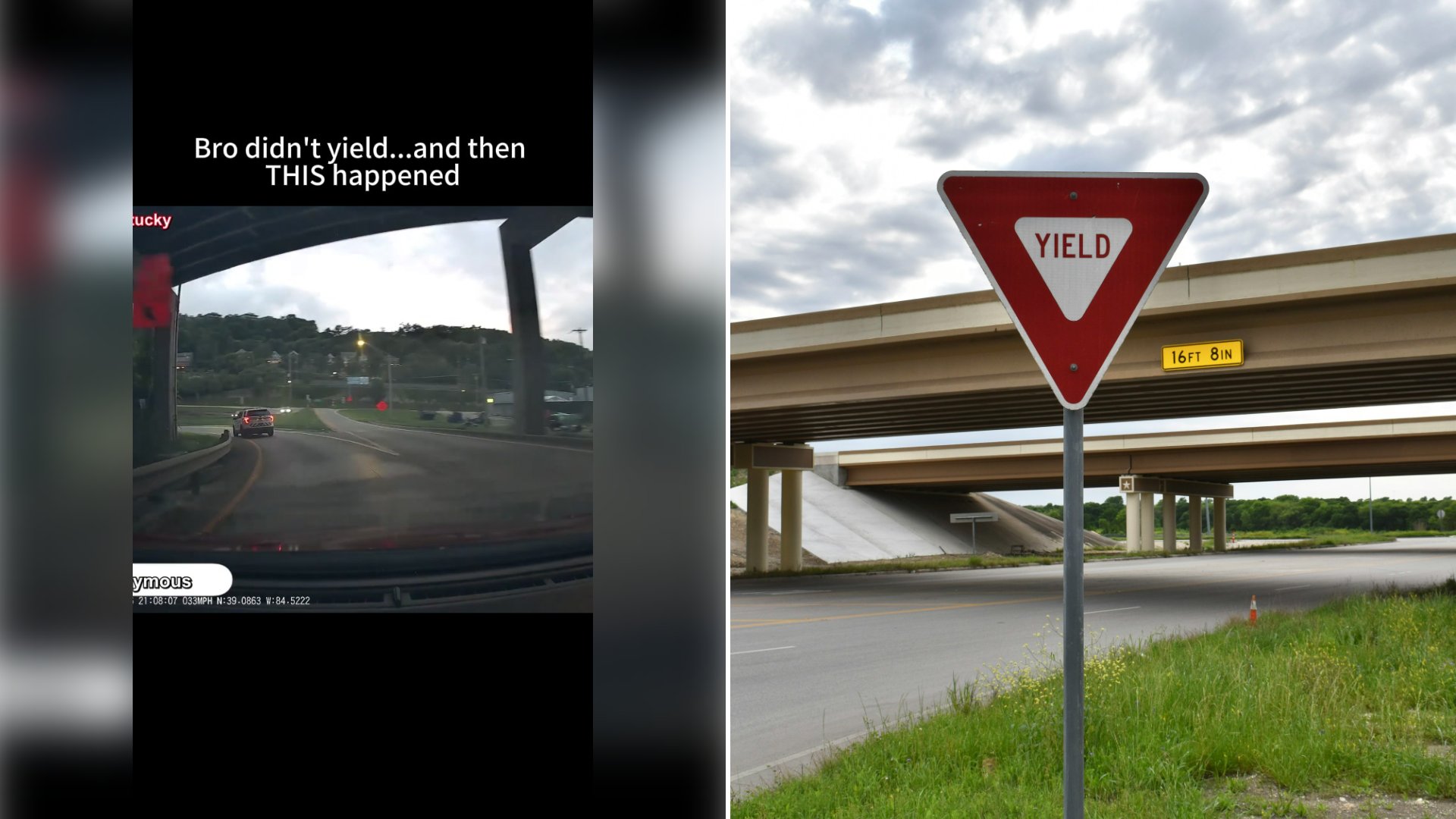
A driver’s dashcam captures the exact moment another car blows straight through a yield sign without slowing down, nearly causing a collision. He opens the video blunt about what happened, essentially saying another car failed to yield and then the near miss followed immediately, before shifting into a hands on look at the specific dashcam model that caught the footage in the first place.
The video from @seam0716 pairs the dramatic near miss clip with a practical pitch, arguing the footage alone makes the case for why every driver should have a dashcam running at all times. It is a format that works because the near miss clip does the emotional heavy lifting before the practical gear talk even starts.
@seam0716
Failure to yield is one of the most common contributing factors in intersection related crashes nationally, and it is also one of the hardest violations to prove after the fact without video evidence, since it almost always comes down to one driver’s word against another’s about who had the right of way. That evidentiary gap is exactly why dashcam footage has become so valuable to insurance adjusters, many of whom now explicitly ask claimants whether dashcam video exists before finalizing a fault determination on a disputed intersection claim.
The dashcam market itself has matured quickly to meet this demand. Modern dash cameras commonly include features like automatic incident detection that locks a clip in protected storage the moment a sudden stop or impact is sensed, GPS tagging that timestamps exactly where an incident occurred, and parking mode recording that keeps capturing footage even when the car is off and someone bumps it in a lot. Entry level dashcams with solid video quality are now available at a fraction of what similar units cost just a few years ago, which has pushed adoption well beyond the commercial trucking and rideshare drivers who were early adopters of the technology.
Yield sign violations specifically tend to cluster around a predictable set of conditions: merge lanes onto highways, roundabouts that are less common in a given region and therefore less intuitively understood by local drivers, and intersections where sightlines are partially blocked by parked cars or landscaping. Traffic engineers studying these intersections often recommend better signage or even converting problem yield intersections to all way stops specifically because driver compliance with yield signs tends to be lower than compliance with stop signs, where the expectation to come to a complete halt is unambiguous.
For anyone convinced by a clip like this one to finally install a dashcam, the basic advice holds up well regardless of which model gets chosen: mount it centered behind the rearview mirror for the clearest forward view, format the memory card regularly so older footage does not corrupt newer recordings, and check that the unit actually saves locked incident files automatically rather than relying on manual saves that are easy to forget in the moment right after a scare.
More from Steel Horse Rides
- Driver Asks Did I Overreact Over Dashcam Footage of an Oncoming Silver Car Coming at Him Near the Center Line, Then Shows His Face Barely Moving the Entire Time
- Buyer Catches a Facebook Marketplace Car Flipper Rolling Back the Odometer and Says the Title Was Not Even in His Name, Then Warns Other Shoppers
- Car Expert Explains California’s New CARS Act Requiring Dealerships To Disclose Full Vehicle Prices Upfront and Offer a Three Day Cancellation Window