
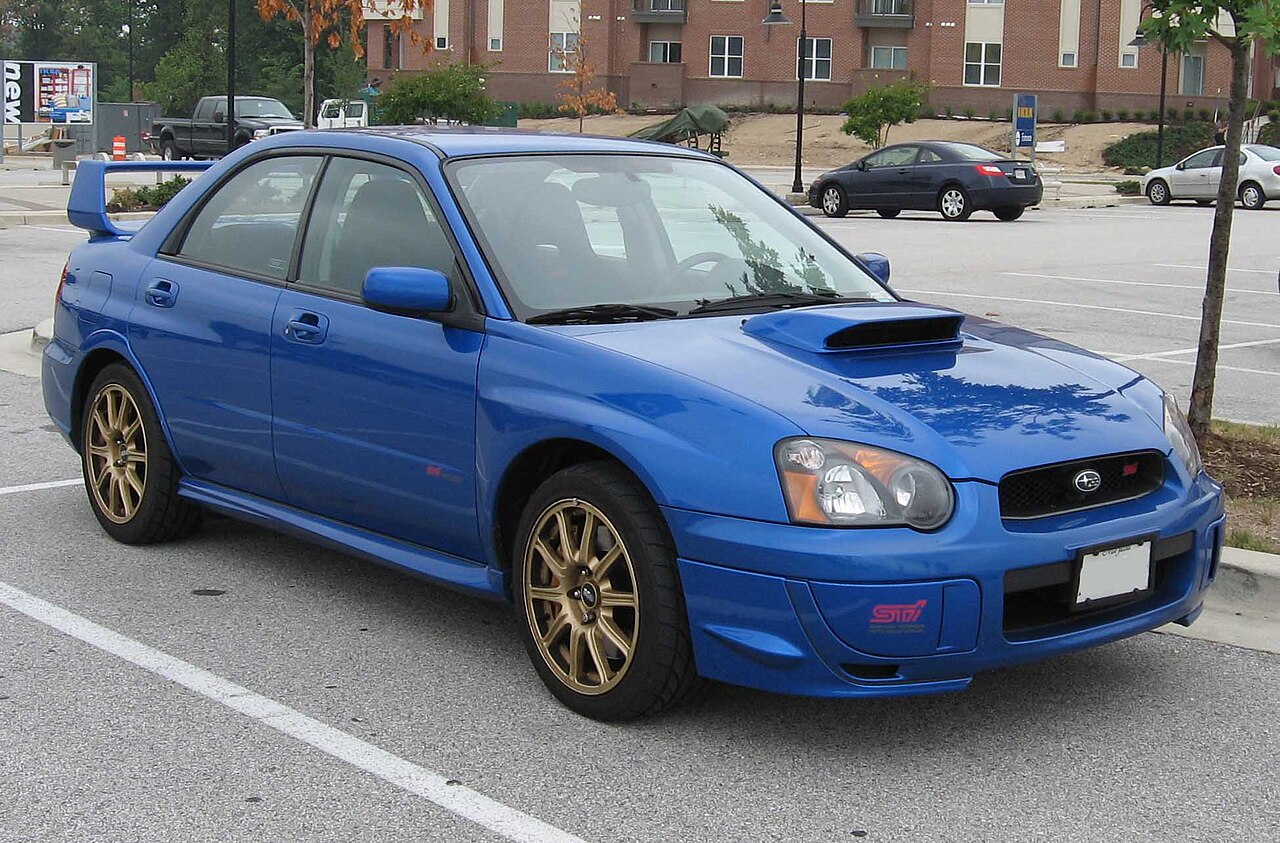

A 2004 Subaru Impreza WRX STI that traded hands for an average of $21,920 in September 2016 is worth roughly $41,320 today in #2 (excellent) condition — an 88% gain in a decade, according to Hagerty Insider’s own valuation data. The 2006-2007 Mitsubishi Lancer Evolution IX has moved even faster, climbing 141% over the same stretch to an average value of $57,800. Those numbers come straight out of Hagerty’s insured-value and quote-request database, not a nostalgia blog. And the buyers driving that climb aren’t who you’d expect for a 20-year-old economy sedan with a wing bolted to the trunk. Hagerty’s own quote data shows Millennials now account for 74% of Evo IX quotes and 45% of WRX STI quotes — more than any other generation, by a wide margin.

The STI’s Slow Build, Then the Sprint
The WRX STI’s climb wasn’t a straight line. From September 2016 through January 2020, values rose 54%, according to Hagerty’s market-trends data. Then the pandemic-era collector-car boom hit, adding another 22% between January 2020 and today, including a 12% jump in the last year alone. Stack the two windows together and you get the headline figure: 88% growth over ten years, taking the average #2-condition value from $21,920 to $41,320.
The Evo IX Is Outrunning Everything
If the STI is appreciating steadily, the Evo IX is doing something closer to a full-send launch. Its average value is up 141% since 2016, according to Hagerty’s Evo IX valuation record, with 97% of that gain landing since January 2020 alone. The earlier Evo VIII (2003-2005) followed a similar but less dramatic path, up 82% over the decade to an average of $34,317. Mitsubishi built roughly 21,000 Evo VIII and IX cars combined for the U.S. market between 2003 and 2006 — and only 8,201 of those were the IX, a small pool now chasing a much bigger wave of demand.
Millennials Didn’t Wait for Permission
The generational split is the real story here. Hagerty’s insurance-quote data breaks WRX STI interest down as 45% Millennial, 24% Gen Z, 21% Gen X, and 9% Boomer. For the Evo VIII, Millennials account for 60% of quotes. For the Evo IX — the newest and rarest of the three — that number jumps to 74% Millennial, with Gen X and Gen Z splitting most of what’s left and Boomers barely registering at all. These are buyers who were in middle school or high school when these cars were new, chasing them in video games and street-racing movies long before they could afford one off a dealer lot.
Why the Timing Lines Up
Millennials aged into peak earning years right as these cars aged into “affordable classic” territory — cheap enough to buy on a whim in the early 2010s, scarce enough now that a clean, unmodified example is genuinely hard to find. Hagerty’s own sale-tracking shows where the ceiling can go for the STI nameplate: a numbers-matching, 25,000-mile 1998 Subaru 22B — the ultra-rare Japan-market halo version of the STI, one of only 400 built — sold for $317,555 at a Bring a Trailer auction in April 2021, the first time a 22B had gone to public auction in the U.S. That’s a different and far rarer car than the mainstream 2004-2007 STI, but it shows serious money chasing this platform when the right example surfaces.
The Percentage Hides a Small Number
It’s worth being honest about scale here. In a separate breakdown of generational buying habits, Hagerty Insider found that Millennials still call about American trucks and muscle cars far more often than they call about anything Japanese — the Mazda Miata, BMW 3 Series, and Volkswagen Beetle are the only imports that crack their overall top 25. But when Hagerty isolated the 2002-2007 Lancer/Evo specifically, Millennials represented the highest proportional share of any generation, even though the raw number of Millennial inquiries was just 153 people. As Hagerty’s own analysts put it, a high percentage from one generation “usually tells us more about a lack of interest from older collectors” than about mass enthusiasm. The Evo IX and STI numbers are real, but they describe a passionate, still-small buyer pool moving a thin market, not a mainstream stampede.
The Pattern Isn’t Limited to These Two Cars
What’s happening with the STI and Evo IX still reflects something bigger than two nameplates: early-2000s JDM performance cars are among the categories where Millennials are moving the needle hardest, even in corners of the market older generations have largely ignored. A car that once depreciated to nothing because insurers treated it as a high-risk teenager’s toy is now being insured as a weekend collectible by the same generation that grew up wanting one. Whether that’s the start of a mainstream shift or just a small group of diehards finally able to afford their poster car, the values are already moving — and the STI and Evo IX are the proof.