
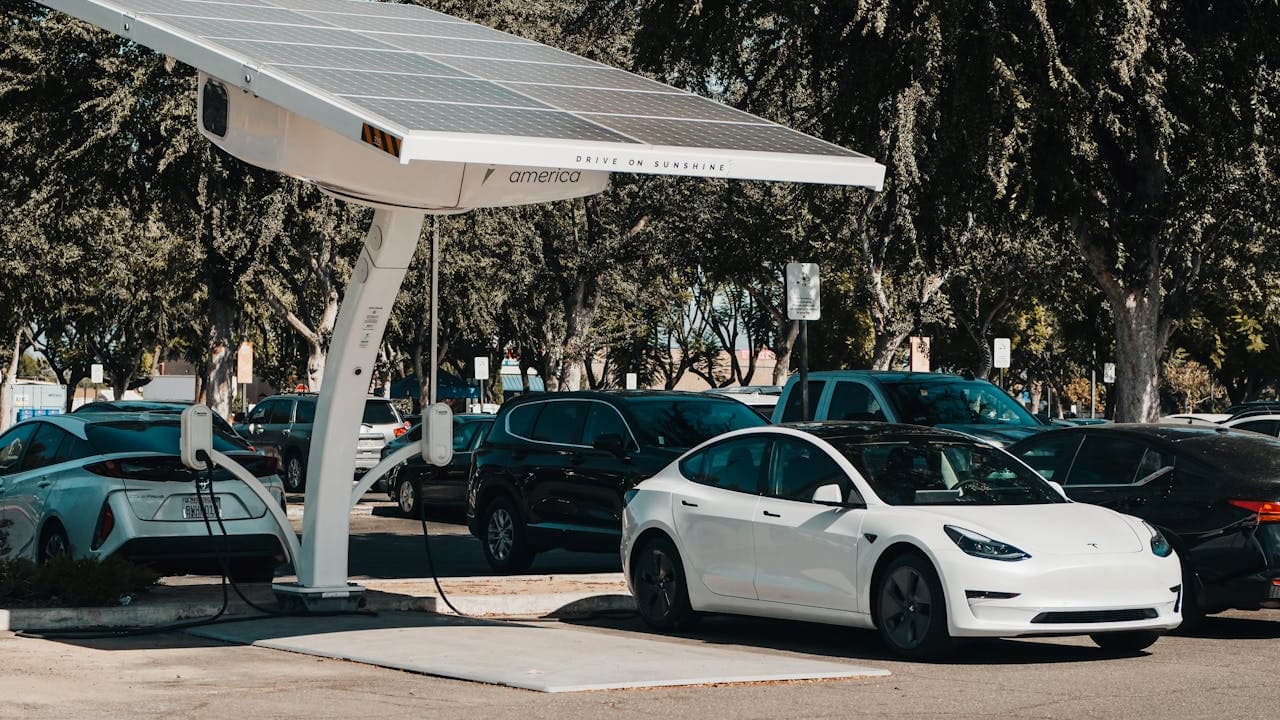

The average electric medium sedan costs $13,692 a year to own — $3,736 more than a comparable gas sedan — even though it burns less than half as much money on fuel. That’s the uncomfortable math buried in AAA’s 2025 “Your Driving Costs” study, the insurer’s annual teardown of what it actually costs to buy, finance, insure, and maintain a new vehicle over five years and 75,000 miles. AAA tested 45 models across nine categories, and when the categories are lined up side by side, EVs come out ahead on the pump and the shop bill — and behind on almost everything else.
The Per-Mile Numbers Don’t Lie
AAA’s own 2025 fact sheet puts the average electric vehicle at 71.21 cents per mile to own and operate. A small gas sedan runs 55.87 cents per mile. A hybrid runs 63.94 cents per mile. Even a medium gas sedan, at 66.37 cents per mile, undercuts the average EV. Run those numbers out over 75,000 miles and an EV owner is paying thousands more than a small-sedan driver would — for a car marketed on the promise of cheap running costs.
Where the EV Actually Wins
Give the EV its due: on a medium sedan, AAA’s detailed cost breakdown shows electricity costing just $728.75 a year (5.07 cents per mile) versus $1,669 a year in gasoline (11.13 cents per mile) for the equivalent gas car. Maintenance is cheaper too — $1,358 a year for the EV against $1,786 for the gas sedan, since there’s no oil to change and far fewer moving parts to wear out. Combined, that’s roughly $1,368 a year in real, verifiable savings on the two costs EV owners hear about most.
Where It Loses It All Back — And Then Some
The EV’s downfall is everything AAA lumps under ownership rather than operation. Depreciation on that same electric medium sedan runs $7,088 a year, more than double the $3,462 a gas sedan loses. Insurance costs $2,027 versus $1,572. Finance charges run $1,427 versus $854, because EV buyers are financing a bigger number — AAA pegs the average new EV price at roughly $55,000 against $48,000 for a gas vehicle. License, registration, and tax costs follow the same pattern: $1,064 for the EV versus $613 for gas, since those fees are frequently tied to a vehicle’s sticker price. Add it up and the EV’s fuel and maintenance edge gets erased three times over.
SUVs Tell a Softer Version of the Same Story
The gap narrows outside the sedan class but never flips. A compact electric SUV costs $11,191 a year to own, compared with $10,279 for its gas counterpart and $10,340 for a hybrid — a $912 premium rather than a $3,700 one. That’s still a real number, just a smaller one, and it suggests body style and how fast a given EV platform loses value both matter as much as the powertrain itself.
Why 2025 Made the Gap Wider
Part of what’s driving this year’s numbers is that gas got cheaper while charging got pricier. AAA’s data shows regular gasoline averaging $3.15 a gallon in 2025, down from $3.53, while the average cost to charge an EV rose to 16.7 cents per kilowatt-hour from 15.9 cents. Overall new-vehicle ownership costs actually fell $719 industry-wide, to $11,577 a year — but that decline was driven almost entirely by cheaper gas and lower finance charges on conventional vehicles, not by anything that helped EV owners.
AAA’s own director of automotive research, Greg Brannon, flagged the timing risk directly in the study’s release: “It might be tempting to rush to the dealer for a new car when you notice a drop in ownership costs this year. However, consumers should factor in all the expenses involved before making any commitments.”
What This Means If You’re Cross-Shopping
None of this means EVs are a bad buy — it means the sales pitch built entirely around fuel savings is incomplete. A driver who keeps a car for a decade and racks up serious mileage will eventually work off some of that depreciation gap through lower running costs. A driver who trades in every three to five years, which is closer to the AAA study’s own ownership window, is far more likely to feel the resale hit before the fuel savings catch up. The number that should get screenshotted out of this study isn’t the electric bill — it’s the $7,088 depreciation line. That’s the cost nobody puts on a window sticker, and right now it’s the biggest line item in EV ownership by a wide margin.