
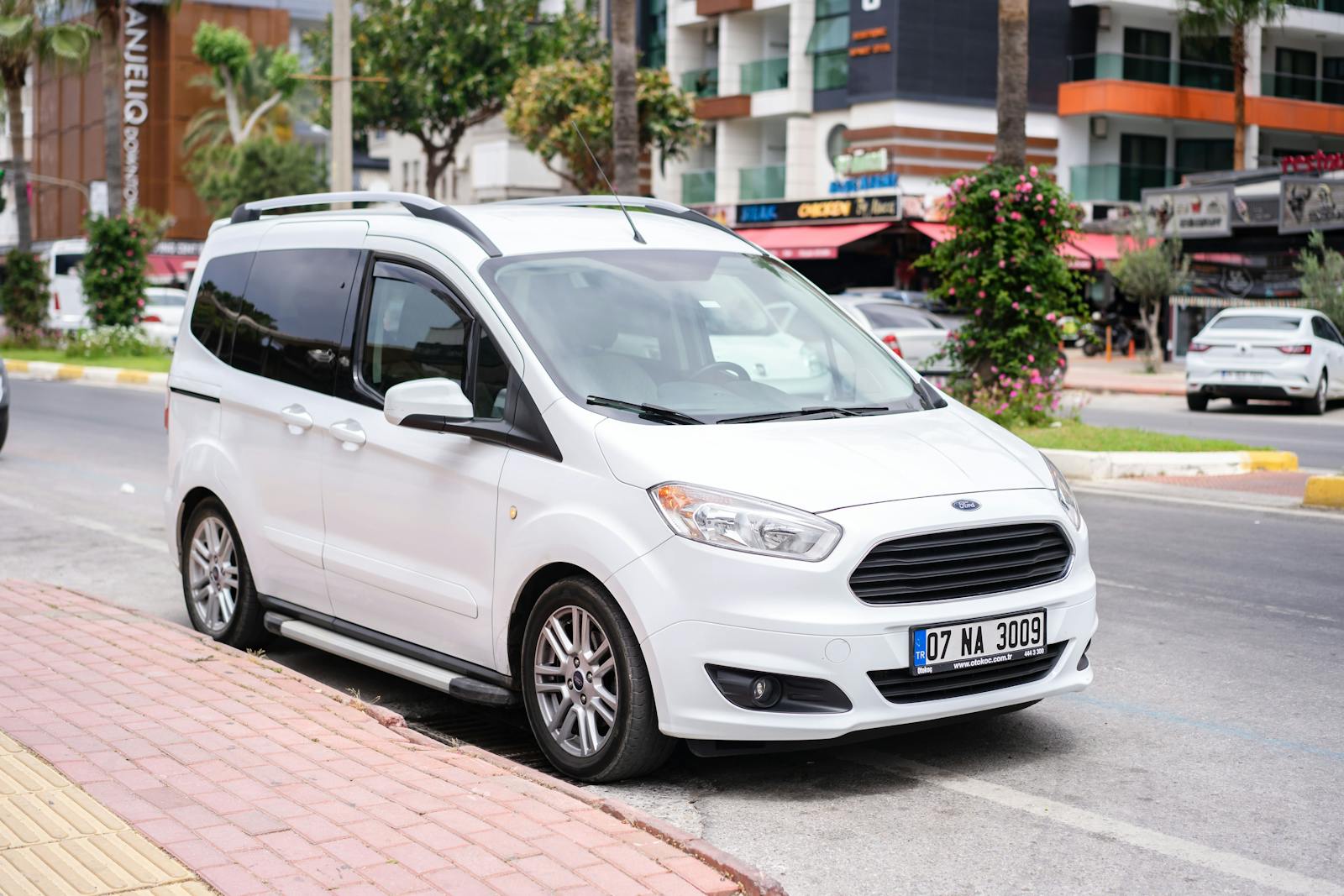

They bought the minivan for the boring reasons people buy minivans: it fit the car seats, it swallowed groceries, and it didn’t make weird noises. It was the family’s default setting—school drop-off, weekend soccer, late-night pharmacy runs when the baby spiked a fever. The kind of vehicle you stop thinking about because it’s always just… there.
Then a recall notice landed, and suddenly the van was something to think about. It wasn’t one of those “we might update a label” recalls, either. It was framed like a real safety issue—something about a defect that could cause a loss of control under certain conditions. The letter had that careful corporate tone, but the message underneath was plain: get this fixed.
They did what you’re supposed to do. The mom called the nearest dealership, gave them the VIN, and asked for the earliest appointment. The service advisor didn’t sound alarmed, which was oddly calming at first, and promised they’d “get them taken care of.” That was the start of a months-long loop of hold music, vague timelines, and the kind of delays that feel harmless right up until they aren’t.

The Recall That Wouldn’t Turn Into a Repair
The first appointment wasn’t really an appointment. It was more like, “Bring it in and we’ll see,” which already had that ominous dealership energy—like you’re scheduling disappointment. They drove in, waited in that bright lounge that smells like burnt coffee, and after an hour someone came out holding a clipboard like it was a shield.
Parts weren’t in. They could do an “inspection,” but the actual repair would need a component they didn’t have yet. The advisor said it like it was weather: nothing they could do, just unfortunate. They offered to put the family on a list and call when the part arrived.
So the family went home with the recalled minivan still recalled. The dad taped the recall letter to the fridge under a magnet, like it would help. Every time they loaded the kids into the back, it was in the back of their minds: they were driving the van the manufacturer had specifically told them to fix.
Weeks later, they called again. Same story, different phrasing—“supply chain,” “backorder,” “should be soon.” The family started getting that slow-burn anger that comes from being polite over and over and realizing politeness isn’t moving the needle. Eventually they asked the question people hate asking because it makes everything more tense: “Is it safe to keep driving?”
The answer wasn’t a clean yes or no. It was more like, “We haven’t seen issues,” and “just drive normally,” and “if you notice anything, bring it in.” The parents heard what wasn’t being said: nobody was going to tell them to stop driving it, because that would mean owning what that actually implies.
“We’ll Call You” Turns Into “Stop Calling”
After a couple more check-ins, the dealership’s tone shifted. Not rude, exactly—just that thinned-out patience customer service people get when they think you’re being unreasonable for wanting the thing you were told to do. The service advisor started sounding like a gatekeeper to a secret part vault. “Still waiting,” they’d say, as if the family was the one dragging this out.
At one point, the mom asked if they could at least schedule something on the calendar so they weren’t in limbo. The dealership offered a date that felt suspiciously far out, like it existed to get the call off their desk. When the day came, they got a call the morning of: actually, the part still wasn’t in.
That’s when the family started getting creative, in that tired-parent way where you become a part-time project manager for problems you didn’t create. They called another dealer across town. That dealer said they could “order the part,” but it would take time and they couldn’t promise anything because the recall parts were “allocated.” They called a third place, further out, who told them they weren’t taking new recall work because they were “swamped.”
Meanwhile the van was doing van things: commuting, idling in car line, hauling backpacks and snack wrappers. The dad started driving it differently, like he could outsmart a defect with caution. He left extra space, avoided certain routes, and flinched at every odd sensation in the steering wheel.
The kids didn’t know any of this, obviously. They were arguing about whose turn it was to sit by the window, kicking the back of the front seats, dropping crackers into crevices that would never be cleaned. The whole thing had that unfair quality of normal life continuing while the adults quietly carried an invisible risk around with them.
The Day It Finally Happens
The crash didn’t happen on a mountain road in a thunderstorm. It happened in that most infuriating setting: ordinary. Late afternoon, not fully dark, a route they’d taken a hundred times. The mom was driving, heading back from errands, one kid in the second row and another strapped into the third.
She later described the moment like the van “decided to do something else.” A sudden change—whether it was steering, braking, or some mechanical hiccup that made control feel slippery—followed by that split-second panic where your brain tries to solve a physics problem faster than it can. She corrected, but the correction didn’t match what the van did.
It wasn’t a catastrophic pileup, but it was bad enough to matter. The minivan hit another vehicle at an angle and jumped a curb, ending in that awkward, crumpled stop where everything inside the cabin goes silent for a beat. The kids were crying. The mom’s hands were shaking so hard she couldn’t immediately unbuckle the straps.
Everyone who’s been in a crash knows the weird details you remember: the smell of the airbags, the way your phone suddenly feels too small in your hand, the stranger who appears out of nowhere asking if you’re okay. The mom kept repeating, half to herself, half to the kids, “You’re okay, you’re okay,” as if saying it could make it true faster. Then she called her husband, and he heard the tone in her voice before she even explained what happened.
Dealership Amnesia and the Paper Trail
In the days after, the family did what people do when adrenaline wears off and anger takes its place: they gathered receipts. They pulled up call logs, appointment confirmations, emails, the recall notice with the date on it. They weren’t trying to be dramatic; they were trying to make sense of how they’d done everything right and still ended up on the side of the road with a wrecked van.
The dad called the dealership again, not to schedule, but to ask a very specific question: why the repair hadn’t happened. The person on the phone slid into corporate autopilot immediately—sympathy words, disclaimers, “we can’t comment,” “we’re looking into it.” When he mentioned the previous appointments that had been canceled, the response got slippery, like the dealership was suddenly unfamiliar with their history.
They asked for a loaner earlier during the delays, and were told none were available. Now, after the crash, the idea of a loaner came up again, and it was still a problem—insurance has to approve, availability is limited, paperwork takes time. Everything took time, which was the entire problem from the start.
What really got under their skin was the way responsibility kept evaporating. The manufacturer had issued a recall. The dealer said parts weren’t in. The service department said they were doing what they could. And now the family was holding the consequences in their hands—medical checks, a damaged vehicle, and kids who suddenly asked nervous questions in the car like, “Is this one safe?”
The Messy Aftermath Nobody Warns You About
The crash didn’t end at the tow truck. It became a scheduling war: doctor visits “just in case,” insurance calls, rental car counters, and that depressing task of cleaning personal belongings out of a vehicle that no longer feels like yours. The mom found a half-finished water bottle and a tiny sock under a seat and started crying in the driveway, not because of the sock, but because she couldn’t stop picturing what could’ve happened.
The dealership offered to “start the process” once they could physically see the vehicle, which felt like a cruel joke. The van was in a body shop yard, and the family was still hearing the same song: we need the part, we need approval, we need time. The dad kept thinking about the recall letter and how it basically handed them an assignment—get repaired—and then left them without a path to actually complete it.
They started asking around about next steps, which is where things got even uglier. People suggested contacting the manufacturer directly, filing complaints, documenting everything, talking to a lawyer. Each suggestion came with its own exhausting list of steps, because when something goes wrong in the real world, you don’t get one clean lever to pull; you get a pile of forms and phone trees and conflicting answers.
And the hard part wasn’t just the money, though money was obviously part of it. It was the feeling of being trapped between “you must fix this for safety” and “we can’t fix this right now,” while still being expected to drive your kids around like nothing’s wrong. The family didn’t want revenge. They wanted someone—anyone—to admit that “delayed” and “dangerous” aren’t separate categories when the delay lasts long enough.
By the time the dust settled, they were left with the kind of unresolved tension that doesn’t fit neatly into a claim number: a recalled minivan that had been treated like an inconvenience until it wasn’t, a dealership that could always point to the next bottleneck, and a couple of parents who now heard every normal creak of a vehicle as a warning. The recall notice was still on the fridge, but now it felt less like a reminder and more like an accusation—proof that the danger had been spelled out in advance, and still nobody managed to stop it in time.