

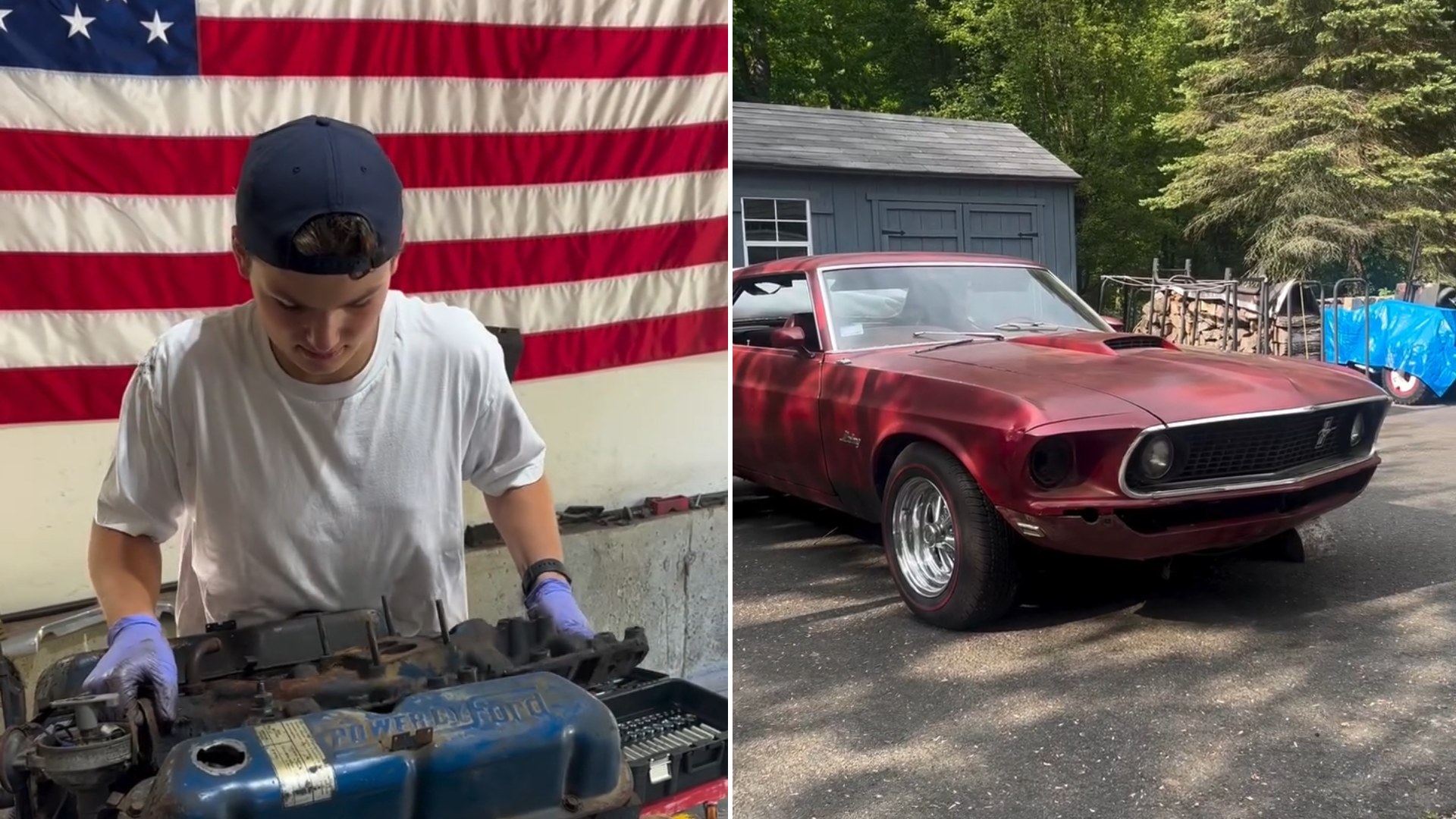
Some restoration projects are as much about the relationship built along the way as they are about the finished car. That appears to be the case for the father-and-son team behind the Instagram account @mustangproject69, who documented the full, step-by-step restoration of a vintage Ford Mustang from start to finish, and closed out the process with a simple but sincere verdict: every single minute of it was worth it.
“Worth every minute,” the caption reads, stripped down to its essentials and punctuated with hashtags tying the video to a broader restoration story. That brevity is notable given the scope of what a full Mustang restoration actually entails. Unlike a simple detailing job or a single-part repair, restoring a vintage Mustang from start to finish typically means addressing the vehicle at every level — body panels that need to be repaired or replaced, an engine and drivetrain that may require a complete rebuild, an interior stripped down and refinished, and a paint job that can take weeks on its own once bodywork is finally squared away.
The Ford Mustang holds a particular place in American automotive culture that makes it a favorite subject for restoration projects passed between generations. Since its debut in the 1960s, the Mustang has represented something close to an entry point into classic car ownership for a huge swath of enthusiasts — accessible enough in its original production numbers that used examples, even rough ones, still surface with some regularity, but significant enough historically that restoring one properly carries real weight among car people. A father and son taking one on together, rather than either working solo, adds a dimension that goes beyond the mechanical work itself.
Restoration projects of this scale tend to unfold across months, sometimes years, and rarely proceed in a straight line. There are the setbacks that come standard with any project involving a decades-old vehicle: parts that turn out to be harder to source than expected, rust discovered in places that looked solid at first glance, a rebuild that has to be redone because something wasn’t quite right the first time. A montage showcasing the process, as this one reportedly does, condenses all of that into something watchable, but anyone who has actually lived through a full car restoration knows the reality behind the highlight reel involves plenty of long weekends, skinned knuckles, and moments of doubt about whether the project would ever actually reach the finish line.
What makes a father-son restoration specifically resonate with audiences is the way it reframes a mechanical project as a vehicle, quite literally, for spending sustained time together. Working on a car requires patience, problem-solving, and long stretches of shared focus — qualities that translate just as easily into strengthening a relationship as they do into fixing an engine. For a son learning alongside a father, or a father passing down skills he picked up decades earlier, the Mustang itself becomes almost secondary to the process of building it together, even though the finished car is what ultimately gets shown off.
By the time the restoration reaches completion, the declaration that it was “worth every minute” reads less like a caption written for engagement and more like an honest summary of what a project like this actually delivers: not just a running, driving vintage Mustang, but months or years of memories built in a garage that no amount of money could simply buy off a dealership lot.
Takeaway: Taking On a Restoration Project With Family
A family restoration project works best when expectations are set early: budget generously for time and cost overruns, since older vehicles almost always reveal problems that weren’t visible at the outset. Break the project into manageable phases — mechanical, body, interior, paint — rather than trying to tackle everything at once, and celebrate small milestones along the way rather than waiting for the final reveal to feel a sense of progress. Most importantly, remember that the skills and patience passed between generations during a build like this often outlast the car itself; even if the vehicle eventually gets sold, the time spent working side by side rarely loses its value.