

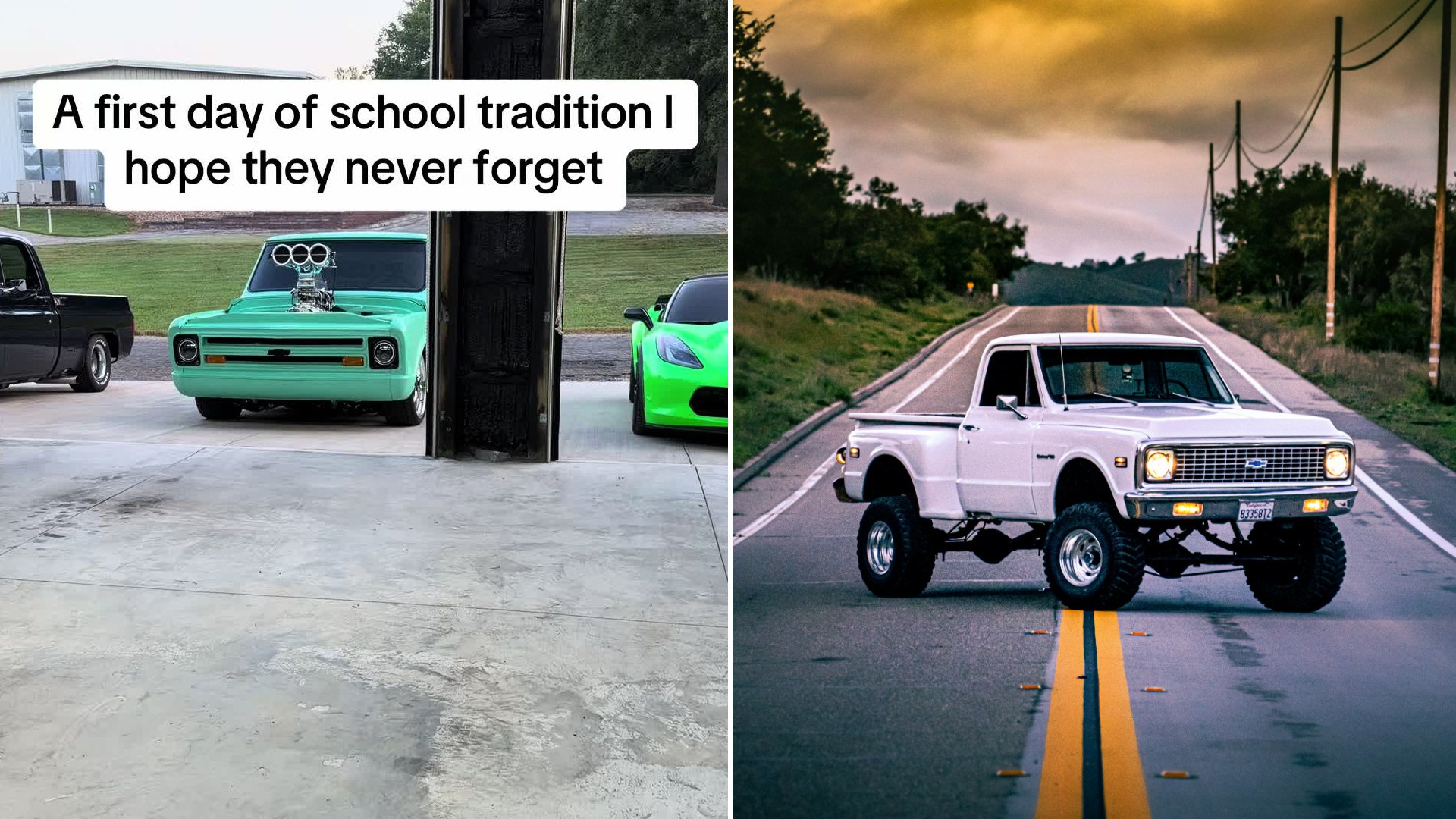
For most kids, the first day of school means a walk to the bus stop or a ride in whatever car happens to be in the driveway. For the daughters of the TikTok creator behind @beseenmotorsports, it meant something considerably more memorable: a ride to school in classic, modified trucks their father built himself, with a promise attached that those very vehicles will belong to them one day.
“One day, these cars will be theirs forever,” the caption reads, accompanied by hashtags referencing Chevy C10 trucks and the phrase “built not bought” — a badge of honor within car culture reserved for vehicles assembled and customized by hand rather than purchased off a lot already finished. The C10 in particular has become one of the most beloved platforms among classic truck builders, prized for its simple, boxy lines and the sheer amount of aftermarket support that makes custom builds achievable for enthusiasts working out of home garages rather than professional shops.
Building a classic truck from the ground up, or substantially modifying one, is a process that stretches on for months or years depending on the scope of the work. Engines get swapped or rebuilt. Suspension systems get modernized for a smoother ride. Bodywork gets reshaped, painted, and detailed to a standard the original factory line never intended. Every hour spent under the hood or beneath the frame represents a choice to prioritize this project over countless easier alternatives, which is part of why builders develop such a deep attachment to trucks they’ve assembled themselves.
That attachment is precisely what makes this particular moment resonate. Rather than keeping the finished trucks tucked away for car shows or weekend cruises, this father chose to put them to the most ordinary use imaginable — the school drop-off run — turning a routine morning errand into a small ceremony. There’s something notable about a builder who spends that much time and care on a vehicle choosing to expose it to the everyday wear of driveways, drop-off lanes, and school parking lots rather than keeping it wrapped in a garage. It signals these trucks were never meant to be static trophies; they were built to be lived with, driven, and eventually handed down.
The promise that the trucks will belong to his daughters someday adds a generational layer that separates this story from a typical build showcase. Classic vehicles have long served as a kind of rolling inheritance within car-loving families — a grandfather’s old truck handed down to a grandchild, a father’s project car eventually becoming a daughter’s first set of wheels. By stating the intention outright, on camera, on what is likely a meaningful day for his kids, the father is essentially documenting a promise for the record, one his daughters will presumably be able to look back on years from now.
There’s also a quieter statement embedded in the choice of vehicle. Modified C10 trucks carry a specific kind of cultural weight within truck culture — they’re not flashy supercars built to turn heads with speed, but trucks built with patience, mechanical skill, and personal investment. Driving daughters to their first day of school in vehicles like that, rather than something purchased new off a lot, models a particular set of values: that things built with your own hands, and passed down rather than replaced, carry a kind of worth that a showroom price tag never fully captures.
Whether or not the daughters fully grasp the significance of the moment now, the trucks themselves are likely to outlast plenty of other memories from their early school years — sitting in a garage somewhere, waiting for the day their father’s promise comes due.
Takeaway: Building a Vehicle to Pass Down
Building a classic truck or car with the intention of eventually handing it down is one of the more meaningful reasons to take on a long-term restoration project. If that’s the goal, document the build along the way — photos, notes on parts and decisions made — so the eventual owner inherits not just a vehicle but a record of the work and thought that went into it. Keep maintenance records current and store the vehicle properly between uses, since a truck meant to last decades needs consistent upkeep, not just an initial burst of effort. And consider involving kids in small parts of the process early on; a truck someone remembers helping wash or ride in as a child tends to mean far more than one simply handed over as an adult.