

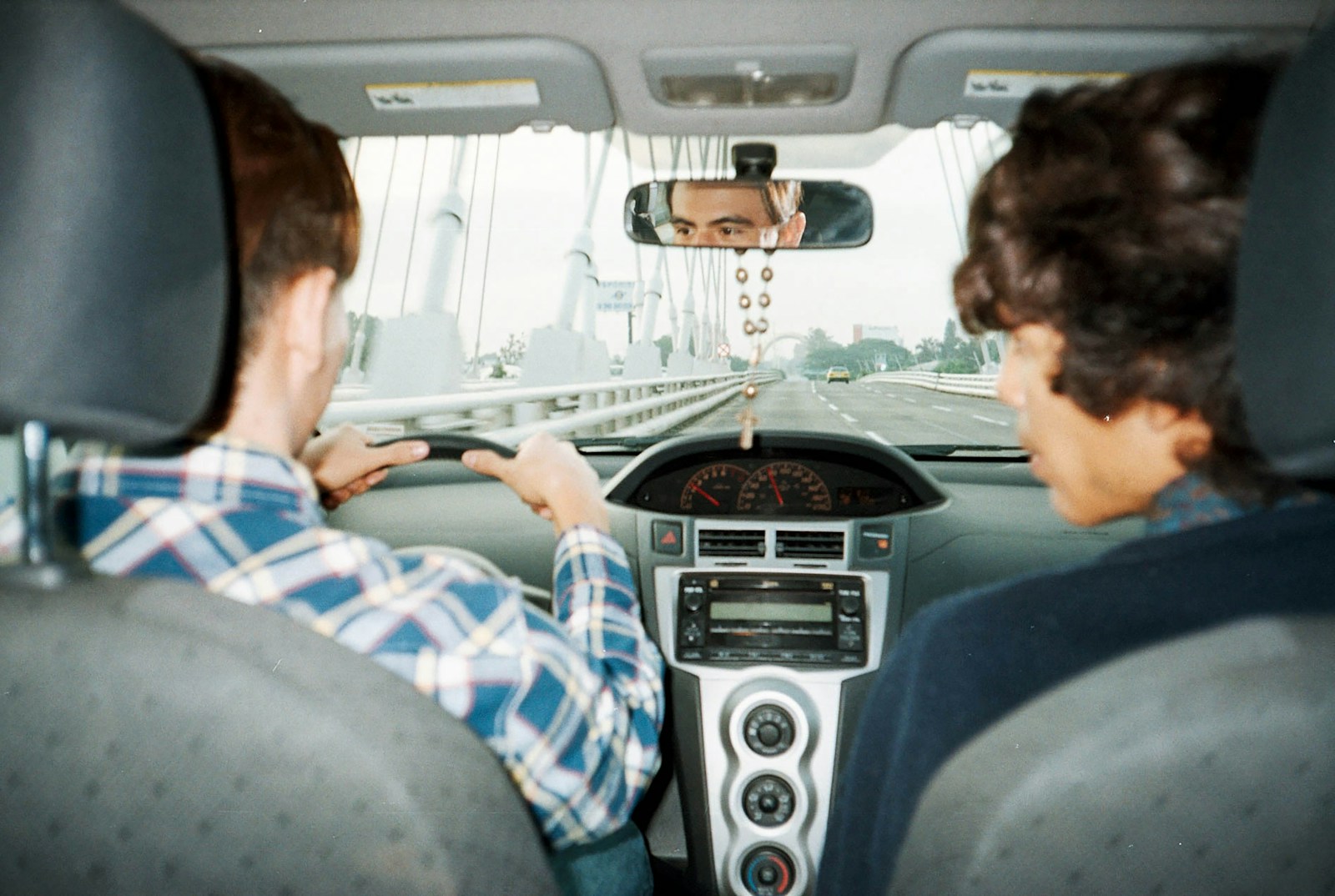
By the time Maya turned seventeen, she’d learned the family rules the way other kids learned driving laws: keep your head down, do what you’re asked, and don’t expect the same treatment as her brother. Her dad, Greg, liked to call Maya “the mature one,” which sounded like a compliment until you noticed it always came right before a new responsibility got dropped in her lap. Meanwhile, her older brother Dylan got labeled “the social one,” which apparently translated to: he needed “support” and “confidence boosts” and “second chances.”
Their house ran on a weird kind of math. If Dylan messed up, it was because school was stressful or his friends were a bad influence or he “wasn’t thriving” in the rigid system. If Maya messed up, it was because she “knew better,” which made it personal. Their mom floated in and out of it all, exhausted and conflict-avoidant, the kind of parent who mastered sighing and saying, “Let your father handle it,” even when her father was the whole problem.
So when Greg announced over dinner that he’d “handled the car situation,” Maya’s fork paused mid-air. She’d been saving since she was fifteen—babysitting, tutoring, holiday retail shifts—quietly building a little pile of cash she didn’t talk about because every time her dad learned she had money, some “family expense” mysteriously appeared. Dylan didn’t even look up from his phone; he just smirked like he already knew the punchline.
The Car That “Just Made Sense”
The next Saturday, Greg told everyone to come outside. Parked in the driveway was a used sedan, clean enough to look freshly detailed, with that unmistakable “new-to-you” smell leaking out of the open window. Greg stood there with the keys in his hand like he was unveiling a statue he’d commissioned.
“This,” he said, flipping the keys once in his palm, “is for Dylan.” He said it like the conclusion of a logical argument, not a decision that would detonate the entire house. Dylan’s face lit up immediately, and he did this half-laugh, half-whoop like someone had just surprised him with a vacation.
Maya blinked and waited for the rest, because surely there was more. A car for Dylan, sure—but Greg had been talking for months about how “both kids” would need reliable transportation, how “we’re not made of money,” how “everyone has to contribute.” She stood there in the driveway, watching Dylan slide into the driver’s seat and adjust the mirrors like he was in a music video, and felt something sour settle behind her ribs.
Greg turned to Maya like he was about to reassure her. “You don’t need one right now,” he said casually. “You’re responsible. You can earn one.”
The Deal That Wasn’t a Deal
“Earn one how?” Maya asked, keeping her voice as even as she could. She was already mentally running through her savings and the kind of junker she could buy outright if she kept working. She’d been bracing for her dad to say something like, “Match what you saved and I’ll match the rest,” which would’ve been unfair but at least recognizable as parenting.
Greg nodded toward the house, where Maya’s two younger siblings—twelve-year-old Ava and nine-year-old Ben—were arguing loudly about who got the front seat in a car none of them technically owned. “By helping the family,” he said. “You can drive your brother and the kids where they need to go. Practice your skills. Show you can handle it.”
Maya stared at him. “But… I don’t have a car. Dylan does.”
Greg smiled like she’d asked a cute question. “Exactly. Dylan’s got a job to focus on and a social life. You’re better at planning. You’ll use his car for family stuff, and when you’ve proven you can be consistent, we’ll talk about getting you one.”
It landed all at once: her “earning” wasn’t a payment plan. It was indentured transportation. Dylan got a gift. Maya got chores with mileage.
“You’re So Good at This”
The first week after the car appeared, Greg acted like the new arrangement had always been the plan. Maya would be called from her room to drive Ava to dance, then rush Ben to soccer, then swing by Dylan’s friend’s house because Dylan “couldn’t be late” and Greg “had meetings.” The keys lived on a hook near the front door, but if Maya reached for them without permission, Greg would suddenly materialize to ask where she thought she was going.
Dylan, for his part, treated the car like it was his kingdom and Maya was a temporary employee. He’d leave fast-food wrappers in the cupholders, change the radio presets, and complain if she moved the seat. Once, she asked him to fill the tank since she’d driven his car for three straight days, and he laughed like she was adorable for trying.
“Dad said you’re helping out,” Dylan told her, tossing his backpack onto the couch. “It’s not that deep.” Then he grabbed the keys from the hook—his keys, in his mind—and went out again, leaving Maya holding a list of pickup times and locations like a dispatch operator.
Greg kept praising her in that way that sounded supportive until you realized it was a leash. “See? You’re so good at this,” he’d say when she managed to get everyone everywhere on time. “This is why I trust you.” Trust, apparently, meant workload.
The Moment She Asked for Something Concrete
After about a month, Maya tried to pin her dad down. She picked a rare quiet moment when Dylan was out and the younger kids were at school, and she came into the kitchen with her notebook—the one where she tracked her shifts and savings. She showed Greg the numbers, the hours, the fact that she could cover a decent down payment if he’d just commit to matching it like he’d promised “eventually.”
Greg barely glanced at the page. “We’re not talking about that right now,” he said, already irritated by the existence of a request. “Money’s tight. You know that.”
Maya pointed out, carefully, that he’d just bought Dylan a car. Greg’s expression changed instantly, like she’d accused him of something ugly in public. “That was different,” he snapped. “Dylan needs it. He’s got his job, his future. And he’s been doing better lately. I wanted to reward that.”
Maya’s voice got sharper despite her best effort. “So what’s my reward for doing everything right?”
Greg’s answer was quick, like he’d been waiting to use it. “You don’t do the right thing for rewards,” he said. “You do it because it’s who you are. That’s why I can count on you.”
The conversation ended the way these conversations always ended: Greg declaring it over, Maya swallowing frustration because pushing further would be labeled “disrespect,” and the entire household continuing to run on her quiet compliance.
The Blowup in the Driveway
The breaking point came on a Thursday that was already stacked: Ava had dance, Ben had a dentist appointment, and Maya had an extra shift she’d begged for because she was trying to save faster. Greg knew all of this. He’d been reminded twice, because Maya had learned that if she didn’t put things in writing, her dad would “forget” in the convenient way.
At 3:30, Greg called her while she was at school and told her to pick Dylan up from work at 5:00. Maya reminded him she couldn’t—she’d be at her shift, and Dylan’s job was ten minutes from Greg’s office anyway. Greg’s voice went cold. “Your shift isn’t as important as family obligations,” he said, like he was reciting policy.
Maya told him no. Not “I’ll try,” not “maybe,” just no. She said she’d already covered three of Dylan’s rides this week, and she wasn’t losing paid hours so Dylan could avoid taking the bus or asking one of his friends.
When she got home, Greg was waiting in the driveway, keys in hand, Dylan standing behind him with his arms folded like a bouncer. Greg held the keys up and said, “If you’re not going to help, you don’t get access to the car. Simple.”
Maya looked at the keys and realized how ridiculous it was that she’d been “earning” something that could be revoked at a whim. She told him, calmly at first, that she was done driving everyone around without any actual agreement. She was done being the family’s default solution while Dylan got rewarded for existing.
Greg’s face tightened, the way it always did when Maya named the pattern out loud. “You’re jealous,” he said, like it was a diagnosis. “This attitude is exactly why you’re not ready for your own car.”
Maya didn’t scream, but her voice shook anyway. “I’m not jealous,” she said. “I’m tired. You bought him a car and you bought me a job. And then you tell me I can ‘earn one’ by being your chauffeur.”
Dylan muttered something about her being dramatic. Greg told her to go to her room. Maya didn’t move. She just stood there, in the driveway, watching her dad grip the keys like they were a symbol of authority instead of a piece of metal that proved who mattered more in his little system.
That night, the house felt tense in that familiar, suffocating way—doors closing too softly, footsteps too careful, everyone pretending it was normal. Maya sat in her room and looked at her savings spreadsheet, doing the math on how long it would take to buy something on her own without anyone “matching” anything. Downstairs, Greg kept the keys in his pocket instead of on the hook, and the message was clear: the car wasn’t just transportation. It was leverage, and he was perfectly fine using it on the kid who’d been holding the whole family together.