

He’d said it out loud at the funeral lunch, which is the kind of place where promises feel like they attach themselves to your ribcage. He told his son they were going to bring Grandpa’s ’67 convertible back, the same way his dad had always sworn he would “one day,” once there was time. The kid nodded like it was already a plan, not just grief trying to invent something solid to hold onto.
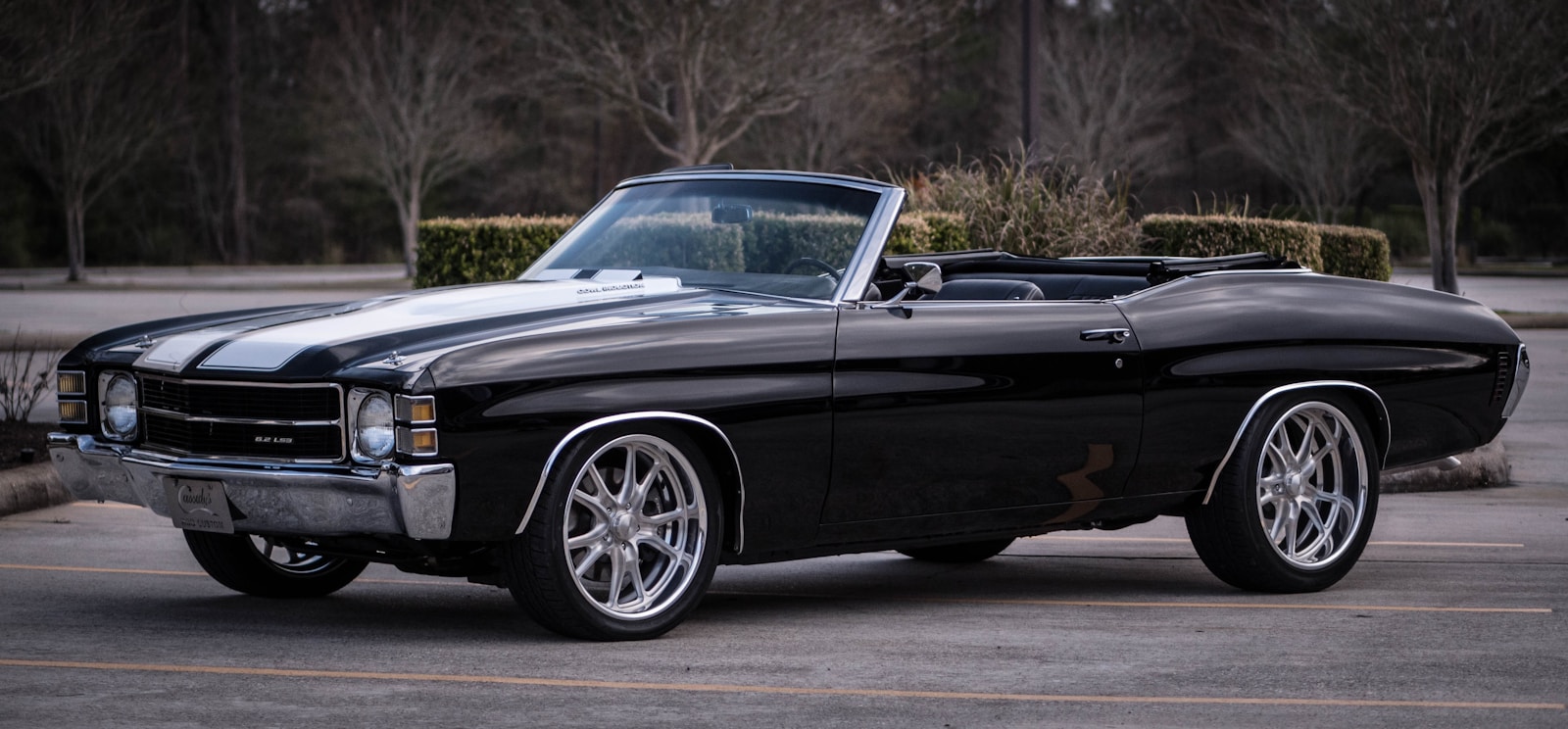
Two months later, the convertible rolled into their driveway on a flatbed, looking better than it should’ve for something that had spent years sleeping in a garage. The paint had this uniform black sheen that read as “freshened up” from ten feet away, and the chrome still caught the sun. It had the kind of stance that makes neighbors slow down when they walk the dog.
What nobody saw—what the dad didn’t see until the first real weekend they got under it—was that the black wasn’t paint so much as camouflage. Underneath, where the structure mattered, the subframe was half-eaten by rust and sealed in place with a rattle-can confidence that only ever exists right before you touch it with a screwdriver.
The promise becomes a project
At first, it was the wholesome version of the story. Saturday mornings meant donuts and a YouTube video paused on a workbench, the dad acting like he totally remembered everything he’d learned helping his own father back in the day. The son got gloves that were too big and a ratchet he clicked like it was a sound effect.
The car’s paperwork was basically a family scrapbook—old insurance cards, a worn key tag from a dealership that didn’t exist anymore, and a Polaroid of the dad as a teenager leaning on the same fender. That photo did a lot of heavy lifting. Every time the scope of the job got vague or scary, the dad would point at it like proof they were supposed to be doing this.
He didn’t go into it trying to build a show car. The plan was always “make it safe, make it run, keep it original-ish.” He priced out brakes, fuel lines, tires, some interior cleanup, and a basic refresh that felt reasonable—until the moment the car stopped being an object from his childhood and started being an object he was responsible for.
The first poke through the black
The rot showed itself the way these things always do: not with a dramatic snap, but with a small, ugly surprise. The dad was under the front end tracing a line—checking steering components, looking for leaks—when he noticed a bubbly edge where the black paint didn’t quite lay flat. He scraped at it with a pick, expecting a little surface rust and a quick wire-wheel session.
Instead, the black coating cracked like a thin shell and the metal underneath turned to flakes. Not “rusty,” not “needs attention,” but “this used to be steel and now it’s history.” When he tapped again, a chunk came off and dropped into his face shield like a bad joke.
He tried to keep it calm for the kid, because that’s what dads do when they don’t want the fun thing to die in real time. He slid out from under the car, brushed his shirt off, and said something like, “Looks like we’ve got some rust to deal with.” But his eyes were doing the math already, and it wasn’t adding up in a way that still included summer drives.
The next day he brought a buddy over—one of those guys who’s always “built a couple” and has strong opinions about what’s worth saving. The buddy didn’t even need to get all the way under it. He crouched, stared, ran a hand along the underside, and went quiet in the way that means he’s trying to choose words that won’t make you feel stupid.
How it got this bad without looking that bad
Once the illusion broke, everything else started to look suspicious. The black coating wasn’t a careful underbody treatment; it was a quick spray meant to unify the color and hide the scar tissue. Under it, the metal had that layered, delaminating look—like a pastry, except you don’t want your car frame to have layers.
The dad started finding patches that weren’t repairs so much as apologies. A plate here with welds that didn’t fully penetrate, a blob of seam sealer there, fasteners that looked newer than everything around them. It wasn’t one catastrophic failure point; it was a whole front end that had been gently cosplaying as solid.
He did the thing people do when they want a different answer: he went shopping for opinions. One shop wouldn’t touch it and said so like it hurt their pride. Another shop would touch it, but the number they threw out sounded less like a quote and more like a warning.
That’s the moment the story stopped being about a father-son project and started being about a father trying to justify a sinking ship because it had his father’s name on it. He’d already told people. He’d already pictured his son in the passenger seat. Backing out didn’t feel like quitting a project—it felt like breaking a promise to someone who couldn’t argue back.
The money starts keeping score
The first big spend was supposed to be “the hard part,” the foundation that would make everything else enjoyable. Subframe replacement or reconstruction isn’t glamorous; you can’t post it and have anyone but the most dedicated car people care. But it’s the difference between a car and a very shiny hazard.
Parts availability became its own little nightmare. Everyone loves to say “they make everything for those,” right up until you need a specific piece that fits your exact configuration and doesn’t require three other parts to change with it. The dad learned what backorder really means, the kind of waiting where you keep refreshing an email like it’ll move the calendar.
Meanwhile, the convertible sat there with its top down like it was mocking them. The kid would walk by and ask when they’d be able to drive it “even just around the block,” and the dad would give him a moving target. Soon. After this. Once the frame’s done. Once it’s safe. Once the shop calls.
And because the subframe was just the first honest problem, the honest problems kept arriving. Once the front end was apart, they found worn suspension components that would’ve felt irresponsible to reuse. Brake lines looked original, which is another way of saying they looked like a dare. The steering box had slop that suddenly wasn’t “character,” it was “we’re doing this now or we’re doing it after something scary happens.”
He kept a spreadsheet at first. That spreadsheet turned into a survival mechanism. Every new line item made him feel both more committed and more trapped, like the money wasn’t buying progress so much as buying permission to keep telling himself it would be worth it.
Two years later, it’s not the same dream anymore
By the time they hit the two-year mark, the number sitting on the bottom of that spreadsheet was $32,000. Not a tidy, planned “restoration budget,” but a pile of receipts from parts, labor, tools he didn’t have, and the kind of “while you’re in there” decisions that snowball when you’re trying not to do something twice. There were weeks when the car moved forward, and long stretches where it just sat because the next step depended on someone else’s schedule.
The father’s relationship with the project changed in small, telling ways. At the beginning, he’d talk about it like a shared adventure—“we’re doing the brakes next,” “we’re figuring out the wiring.” Two years in, his language got tighter: “I’ve got to handle the subframe stuff,” “I need to call the shop,” “I can’t mess this up.” The kid still helped, but more like an assistant hovering at the edge of an adult problem.
There were awkward moments that didn’t make it into the neat version of the story. The dad snapping when a bolt stripped because he was already exhausted from arguing with vendors on the phone. The kid going quiet when he realized “working on the car” usually meant watching his dad stress out. The spouse asking, not unkindly, whether they’d basically bought a very expensive way to feel guilty every weekend.
And then there was the uncomfortable fact that $32,000 doesn’t automatically buy closure. The car was structurally closer to safe, sure, but it wasn’t cruising. It wasn’t the cinematic father-son payoff scene. It was still a machine in pieces that demanded attention, and now it demanded attention with a price tag attached.
What made it sting was that the dad could see the alternate timeline clearly. In that timeline, he sells the car as-is, takes the hit, and buys something running—something he can actually drive with his son now, while the kid still wants to. But in this timeline, the car isn’t just a car. It’s a memorial that somehow requires constant payments.
He still says he doesn’t regret it, and maybe he doesn’t, not entirely. But when he talks about the rattle-can black and the rust underneath, there’s a different edge to it now—not just anger at whoever covered it up, but anger at how easy it is to confuse “honoring someone” with “refusing to let go.” The convertible is closer than it used to be, but it’s also become a weird, heavy third presence in their family, sitting in the garage like a question nobody can answer: when does a promise stop being love and start being a debt?