

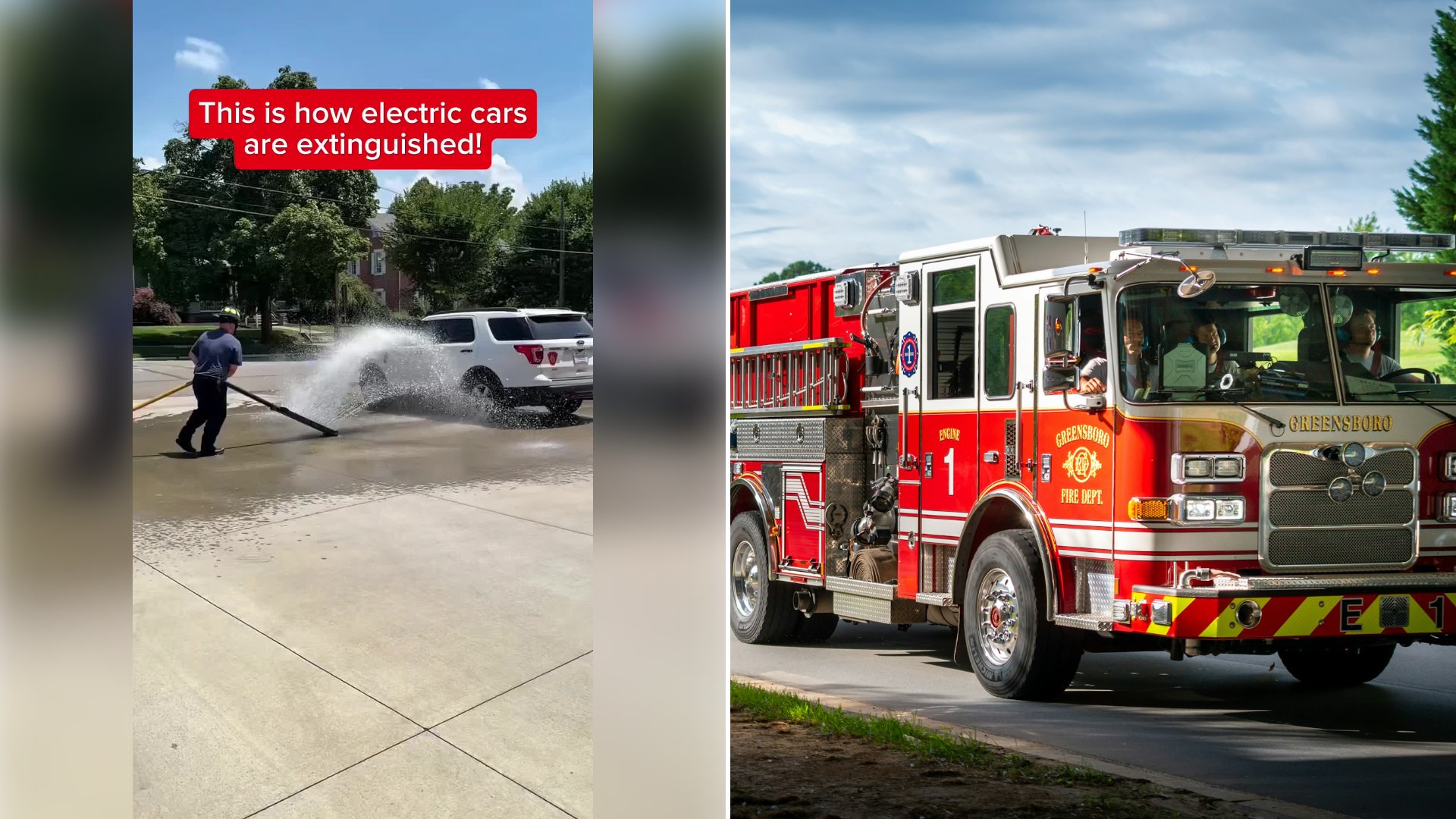
A firefighter steps in front of the camera not to show off gear, but to walk through something that has become a real headache for departments across the country: how do you actually put out an electric vehicle battery fire once it starts? The demonstration breaks down the specialized cooling method crews are now trained to use, showing why dumping a few extinguisher blasts on a burning EV pack almost never works the way it does on a conventional gas fire.
The clip, posted by @theengineeringdream, lays out the step by step approach: rather than treating a lithium ion battery fire like a typical engine bay blaze, the method focuses on sustained, high volume water application aimed directly at the battery pack to pull heat out of the cells faster than the chemical reaction inside them can regenerate it. It is methodical, slower than people expect, and nothing like the quick knockdown most viewers associate with firefighting on TV.
@theengineeringdream
The reason crews train so specifically for this is straightforward physics. A lithium ion battery fire is driven by thermal runaway, a chain reaction where one damaged cell heats its neighbors until they fail too, releasing their own stored energy as heat. That reaction can keep reigniting a pack for hours after the visible flames appear to be out, which is why fire departments now budget for thousands of gallons of water on a single EV fire, far more than a comparable gasoline vehicle fire typically requires. Some departments have adopted specialized tools like fire blankets or immersion trailers that submerge a damaged EV in a tank of water to fully stop the reaction, but on the roadside, sustained direct water application remains the most common first response.
Training programs built around these fires have expanded quickly as EV adoption has grown. The National Fire Protection Association and vehicle manufacturers have published emergency response guides specific to EV battery packs, covering everything from where the high voltage disconnect points are located on a given model to how long a vehicle should be monitored after a fire appears extinguished, since reignition hours or even days later is a documented risk with damaged battery packs. Firefighters are also trained to use thermal imaging cameras to check for hot spots inside a pack that are not visible to the naked eye, since a battery can still be heating internally even after the external fire looks resolved.
It is worth separating the headline fear from the actual data here. Multiple insurance industry and federal transportation studies have found that electric vehicles do not catch fire more often than gasoline powered cars on a per vehicle basis, and in several of those datasets EVs show up with a lower fire incidence rate overall. What is different is not how often an EV fire happens, but how it behaves once it does: longer burn times, the reignition risk, and the specialized response needed, all of which is exactly what this demonstration is trying to educate people on. That nuance tends to get lost in viral clips of EVs on fire, which is part of why a clear explainer like this one resonates with an audience that is already anxious about the technology.
For everyday drivers, the practical takeaway is less about becoming an amateur firefighter and more about knowing what to do in the first few minutes. Safety officials consistently recommend getting a safe distance away immediately, calling 911 right away rather than attempting to fight an EV fire with a handheld extinguisher, and warning first responders on arrival that the vehicle is electric so they can use the correct protocol from the start. That simple heads up can shave critical minutes off a department’s response time and keep everyone involved safer.
More from Steel Horse Rides
- Car Expert Lays Out the Most Reliable Used Cars To Buy at Every Budget From One Thousand Dollars Up To Twenty Five Thousand Dollars and Explains Why
- Arizona Technician Sorts Nine SUVs and Trucks Into Reliable or Unreliable, Putting the Chevy Equinox 2.4 in Red Over Oil Use and Calling the Ford F150 5.0 a Truck for His Family
- Car Expert Explains California’s New CARS Act Requiring Dealerships To Disclose Full Vehicle Prices Upfront and Offer a Three Day Cancellation Window