
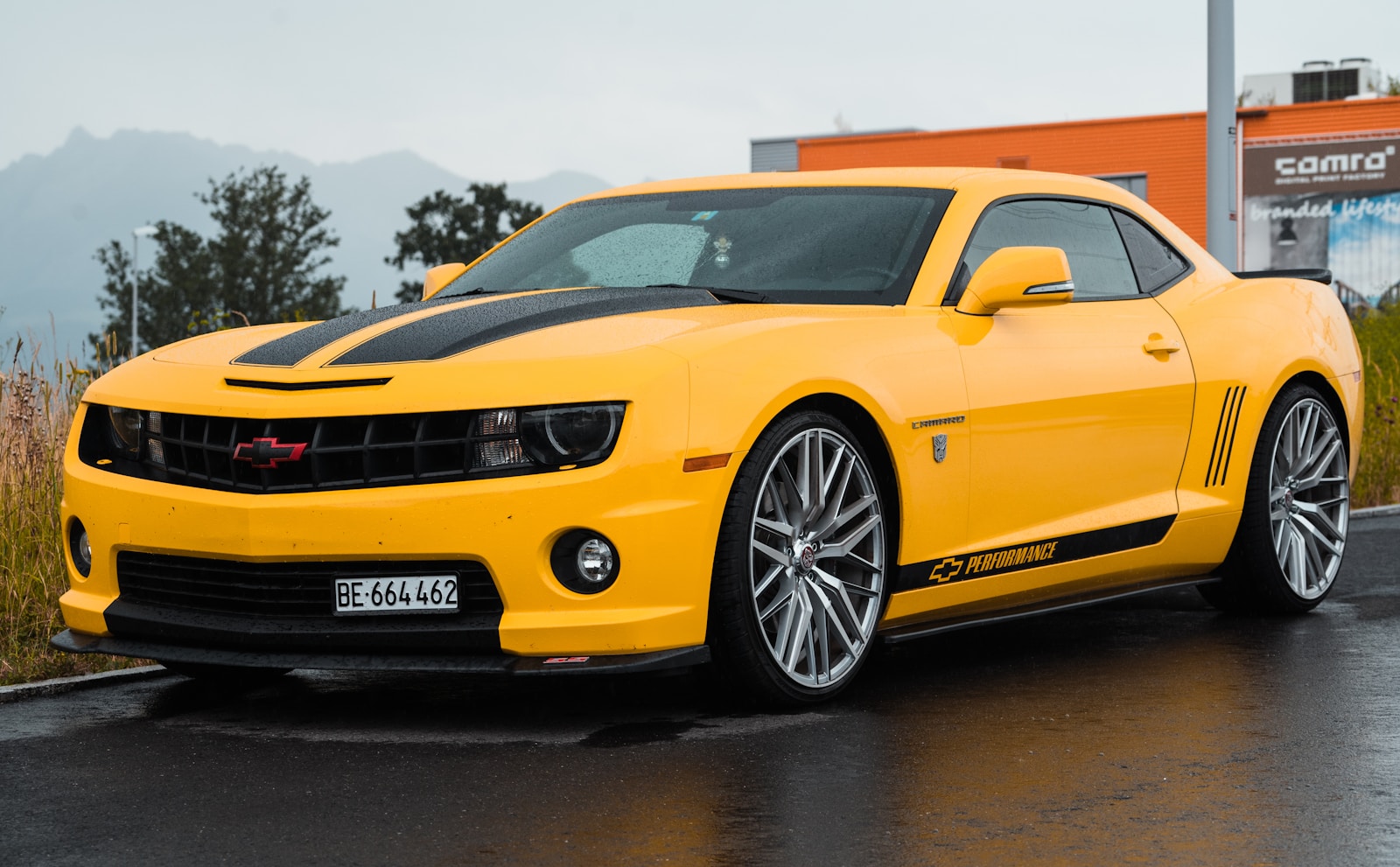

The average first-generation Chevrolet Camaro now sells for $80,938 at auction, according to sale data tracked by Classic.com — nearly $10,000 more than the $71,000 starting price of a brand-new 2027 Chevrolet Corvette Stingray, straight from Chevrolet’s own site. Step up to a Z/28, and the gap widens dramatically: those command a market benchmark of $102,548, more than 40 percent above what Chevrolet charges for its current entry-level sports car. A 57-year-old pony car is now, on average, pricier than the newest car General Motors builds to wear the performance-flagship badge.
How a used car became worth more than a new one
This isn’t a story about the Corvette getting cheap — quite the opposite, base Corvette pricing has climbed steadily for years. It’s a story about how thin the supply of genuine, unmolested first-generation Camaros has become relative to demand from a buyer pool that’s had five extra decades to fall in love with the shape. Hagerty’s own price guide shows a base 1967 Sport Coupe with the 327 cubic-inch, 275-horsepower engine ranging from $15,900 to $42,600 depending on condition — meaning it’s specifically the desirable, higher-performance variants dragging the average well above new-Corvette money, not the ordinary six-cylinder commuter cars that made up the bulk of 1967-69 production.
The ZL-1 shows where this trend actually ends
If you want to see how far this can go, look past the Z/28 to the ultra-rare aluminum-block ZL-1, of which Chevrolet built barely 69 units for 1969 as part of a homologation special. Classic.com’s market benchmark puts the ZL-1 at $894,749 — nearly $825,000 more than a new Corvette, and Hagerty’s own generational pricing analysis separately notes that a ’69 ZL-1 now runs “more than $1,200 per horsepower,” compared to roughly $80 per horsepower for a base 327 Sport Coupe. That’s not a gradual premium. That’s an entirely different market wearing the same badge, and it shows just how much the ceiling has moved for the rarest first-generation cars while ordinary ones remain comparatively grounded.
Why the crossover snuck up on everyone
Nobody woke up one morning and decided a used Camaro should cost more than a new one — it happened gradually, through a combination of tightening supply and a new-Corvette price that, while still representing strong value for what the C8 platform delivers, has climbed enough in recent years to narrow the gap that used to separate “expensive classic” from “new car sticker price.” Meanwhile classic.com’s tracked listings show 432 first-generation Camaros currently on the market against just 34 Z/28s and a mere handful of COPO and ZL-1 cars, a supply pyramid that gets dramatically steeper the closer you get to the most desirable factory configurations — exactly the kind of scarcity that keeps pushing average transaction prices upward even as overall Camaro production numbers from the late 1960s were never especially low.
The SS and RS packages sit right at the tipping point
The more interesting number for most shoppers isn’t the ZL-1 headline — it’s where the mid-tier cars land relative to that new Corvette price. An SS396, RS-optioned Sport Coupe, or a well-documented convertible with the right options routinely trades in the $60,000-to-$90,000 range depending on originality and drivetrain, meaning a meaningful share of the first-generation Camaro market sits directly on top of, or just below, that $71,000 new-Corvette line rather than dramatically above it. That’s arguably the more telling data point: it’s not just the exotic homologation cars pulling the average up artificially, it’s a broad middle tier of genuinely attainable, driver-focused classics that happen to now cost about the same as Chevrolet’s current entry-level sports car — a pricing coincidence that would have sounded absurd a decade ago.
What this crossover actually signals
When a 57-year-old car with a carburetor and drum brakes on lesser trims costs more, on average, than a modern sports car with a factory warranty, adaptive suspension, and a mid-engine layout, that’s not really a statement about the old car being impractical or the new one being cheap. It’s a statement about how collector markets price emotion, rarity, and cultural weight — and about just how much a Camaro’s specific place in American car culture has outrun anything a spec sheet comparison could explain. The Corvette is, dollar for dollar, almost certainly the better performance value. The first-generation Camaro simply isn’t being bought for that reason anymore, and the auction numbers make that distinction impossible to ignore.