
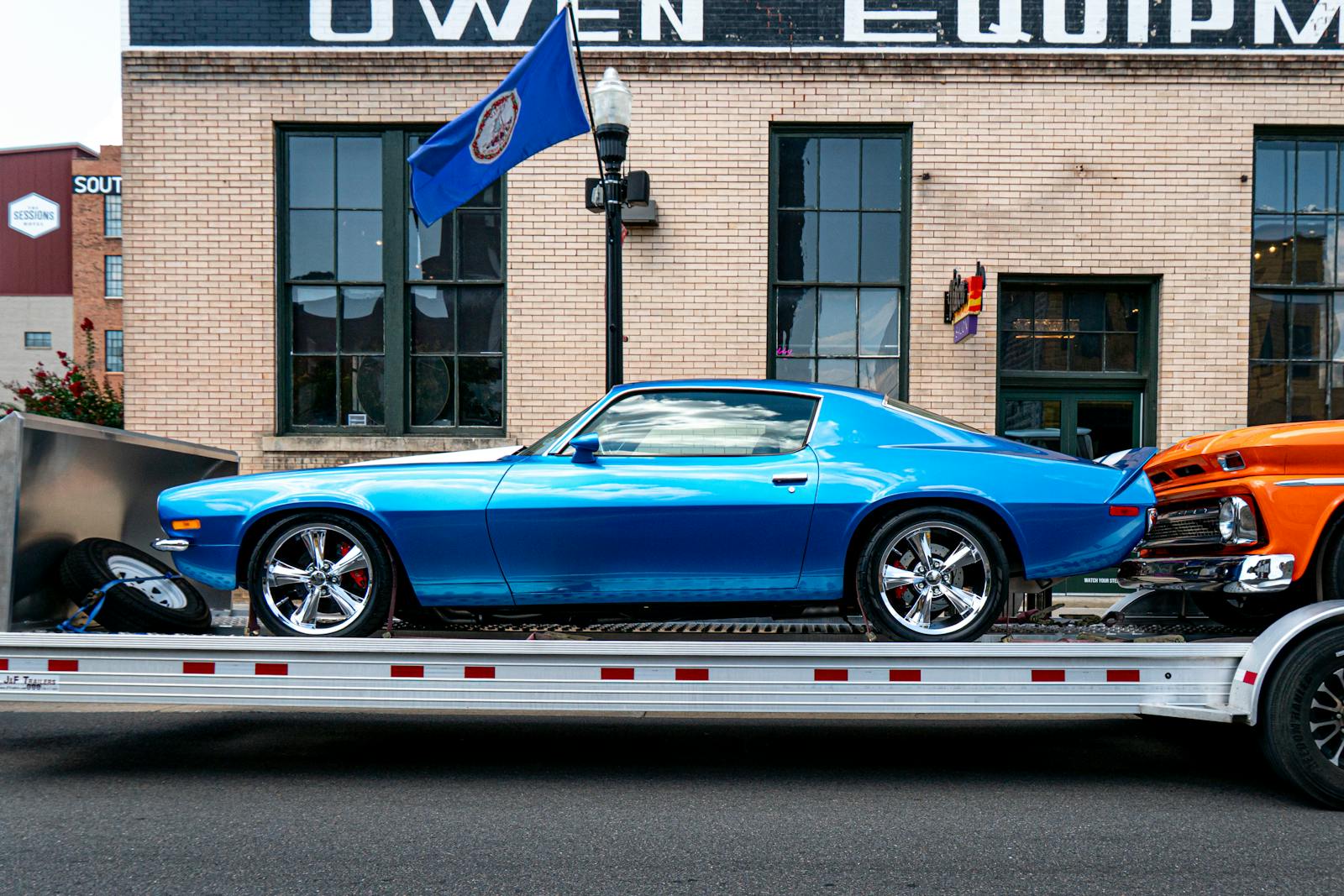

The trailer was still rocking a little when the dad hopped down, did that quick walk-around like he’d done a thousand times, and waved his son forward. Five years of nights and weekends had turned into this moment: the car finally sat there complete, wearing fresh paint and brand-new rubber like it knew it was about to be seen for the first time.
The son looked half excited, half terrified—hands on the wheel, shoulders stiff, eyes flicking between the mirrors and his dad’s hand signals. Everyone’s patience had been burned down to embers over the length of this build, but the last few months had felt like a sprint. Every “we’re almost there” had been followed by another parts run, another late delivery, another little argument over torque specs and “that’s how I’ve always done it.”
When the rear tires touched the ground and took weight, the dad actually smiled. Not a big one, but enough to say, We did it. The son eased it forward, the car crept off the trailer, and for about two hundred feet it was perfect—just the sound of an engine clearing its throat and the kind of rolling pride that makes people forget how much they fought to get there.
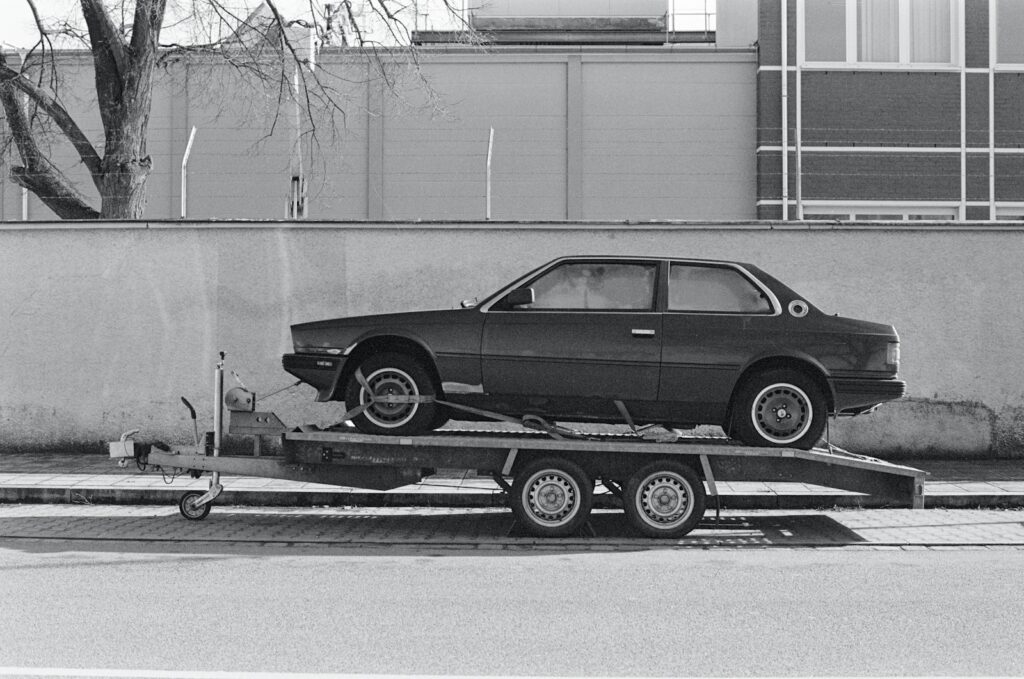
Five Years of “We’ll Finish It This Winter”
This was never supposed to take five years. It started like a lot of father-son builds do: a project car dragged home on optimism, then parked while life kept happening—work overtime, school stuff, money getting tight, money getting less tight, and the endless shuffle of “we’ll get back to it.”
The dad had the experience and the confidence. He’d rebuilt plenty of things in his day, and he had a way of talking that made a job feel smaller than it was. The son had the energy and the obsession, the kind where he’d watch teardown videos at midnight and show up the next day with new ideas and screenshots and a list of parts that “everyone says you have to upgrade.”
Over the years, the garage became a museum of half-finished progress. A pile of old parts in the corner. New parts stacked in boxes like unopened Christmas. A whiteboard with checklists that kept getting erased and rewritten because the plan kept changing, sometimes for good reasons and sometimes because someone got stubborn.
By the time the car was actually “done,” it had been assembled in phases, taken back apart, reassembled again, and then rushed through the last details under that weird pressure that comes right before a big moment. It wasn’t just a vehicle anymore. It was proof they could finish something together without it breaking them.
Loading Day: Pride, Nerves, and a Little Too Much Confidence
The final week was all adrenaline. Fluids got poured in. The engine fired and idled long enough to make both of them grin like kids. There were still tiny loose ends—an interior panel that wasn’t sitting right, a gauge light that flickered—but those felt like “later problems,” the kind you fix after you get a few miles on it.
They loaded it onto the trailer with the careful choreography that says no one wants to be the guy who scratches fresh paint on day one. The dad handled the straps and checked them twice. The son kept hovering, wanting to help but also not wanting to be the reason it slid wrong and crunched a fender.
On the way to the spot where they were going to unload, the dad couldn’t help himself. He started telling the same stories he’d told before—how back in the day they didn’t need fancy tools, how you could feel if something was right, how people overcomplicate things now. The son listened, but his jaw did that tight thing it does when he’s trying to stay respectful while his brain is screaming, Yeah, but we also don’t want to grenade the rear end on the first drive.
They pulled in, picked a straight stretch, and got into position like they’d rehearsed it in their heads a hundred times. The son climbed in, adjusted the seat, and took a breath that was way too deep for someone about to move at walking speed. The dad stood off to the side, arms crossed, calm as if the car hadn’t been a source of arguments for half a decade.
Two Hundred Feet of Glory, Then the Sickening Stop
At first it looked like every other successful unload. The car rolled down smoothly, suspension compressing and rebounding like it was relieved to be on asphalt again. The engine sounded clean, and the son’s face—visible through the windshield—finally relaxed.
Then it happened fast enough that it didn’t make sense. The rear end made a noise that wasn’t a bang exactly, more like a heavy metallic clunk followed by a grinding drag. The car lurched like someone had yanked the handbrake at speed, except they weren’t at speed—just creeping forward—and the sudden resistance made the whole car shudder.
The son’s hands snapped tighter on the wheel and his head jerked forward. He stabbed the clutch and the car still fought him, like the back wheels had decided they were done cooperating. The dad’s arms dropped from crossed to flailing in one motion, that universal “stop, stop, stop” gesture that looks the same in every driveway disaster since the beginning of time.
The car came to a dead stop with the rear tires scuffing instead of rolling. The smell hit next: hot metal and that sharp, unhappy scent of friction where friction should not be. The son killed the engine and just sat there for a second, frozen, like his brain needed a moment to accept that their first “drive” had ended before it even started.
The Immediate Blame Game (Because of Course There Was One)
The dad was the first one to reach the back of the car, crouching down like he could diagnose it by staring. He put a hand near the differential housing, then yanked it back because it was already getting warm. The son got out slower, eyes wide, and asked the question in the exact tone that makes dads defensive: “What was that?”
They tried the easy things first. Rock it a little. Check if a brake caliper was seized. Look for something obvious hanging or rubbing. Nothing looked dramatic from the outside, which somehow made it worse because the only other option was that something inside had gone wrong.
The dad muttered something about “new parts settling” and “it’ll loosen up,” but it didn’t have the sound of someone who believed it. The son didn’t buy it at all. He started doing that nervous pacing thing, walking ten steps away and back, like movement might keep him from saying the sentence that would start a real fight.
Eventually he said it anyway, careful but pointed: “The rear end was the last thing we touched. It was fine on jack stands. What did we do differently?” The dad bristled at the “we,” because in his head that meant “you,” and in the son’s head it meant “you.”
The Tear-Back-Down: Finding the Missing Crush Sleeve
There’s a special kind of misery to taking apart something you just finished. It’s not like normal repair work where you’re fixing a worn-out part; this was undoing fresh work with fresh paint still curing. Every bolt felt like an accusation.
They got it back onto the trailer and into the garage with the kind of slow, careful dragging you do when you’re scared of making it worse. The dad kept insisting they should “just check the brakes again,” but the son went straight for the differential like he’d already made peace with what he was going to find. Somewhere in those five years, he’d learned that the ugliest problems usually hide in the most expensive assemblies.
Once the cover came off and they started checking the pinion, the mood shifted. It wasn’t speculation anymore; it was evidence. The pinion preload was wrong in a way you could feel, not just measure—too tight, too angry, like the bearings had been forced into a life they weren’t designed for.
And then they found it: the crush sleeve wasn’t there. Not mangled, not installed wrong—just not installed at all, as if it had never existed in the plan. The son stared at the empty space like it was a prank. The dad went quiet in the particular way that means he’s mentally rewinding the job, trying to remember what he did and when.
The uncomfortable part wasn’t just that something had been missed. It was that a crush sleeve is one of those parts you don’t “kind of” forget. It’s not a clip that falls behind a bench. It’s a deliberate step in setting pinion bearing preload, the thing that keeps the whole setup from eating itself alive.
When the son finally asked, “Did you reuse the old one?” the dad didn’t answer right away. He just looked at the workbench, then at the tools, then at the pile of leftover parts like the sleeve might materialize out of guilt. The son’s face hardened as the possibilities narrowed to the one that hurt the most: somebody had decided it wasn’t necessary.
They didn’t have a cinematic blowup right then, not in the way people imagine. It was worse—two people standing over an open differential, realizing the car had made it two hundred feet because pride had outrun procedure. The dad kept saying it could’ve happened to anyone, that it was a simple oversight, but the son couldn’t stop hearing all the times he’d been told not to overthink it. The car sat there half-disassembled again, and the real lockup wasn’t the rear end anymore—it was the silence between them, heavy with the question neither one wanted to say out loud: if the easy, critical part got skipped, what else did they “feel” their way through?
More from Steel Horse Rides: