


Ford and Honda together accounted for roughly 59.5% of every vehicle recalled in the second quarter of 2026 — Ford alone recalled 4,101,255 vehicles across 28 separate campaigns, and Honda added another 2,530,006 vehicles across five campaigns, according to a quarterly recall analysis of NHTSA data covering roughly 11.1 million total vehicles recalled that quarter. Add Chrysler’s 1,692,317 vehicles across 14 campaigns, and the top three manufacturers alone made up 74.7% of everything recalled in the entire industry that quarter.
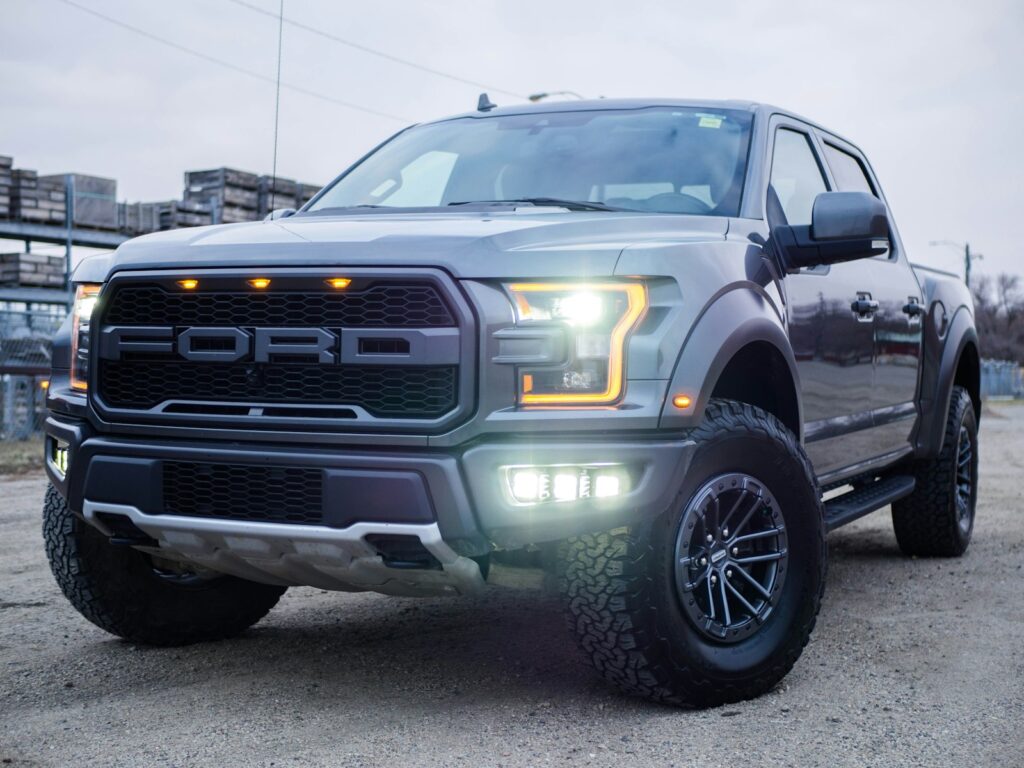
The Split Between Two Very Different Approaches
What’s notable isn’t just the volume, it’s how differently the two leaders got there. Ford spread its 4.1 million-vehicle total across 28 distinct campaigns, an average of roughly 146,000 vehicles per campaign — consistent with a manufacturer issuing a high number of narrower, more targeted fixes. Honda hit a similar overall vehicle count with just five campaigns, an average of more than 500,000 vehicles each, which typically signals a defect traced to a component or software platform shared across a much wider range of models and model years at once.
Powertrain Problems Lead the Pack
Component-by-component, the data shows powertrain issues as the single largest defect category of the quarter, affecting 2,295,897 vehicles — about 20.6% of everything recalled — ahead of structural issues (1,589,269 vehicles, 14.26%), air bags (1,268,091 vehicles, 11.38%), steering (1,077,231 vehicles, 9.67%), and tires (1,049,883 vehicles, 9.42%). Powertrain defects can mean anything from a transmission that can unexpectedly shift out of park to an engine component with a fire risk — the category covers some of the more serious mechanical failure modes tracked by NHTSA’s recall database, which remains the authoritative public record for every campaign referenced here.
Software Fixes Are Getting Rarer, Not More Common
Here’s the detail that cuts against the assumption that recalls are increasingly handled with a simple update pushed overnight: only 3.1% of the vehicles recalled in Q2 2026 qualified for an over-the-air fix, per the same analysis. That’s a sharp drop from Q1 2026, when nearly half of recalled vehicles were OTA-eligible. In practical terms, that means more than 94% of the roughly 11.1 million vehicles caught up in a Q2 recall required an actual dealership visit — a physical inspection, a part replacement, or hands-on repair work that can’t be resolved by downloading anything.
Ford’s Recall Volume Isn’t a One-Quarter Story
Zooming out, Ford’s Q2 numbers fit a pattern that shows up across 2026 more broadly. A separate review of NHTSA recall filings by The Crash Report found Ford filed 60 recall campaigns across 2026, more than double the pace of second-place Chrysler, and traced the bulk of that volume — 96.7% by the outlet’s count — back to Ford’s 2013–2020 design generation rather than its newest models. That lines up with what the Q2 snapshot shows: this isn’t a brand-new defect appearing out of nowhere, it’s an older platform generating a steady stream of campaigns as more failure modes surface with age and mileage.
What This Means If You Own a Ford or Honda
If you drive a Ford or Honda built in roughly the last decade, the odds that your specific VIN was touched by one of these campaigns are real, and the fix almost certainly isn’t going to arrive as a software update — it’s going to require an appointment. The fastest way to check is NHTSA’s own VIN lookup tool, which pulls directly from the same recall database this data comes from and tells you in seconds whether your specific vehicle has an open, unrepaired campaign. Recalls are free to fix by federal law regardless of your car’s age or mileage — the only cost is the time it takes to book the appointment.
The Bigger Picture
Two manufacturers producing roughly six out of every ten recalled vehicles in a single quarter isn’t necessarily a sign that Ford and Honda build less reliable cars than everyone else — it’s partly a function of how many vehicles they have on the road to begin with. But the shrinking share of OTA-eligible fixes is a genuine trend worth watching: as software-defined vehicles were supposed to make recalls faster and cheaper to resolve, the data for this quarter is moving in the opposite direction, back toward the dealership bay.