Ford Recalls 4.4 Million Vehicles Over Potential Brake Failure Crash Risk
Photo by Alfo Medeiros
Madison Cates
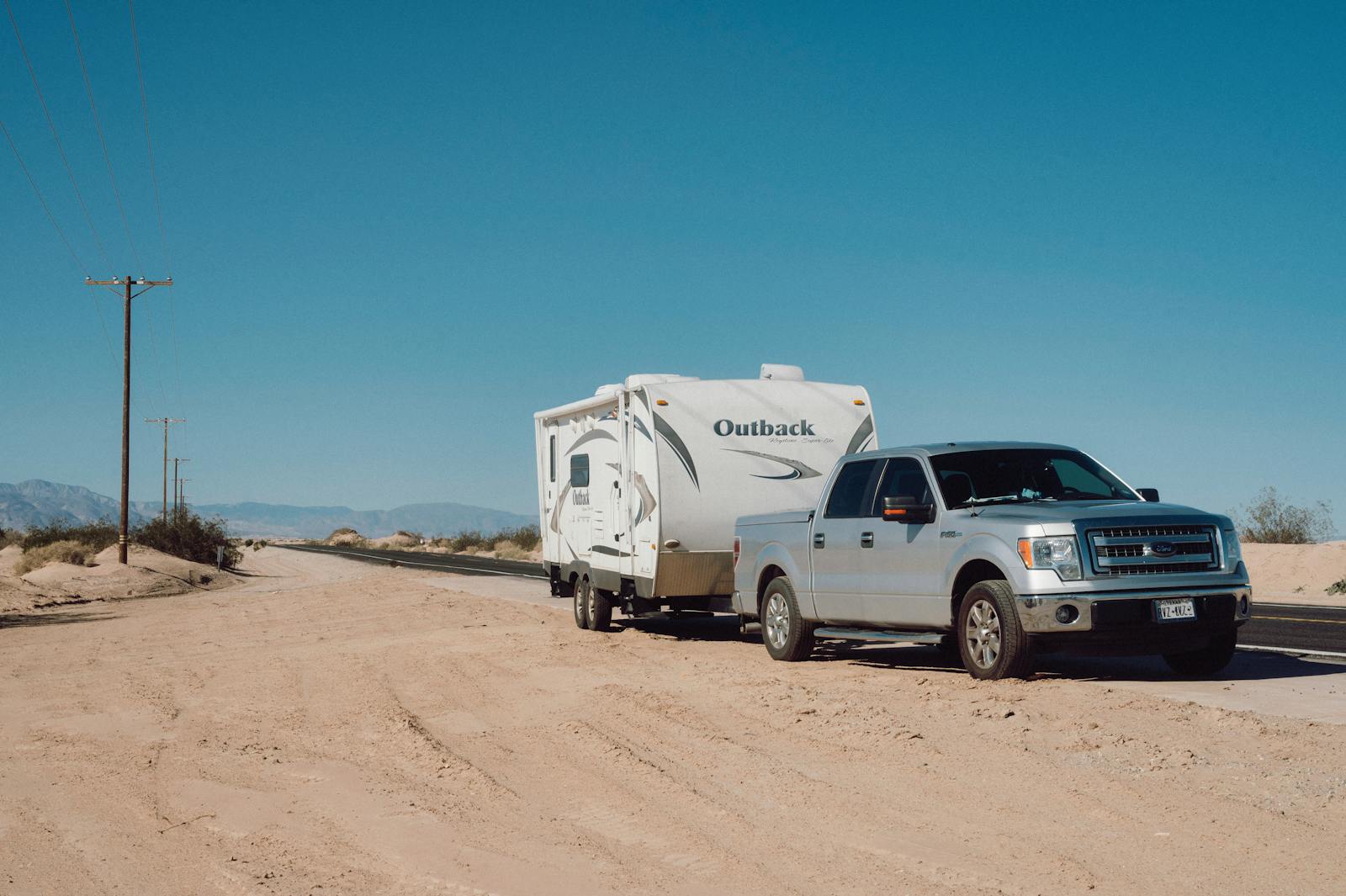
Ford is recalling approximately 4.38 million trucks, SUVs, and vans in the United States over a software defect that can knock out trailer brakes and lights while towing. The recall, announced in late February 2026 and confirmed by Ford, covers seven nameplates spanning the 2022 through 2026 model years, making it one of the largest safety campaigns the automaker has ever launched.
The defect sits inside the Integrated Trailer Module, a controller that manages communication between the tow vehicle and the trailer’s braking and lighting systems. Faulty software can cause the module to intermittently lose that connection, meaning brake commands from the truck may never reach the trailer and rear trailer lights can go dark without warning. For anyone pulling a loaded boat, camper, or work trailer, the result is a heavy, unbraked load pushing the vehicle forward, particularly dangerous on downhill grades or in stop-and-go traffic.
Ford told CBS News that drivers may see trailer-fault warning lights or messages on the instrument cluster when the glitch occurs. As of March 2026, the company has not reported any crashes or injuries tied to the defect, according to its recall filings.
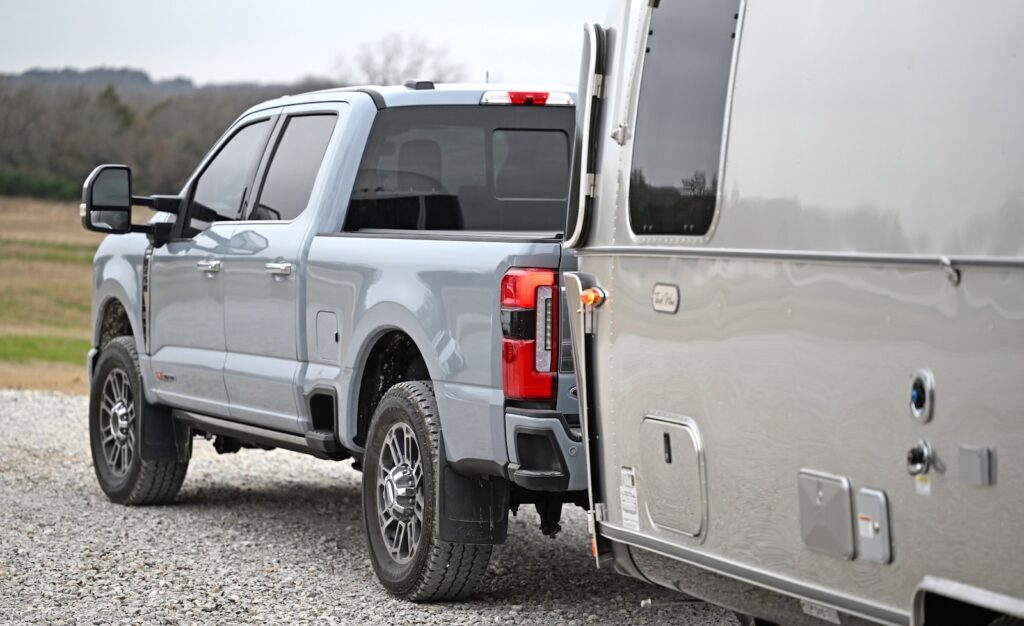
A silver truck parked on a gravel road
Which vehicles are covered
The recall spans Ford’s core towing lineup. The bulk of affected vehicles are F-150 and Super Duty pickups (F-250, F-350, F-450, and F-550), but the campaign also pulls in the Expedition, the Lincoln Navigator, and the compact Ford Maverick. A detailed breakdown of the filing counts roughly 412,000 Mavericks from the 2022 through 2026 model years alone.
The Courier-Journal reported that the recall campaign is formally titled “Trailer Lighting and Brakes May Not Function,” and that NHTSA documents cite a potential loss of brake functions on the trailer side as the primary safety concern. Owners of work-focused Super Duty trucks, many of whom haul equipment, livestock trailers, or heavy flatbeds daily, face the most acute risk simply because their trailer loads tend to be heaviest.
Importantly, the defect lives in the tow vehicle’s module, not in the trailer itself. That means every affected truck or SUV carries the risk regardless of what brand or type of trailer is hitched to it.
How Ford plans to fix it
Ford says the remedy is a no-cost software update that recalibrates the Integrated Trailer Module to maintain stable communication with the trailer. Owners of newer, connected vehicles may receive the patch over the air; everyone else will need to visit a dealership. According to reporting on the filing, Ford expects the full software rollout to be complete by May 2026.
Notification letters are expected to go out on a rolling basis through spring 2026. In the meantime, Ford and safety regulators recommend several steps:
Check your VIN now. The NHTSA recall portal lets owners search by VIN or license plate to confirm whether their vehicle is included.
Watch for warning lights. Any trailer-fault message on the dash should be treated seriously. If it appears while towing, pull over safely and disconnect the trailer until the update is installed.
Contact your dealer. Owners who tow frequently and cannot wait for an over-the-air patch should schedule a dealer appointment as soon as the fix becomes available in their region.
The bigger picture for Ford
A recall of this scale is rare for any automaker. For context, Ford’s 2024 Takata airbag-related recalls and its repeated campaigns on Super Duty trucks have already tested owner patience. This latest action landed just weeks after Ford leadership touted quality improvement bonuses internally, a timing contrast that has not gone unnoticed by industry observers.
Still, the fact that the fix is software-based rather than a physical part replacement means Ford can move faster than it could with a hardware recall of comparable size. Whether the rollout actually hits the May 2026 target will be a telling measure of whether the company’s quality push is more than talk.
More from Wilder Media Group: