
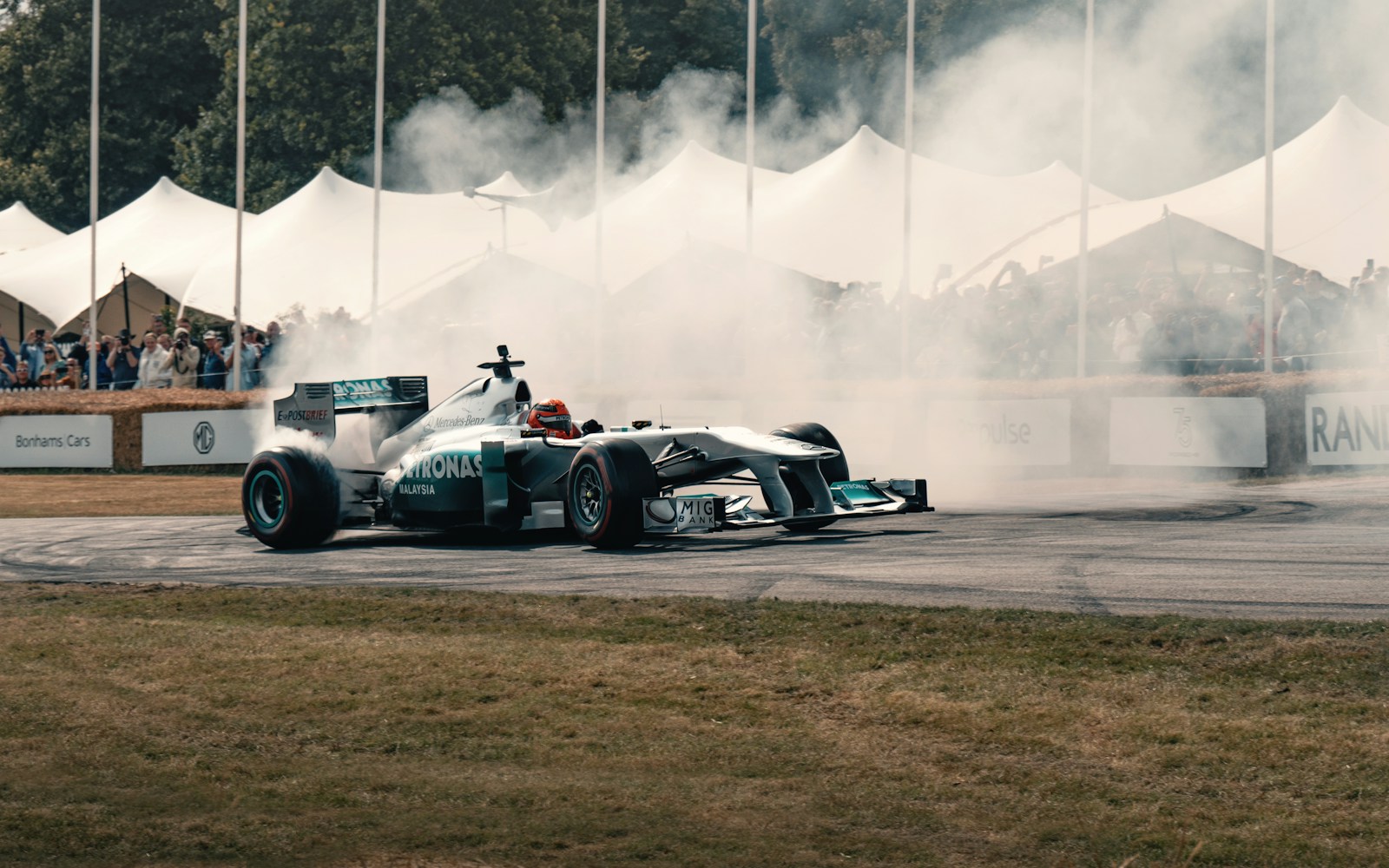

Formula 1 debuts a brand-new 5.414-kilometer street circuit in Madrid this weekend, and drivers who have already walked and driven it are calling the layout a “car killer” days before a single competitive lap counts, according to comments made at a pre-race press conference and Formula One’s own circuit guide for the new track, known as Madring.
Key Points
- Madring runs 22 corners across 5.414 km, with the Spanish Grand Prix set for 57 laps and a 308.399 km race distance, per Formula1.com‘s own circuit guide.
- The signature feature, La Monumental, is a 550-meter banked corner with gradient banking as steep as 24% — a design more common in oval racing than a modern F1 street track.
- Turn 8 combines an elevation change with a blind apex, and cars are expected to top 340 kph on the longest straight before the track narrows into a tight, wall-lined final sector.
- Several of the circuit’s heaviest braking zones sit at an angle rather than in a straight line, meaning a driver braking for the corner is also already turning the wheel — a layout Max Verstappen said at a press conference makes it “probably a car killer” and effectively rules out a conventional overtake under braking.
Verstappen wasn’t the only driver flagging the circuit’s difficulty. Fernando Alonso told reporters at the same press conference that the track has “a lot of kerb riding” and high-speed sections that run drivers close to the walls, comparing the sensation to Jeddah. Gabriel Bortoleto called it “a very challenging track” full of “blind corners and banking, up and down,” while Valtteri Bottas described Madring as feeling like “a combination of Saudi and Baku,” according to the FIA’s official press conference transcript from Spanish Grand Prix week.
Why the Layout Worries Drivers
A street circuit built partly on public roads and partly on new permanent asphalt has to compromise somewhere, and Madring’s compromise shows up in exactly the corners drivers brake hardest into. Straight-line braking zones let a driver trail-brake and still have the front tires pointed mostly forward if something goes wrong; an angled braking zone means the car is already loaded sideways the moment something does. Combine that with a banked corner steep enough to belong on a speedway, a blind apex over a rise, and walls that close in through the final sector, and the track is asking a Formula 1 car to do several unrelated hard things back to back with almost no margin for a mistake.
What Happens This Weekend
None of that guarantees carnage — plenty of circuits earn a scary reputation in preview week and race clean once drivers learn the sight lines. But a brand-new track gives teams no historical setup data, no prior tire-wear numbers, and no video library of where cars actually go off. Madring is getting all of that information live, in front of a global audience, during the one weekend nobody involved gets to run a practice session over.