
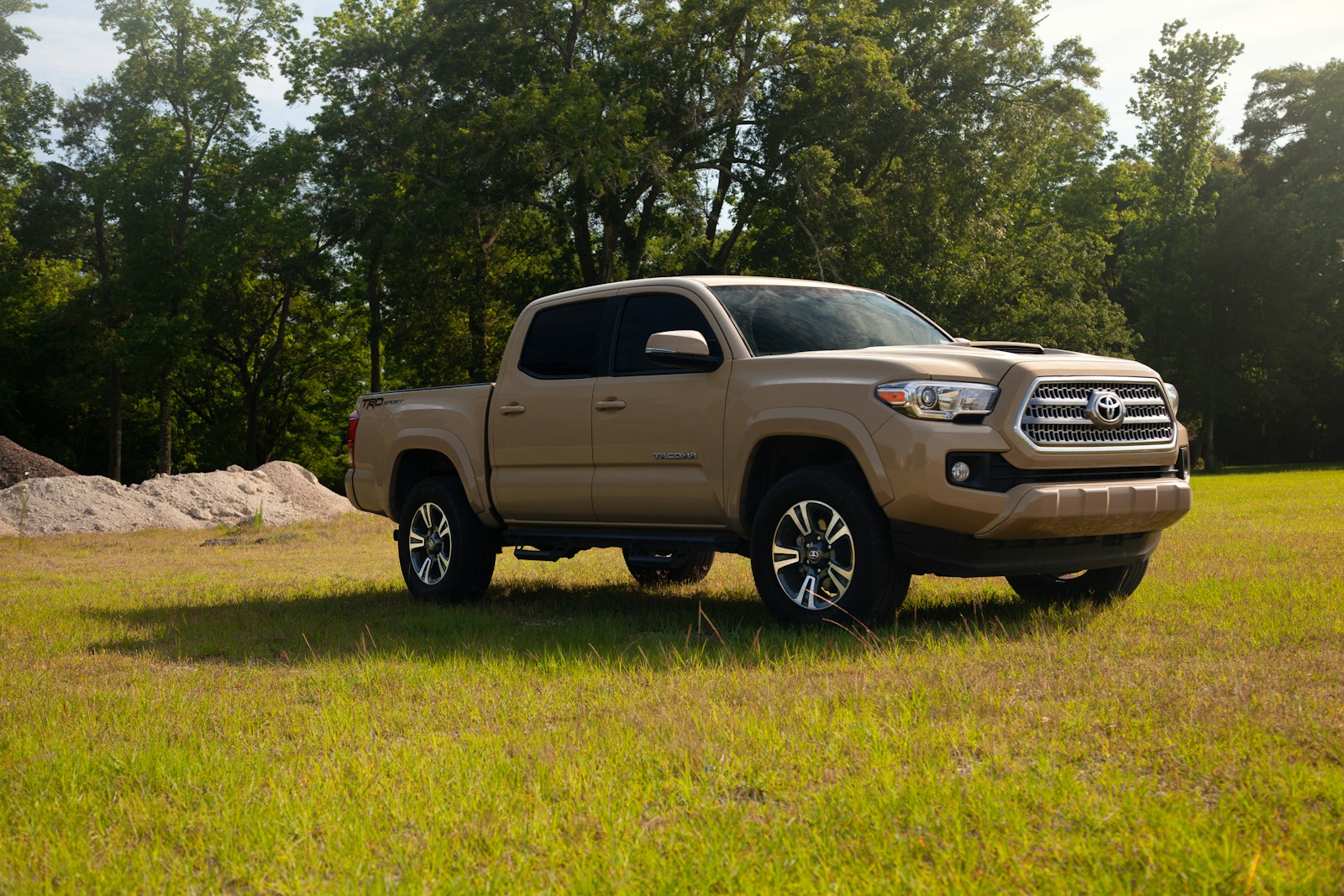

He’d always been the “sure, take it” boyfriend, the kind who tossed his keys in a bowl by the door and didn’t keep mental score. His truck wasn’t anything exotic, but it was his pride: lifted a little, clean cab, decent tires, the one purchase he’d made before the relationship that still felt fully his. So when his girlfriend asked to borrow it on a Saturday afternoon because her car was “making that noise again,” he didn’t even blink.
She said she was just running errands—pharmacy, grocery store, maybe swing by her sister’s to drop off some stuff. The usual. He was half-watching a game and half-fixing a leaky faucet when she left, and he barely registered the door closing until the house got quiet and he realized she’d taken his good sunglasses too.
Two hours later, his phone lit up with her name. He expected a quick “what aisle is the peanut butter in” type call. Instead, he got this thin, shaky voice saying, “Don’t be mad,” and in the background there was traffic noise and something like a car alarm that wouldn’t quit.
The call that didn’t match the story
She told him she’d “barely tapped” something and the truck “just slid.” It was raining, she said, the roads were slick, and someone cut her off. He asked where she was and she hesitated long enough for him to sit up on the couch. “Near the grocery store,” she said, which was vague in a way she never was when she was genuinely annoyed about parking.
He asked if she was okay. She said yes, but then started rushing through details like she was reading them off a script: she wasn’t hurt, the other driver wasn’t hurt, police weren’t needed, everything was under control. Then she blurted, “Can you come get me? Like… right now?”
When he pulled up, the scene didn’t look like a “barely tapped” anything. The truck’s front end was crumpled into a low concrete divider outside a strip mall, airbag deployed, hood bent like someone had folded it. She was standing on the curb hugging her arms, hair messed up, mascara starting to smear, and she kept looking past him like she was waiting for someone else to appear.
He took one look at the damage and asked, quietly, “What happened?” She started talking faster, saying she turned too sharply, the brakes didn’t catch, the tires hydroplaned. None of it really lined up with the angle the truck was sitting at, but he didn’t know enough to argue from a curb in the rain.
“Please don’t call insurance”
He did what most people would do: asked for her license and the insurance card and started calling around for a tow. That’s when she grabbed his wrist—harder than he expected—and said, “No. Don’t call them. Please.” Not “wait,” not “can we talk first,” but this immediate, panicked plea like he was about to set off an alarm.
He thought at first she meant his rates. He told her that’s what insurance is for, and he couldn’t exactly just leave his truck folded in half against a divider. She shook her head and said, “I’ll pay for it. I’ll figure it out. Just… don’t report it.”
That’s when his stomach dropped in a different way. People don’t beg like that over premiums. He asked if she’d been drinking, and her face flashed with offense too quick to be real. “No,” she said, then added, “I swear.”
He started going through possibilities—license suspended, no coverage, hit-and-run. She kept cutting him off with, “It’s not like that,” but she wouldn’t say what it was like. Every time he tried to step away to make a call, she inched closer, like she was afraid he’d talk to someone who’d ask the wrong question.
The missing pieces start showing up
While they stood there, a guy walked out of a nearby storefront, glanced at the truck, then did this awkward half-turn like he’d realized he’d stepped into someone else’s fight. He wasn’t dressed like a tow driver or an employee, just jeans and a hoodie, hands in pockets. The girlfriend’s eyes flicked to him and then away so fast it might’ve been a reflex.
The boyfriend noticed, because of course he did. He asked, “Who’s that?” She said, “Nobody,” with the same tone she’d used earlier when she said “near the grocery store.” The guy lingered by a pillar like he was waiting for permission to exist, then looked at her again, and it hit the boyfriend that this was the person she’d been glancing for when he arrived.
He walked over to the guy and asked, calm but tight, “Were you in the truck?” The guy gave a quick, guilty shrug that wasn’t a yes or no, just a silent confession that he didn’t want to talk. Before he could answer, the girlfriend rushed over and snapped, “Stop. Don’t.”
Now it was a triangle on the wet sidewalk: the boyfriend staring between them, the girlfriend shaking her head like she could undo time, and this stranger suddenly very interested in his shoes. The boyfriend asked her, “You told me you were running errands. Who is he?” She said, “It’s not what you think,” which didn’t help, because it never does.
The lie changes shape in real time
She tried to explain it like it was harmless. She said she’d bumped into an “old friend” and offered him a ride because his car was in the shop, and she didn’t want the boyfriend to “overreact.” The boyfriend asked why she’d lied about where she was going, and she said she didn’t lie, she just “didn’t give details.” That’s the kind of argument people make when the truth is already out and they’re trying to salvage language.
He asked where they were actually headed. She said “just around,” then “to grab food,” then “to talk,” all in the span of thirty seconds. The guy finally muttered something about them going to “the lake,” which was nowhere near her supposed errand route and definitely not a place you end up by accident in the middle of a rainy afternoon.
The boyfriend’s voice stayed weirdly controlled, which almost made it worse. He asked, “So you took my truck to go hang out with him at the lake, you crashed it, and now you’re begging me not to tell insurance. Why?” She pressed her hands together like she was praying and said, “Because if you report it, they’re going to ask questions. And I… I can’t have that.”
He asked what she meant. She started crying, then immediately got stern again, like she was trying to flip to a different emotion that might work better. She said the guy “isn’t supposed to be in the country right now,” or maybe “doesn’t have papers,” she wasn’t even consistent, just throwing out fragments as if one of them would make the request sound reasonable.
What he learns without anyone saying it
The boyfriend didn’t suddenly become an immigration lawyer or a private investigator, but he could read the room. The fear wasn’t about a deductible; it was about names and reports and official attention. The guy stayed quiet, eyes wide, like he’d been yanked into a mess he didn’t understand until the airbags went off.
The girlfriend kept repeating, “Please, please,” and grabbed at the boyfriend’s jacket like he might physically walk away and leave her consequences behind. She promised she’d get the truck fixed, she’d pay out of pocket, she’d do anything. She also kept slipping in little lines like, “You know I love you,” and “Don’t do this to me,” as if he was the one pulling the pin.
He asked her one last time to tell him the truth—where she was going, who the guy was, why she’d lied before the crash. She stared at him for a long beat, then said, “I can’t,” and that was its own answer. In that moment it wasn’t even about the truck anymore; it was about the fact that she’d rather let him stand in the rain with a totaled front end than say a sentence out loud.
He called a tow anyway. Not dramatically, not with a speech, just stepped a few feet away and made the call like a person who realized he was the only adult left in the situation. She didn’t scream, but she did this low, broken sound and started bargaining again, saying she’d pay him back, she’d quit her job if she had to, she’d make it right—anything except letting the story become official.
By the time the tow truck arrived, she’d moved from begging to accusing, telling him he was ruining her life, that he didn’t understand, that he was being cruel. He stood there soaked, watching his truck get winched up, thinking about how easy it had been for her to grab his keys and how hard it was for her to admit who she’d been with.
And the mess he couldn’t shake wasn’t the repair bill or the insurance call—it was the way she’d looked at the stranger first when the crash happened, like he was the person she needed to protect, and the way she’d only looked at her boyfriend when she needed him to clean it up.