

There is a certain kind of magic when an old car turns over after sitting. A crew from @car.culture_co found out just how much, when they put a battery in a 1964 Chevy Corvair and tried it in a parking lot.
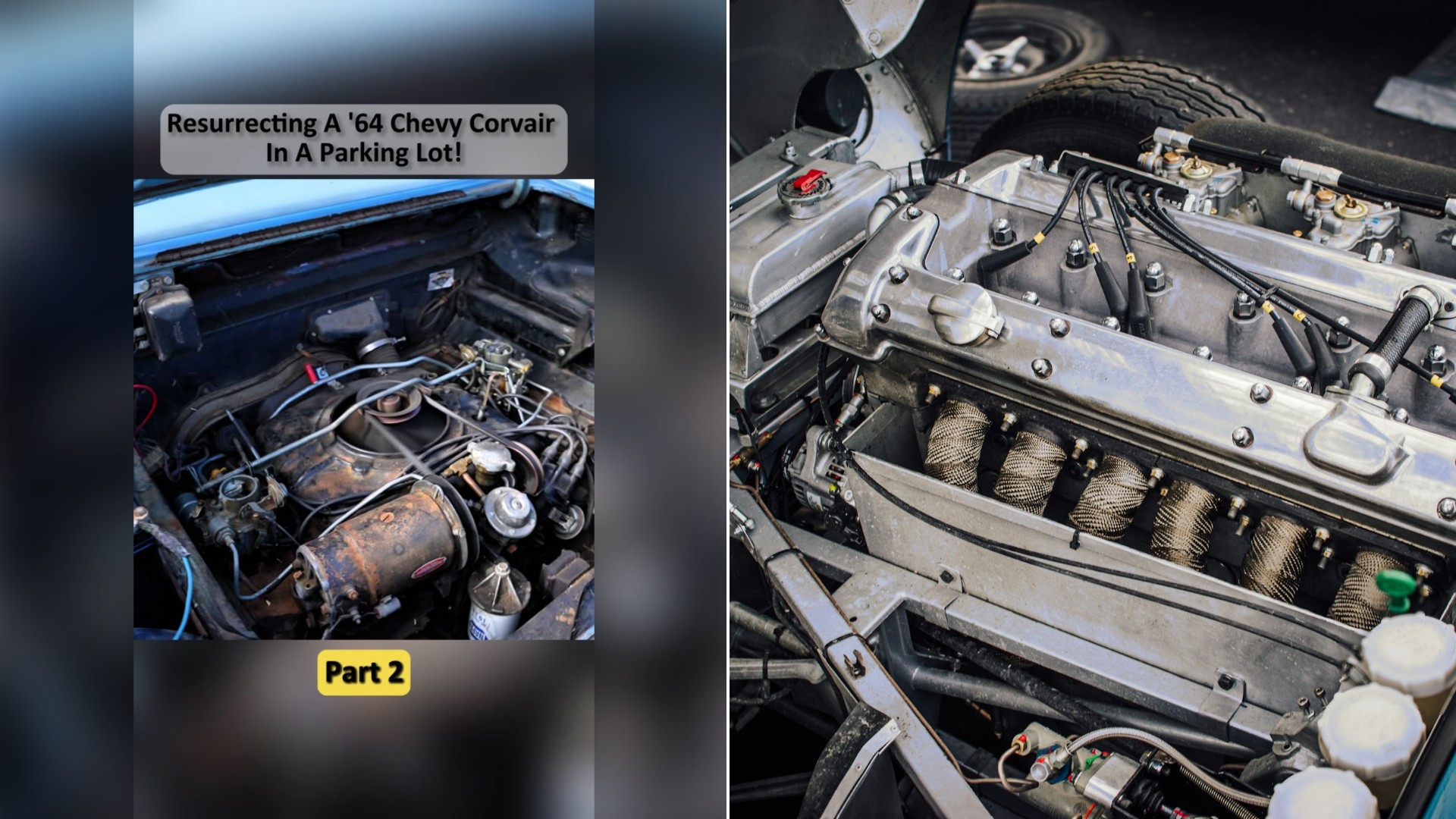
They say they touched nothing else. The car started, it idled, and a few moments later it was rolling.
@car.culture_co
It was not pretty, and it did not run perfectly. But for a 1964 car that had been sitting, it was a surprising start.
“I’m Actually Kind Of Dumbfounded Right Now That It Started That Easily”
The first thing the crew noticed was the smell. One of them says the car “reeks like old gas” and calls it “smelly, bad gas.”
The sound was another story. “It’s funny. It doesn’t seem to be running that bad,” one says, and another adds, “Sounds kind of cool.”
That sound comes from the engine layout. The Corvair has an air-cooled flat six, and one of the guys says he had never touched one or driven one before.
“I feel like we’re cheating,” he says, “but we’re trying to do it as hard as possible.”
The Float Sticks, Fuel Bubbles Out, And A Knock Fixes It
The easy start did not last long without a hiccup. Someone spots fuel and calls out, “Hey, you got a fuel leak!”
The crew figures out that the float in the carburetor is stuck, which is why fuel is bubbling out. A knock on the car got it moving, and they say that worked. “Sometimes you can get away with just knocking on the car.”
It is a classic problem with an old engine that has been sitting. The float controls how much fuel enters the carburetor, and if it sticks, fuel can overflow and flood the engine.
“That was too easy,” one says. “Now we should just see if it moves.”
First And Second Gear Work, And The Brakes “Actually Feel Pretty Good”
With the engine running, the crew checked the next big question, which was whether the car would go. The driver tried reverse and tested the brakes, and he says the car would stop fine.
They reported getting through first and second gear. The driver guesses first gear is unsynchronized, meaning it does not have the helper mechanism that smooths the shift and lets you change gears without crunching.
Asked whether he would take it on a trip, one says he doesn’t see why not. “Brakes actually feel pretty good,” another says.
They were quick to say the car was not fast. “It’s very slow,” one says, estimating that it makes maybe 100 crank horsepower. Another jokes, “Dude, look at our drag strip.”
“Be Really Funny If Someone Called The Police” For Driving Circles In A Corvair
The crew took a few laps around the lot, hoping some fresh gas running through would clear things up. One of them jokes that it would be really funny if someone called the police, because they were just driving circles in a Corvair in a parking lot.
As they ran, the car sounded like it was hitting on all six cylinders. Then the driver says he has a “tickling suspicion” the carburetor flooded again.
“I know my car. I know when she’s flooding,” he says, and predicts it will be a repeating problem. He adds that the car is loud, and says he is “kind of afraid we’re gonna get in trouble.”
What Makes The Corvair Different From Other Cars Of Its Era
The Corvair was built by Chevrolet from 1960 to 1969. It stood out because its engine sat in the back and was cooled by air rather than liquid, so there is no radiator and no coolant to leak.
That layout is why the engine sounds so different from the V8s most people picture when they think of a classic Chevy. It also explains why the crew sounded so intrigued by it.
The Corvair was also the subject of much debate in the 1960s. Consumer advocate Ralph Nader criticized the early models in his 1965 book “Unsafe at Any Speed,” and the car’s reputation has been argued over ever since. Many owners love them for their looks and their unusual engineering.
Waking Up A Car That Has Been Sitting
This Corvair’s quick start is a fun story, but it also shows a few lessons that apply to any car that has been parked for a long time.
- Old gasoline goes bad. The crew noticed the smell right away, and stale fuel can gum up a carburetor and cause a stuck float.
- Test the brakes before anything else. Brake parts can rust and seize when a car sits, so check them first.
- Go slowly. The crew drove laps in a lot rather than heading onto a road, which is a sensible way to test an unfamiliar car.
- Expect problems to repeat. A flooding carburetor will usually need real attention, not just a knock on the fender.
The crew’s final word is a mixture of amusement and caution. The car runs, it stops, and it moves under its own power, yet they expect the flooding to come back.
For a 1964 Corvair that had apparently been asleep, getting it going with only a battery was an impressive start.
More Stories You May Like
- Two Door 1995 Chevy Tahoe With A Five Speed Manual And 298,000 Miles Still Sells For $9,300 After Staying With Its Original California Owner Until This Year
- 1995 BMW M3 With 147,000 Miles Sells For $16,000 On Its Third Trip Through Bring A Trailer, After Selling There In February 2022 And Again In June 2025
- Race Car Bought As A Non Running Project In 1988 Was Raced Up And Down The East Coast, Then Sat In Storage About 25 Years Before Selling For $24,000