
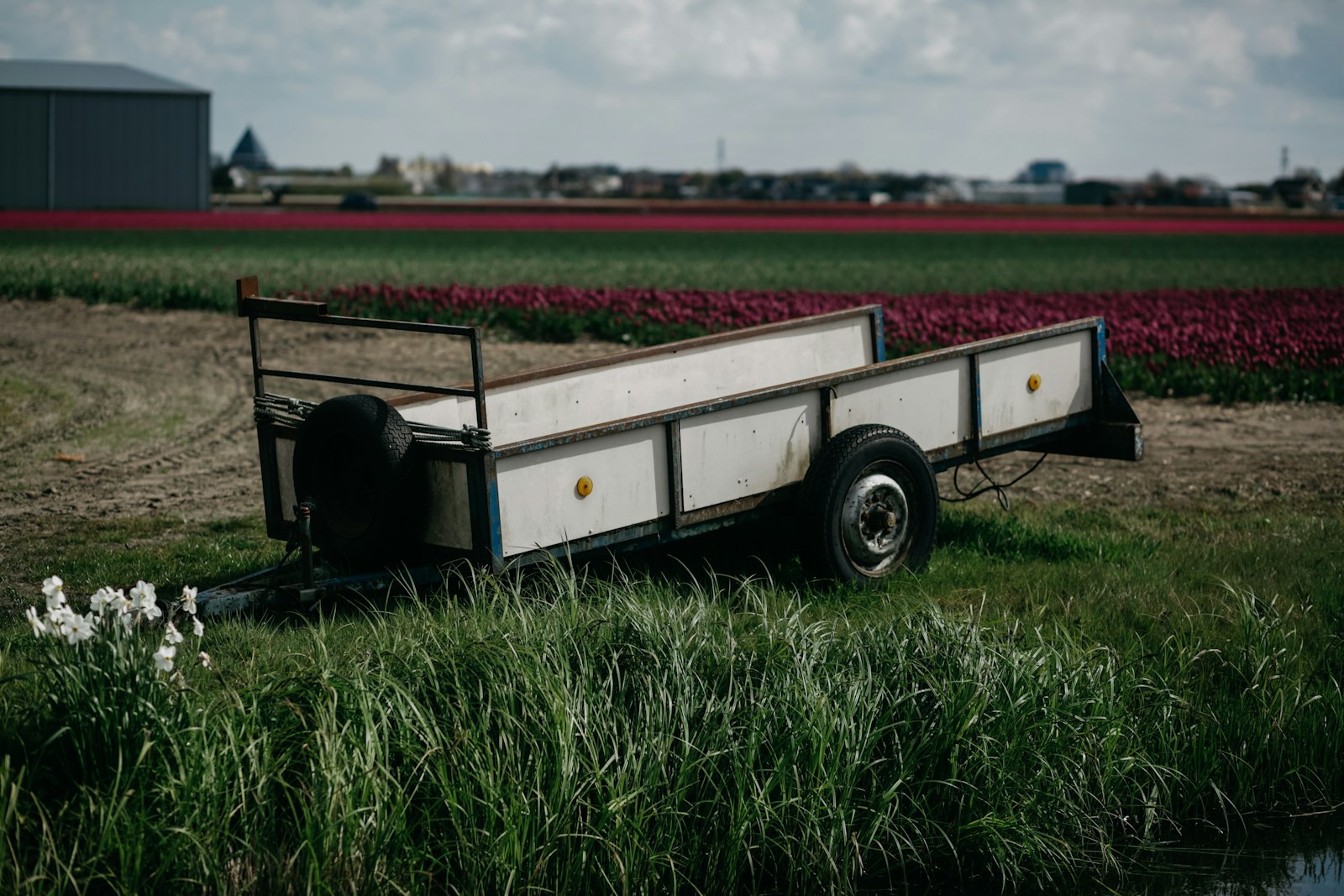

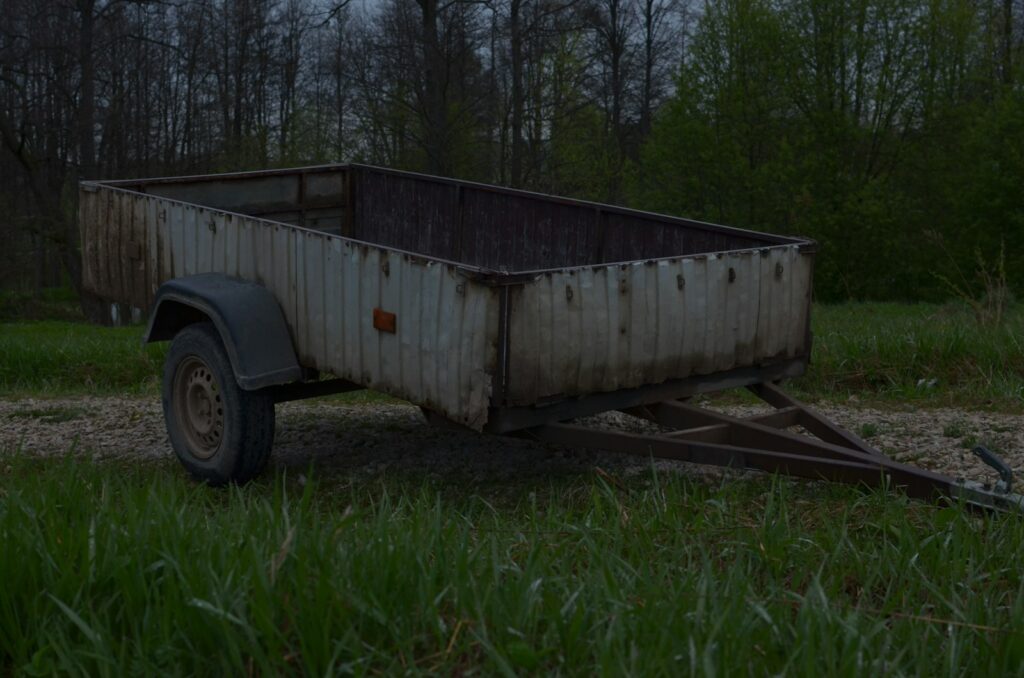
He was doing the kind of errand that feels too small to deserve drama: half-ton truck, little lawn trailer behind it, early afternoon light turning the flat land outside Amarillo into a big, washed-out postcard. The trailer was loaded with a riding mower and a couple gas cans bungeed in like they always were. Nothing crazy, nothing heavy enough to make a modern pickup sweat.
About twenty minutes into the drive, the truck started talking back. It wasn’t a clunk or a thump you could blame on the trailer—this was a thin, steady whine that rose and fell with speed, like a distant siren that kept getting closer no matter what lane you were in. He turned the radio down, waited for it to go away, then waited for it to turn into something he could ignore.
Instead, it sharpened. The whine stretched into a howl, the kind of sound that makes your shoulders tense even if you don’t know what it is yet. He glanced at the trailer in the mirror, saw it tracking straight, and felt that sick little math in his head: if it’s not the trailer, it’s the truck, and if it’s the truck it’s probably expensive.
The
noise that wouldn’t quit
He did the usual checklist while still rolling. Light brake pressure—no change. Slight weave in the lane—no change. Let off the gas and coast—different pitch, same angry note, like the noise was happy to follow him into any driving style he picked.
There was a moment where he almost convinced himself it was road noise, maybe that stretch of rough pavement that always sounds like a wheel bearing dying. But he’d driven this route enough to know what the road sounded like, and this was new. New noises in a drivetrain have a way of feeling personal, like the vehicle is accusing you of something.
He called the guy he was headed to meet—the one who’d asked him to haul the mower over—because there was no chance he’d show up on time now. The call was half explanation, half denial: “Something’s whining in the back end, I’m pulling off.” The other guy did that thing people do when they don’t want to deal with your problem: a quick “yeah, okay,” followed by a suggestion that it was “probably just the trailer.”
Shoulder stop, West Texas edition
He eased onto the shoulder, and the second the truck dropped to idle, the howl didn’t just fade. It sort of… unraveled, like something spinning inside had lost its smoothness and was now grinding through its last good moments. The truck rocked slightly as he shifted into park, and for a second he stared at the shifter like it had betrayed him.
Stepping out was that familiar mix of heat, wind, and semi-truck buffet that makes every roadside inspection feel like a stunt. He did the walk-around anyway, hand hovering near the trailer coupler, eyes scanning for anything obvious—flat tire, blown shock, some strap flapping. Everything on the trailer looked annoyingly normal.
Then he crouched near the rear axle of the truck, and the smell hit him: hot gear oil with that burnt metallic edge. Not “a little warm,” but “something in there is cooking itself” hot. The diff housing looked wet around the cover seam, like it was sweating oil under pressure, and that’s when he stopped thinking about whether he’d make the drop-off and started thinking about whether he’d make it off the shoulder.
The gamble: limp it or tow it
He got back in, windows down, and rolled forward a few feet just to see if the noise changed. It did—worse immediately—like he’d just reminded the rear end that it was supposed to be turning. He could feel vibration through the seat now, that low-frequency shudder that makes you imagine gears chewing themselves into confetti.
He killed the engine and sat there, watching trucks blast past, weighing the dumb options. The next exit wasn’t far, but “not far” on a failing differential can be the distance between “new bearings” and “new axle housing.” He texted a buddy who worked on his own stuff and got a reply that was basically: don’t drive it if it’s howling, you’re going to scatter it.
So he did what everyone hates doing: he called for a tow, explained he had a trailer, and listened to the dispatcher pause like he’d told her he was hauling a piano full of bees. While he waited, he unhitched the trailer as a precaution, because the thought of the truck locking up and dragging that lawn trailer sideways into traffic was enough to make him sweat through his shirt.
Diff cover autopsy
The tow driver showed up with that calm, bored competence that only comes from seeing every kind of roadside stupidity. He walked around the truck once, squatted by the rear end, and said something like, “That’s not a wheel bearing.” Not judgmental, just factual, which somehow felt worse.
They got it to a small shop on the edge of town, the kind of place with gravel out front and a sun-faded sign that’s been promising “ALIGNMENTS” since the late ’90s. The owner didn’t overpromise; he listened, nodded, then asked one question: “How long you been hearing it?” When the truck owner said “like… today,” the owner gave him a look that said today might’ve been the first day he noticed, not the first day it started.
When they pulled the diff cover, the shop’s fluorescent lights turned the inside into a horror display. The gear oil didn’t pour out so much as it slumped, thick and glittering, like someone had mixed graphite into syrup. The magnet in the cover looked like a chia pet made of metal fuzz.
Then the guy reached in with a pick and pulled out actual chunks—shiny slivers and small broken pieces that weren’t supposed to be loose in any functioning universe. The pinion bearing, the one that keeps the pinion gear supported and happy, wasn’t “worn.” It had disintegrated, turned itself into shrapnel, and spread that shrapnel through the differential like it was seasoning a stew.
The messy part: blame, money, and what “should’ve” happened
Once the diagnosis was clear, the conversation shifted from mechanical to personal in that way car trouble always does. The truck owner immediately went to maintenance records in his head: the last time the diff fluid was changed, the last time it towed anything heavier than a lawn trailer, whether he’d ignored a faint whine months ago with the radio up. He said out loud that he’d had the fluid “done not that long ago,” then watched the shop owner raise an eyebrow without saying a word.
The guy he’d been hauling the mower for showed up eventually, not to help, but to check whether he was still getting his mower today. He stood there in clean shoes, looking at the truck on the lift, and kept circling back to the trailer weight like it was on trial. “That little thing shouldn’t break a truck,” he said, which was true and also a perfect way to make the truck owner feel blamed for physics.
The shop owner laid it out bluntly: to fix it right, they’d have to tear the whole differential down and hope the ring and pinion weren’t scored beyond saving. If the gears were damaged, it wasn’t a bearing job anymore—it was a full rebuild or a replacement rear end, and the price started climbing before anyone even touched a wrench. The truck owner stood there staring at the metal paste in the drain pan, doing the mental math between “cheapest acceptable” and “how long can I be without this truck.”
That’s when the awkwardness really set in, because the hauling favor was now a liability. The other guy made a comment about how he’d “just rent a truck next time,” and it landed like an insult even if he meant it as a joke. The truck owner’s jaw tightened, and he didn’t say what he was thinking—that favors don’t come with warranties, and that nobody plans for a pinion bearing to turn itself into gravel on a random afternoon outside Amarillo.
They rolled the conversation around in circles: maybe the fluid was low, maybe a seal had been leaking, maybe the bearing had been on its way out for a year and today was just the day it finally quit pretending. The truck owner kept picturing the moment the whine turned to a howl, how he’d tried to bargain with it for another few miles. He didn’t say much after that, just watched the shop owner scrape metal off the magnet and set it aside like evidence.
By the time the shop closed the estimate window and the tow driver was gone, the trailer was still sitting outside, lonely and innocent, like it had nothing to do with the mess it had witnessed. The mower still needed to be delivered, but now it had become this weird symbol of how quickly a simple favor can turn into an expensive, public failure. And the truck owner was left with the kind of unresolved tension that sticks: not just whether the ring and pinion survived, but whether that relationship survives the unspoken accusation that somebody’s “little trailer” somehow broke a half-ton truck.
More from Steel Horse Rides: