


South Carolina began issuing real fines for holding a phone while driving on March 1, 2026, ending a six-month grace period during which troopers handed out only warnings. The shift marks the full activation of the state’s hands-free law, which now carries escalating penalties for anyone caught gripping a device behind the wheel.
During the 180-day education phase that preceded enforcement, the South Carolina Department of Public Safety issued 6,983 warnings statewide, giving drivers time to adopt Bluetooth, voice commands, and dashboard mounts. That runway is now closed. From Greenville County to Beaufort County, officers who once offered reminders are writing citations.
What the law prohibits
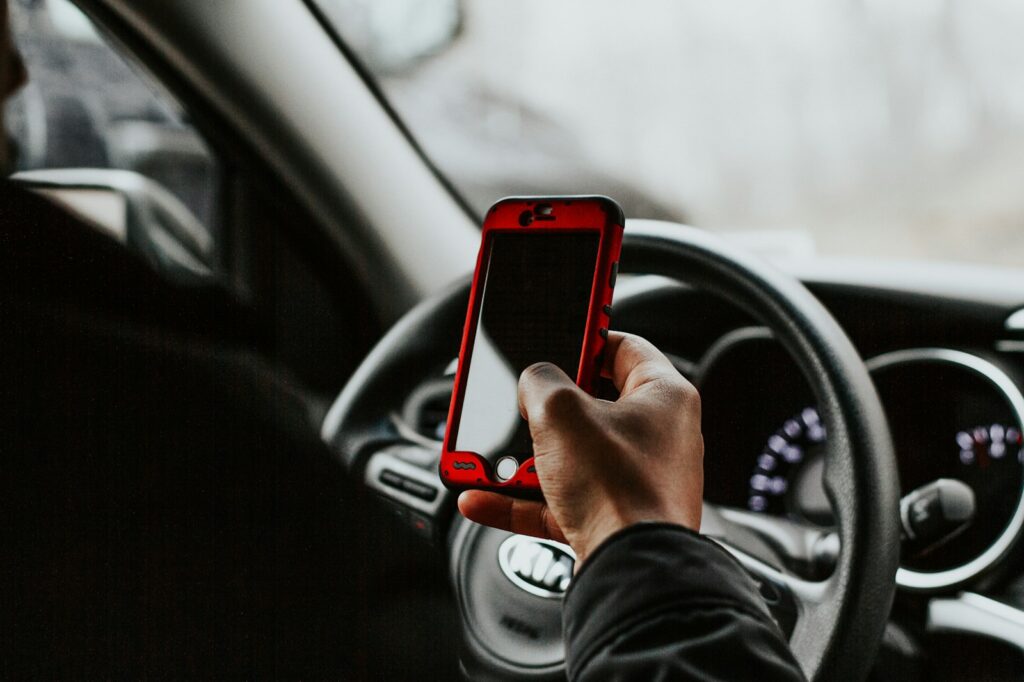
The rule is straightforward: if your vehicle is in motion, your hands cannot be on a phone. According to the South Carolina Department of Public Safety, the law bans holding a device to talk, text, scroll, or enter navigation directions while driving. Drivers can still interact with a phone through voice commands, integrated systems like Apple CarPlay or Android Auto, or a single tap to accept or end a call, but only if the device is secured in a mount or cradle.
The law does include exceptions. Drivers may use a handheld phone to contact 911 in an emergency, and they can handle a device when the vehicle is lawfully stopped and safely stationary, such as when pulled onto a shoulder. Using a phone at a stoplight, however, is not permitted under the current statute.
Fines and license points
Penalties start at $100 for a first offense with no points on the driver’s license. A second violation jumps to $200 and adds two points, according to the Department of Public Safety’s published penalty schedule. Points accumulate on a driver’s record through the SC Department of Motor Vehicles and can eventually affect insurance rates, making repeat offenses costlier than the ticket price alone.
Legal analysts at Coastal Law, a South Carolina firm tracking the statute, note that the escalating structure is designed to change behavior rather than simply generate revenue, a model borrowed from other states with similar laws already on the books.
How enforcement looks on the ground
Officers across the state have signaled that citations will be routine, not reserved for extreme cases. In Greenville County, the transition from education to ticketing was reported by the Greenville News ahead of the March 1 deadline, with local law enforcement describing the move as overdue. In Beaufort County, ABC News 4 reported that stricter enforcement began immediately, with officers pairing awareness campaigns with on-the-spot citations.
School zones and high-crash corridors are expected to see the heaviest enforcement presence. State officials have pointed to distracted driving as a persistent factor in South Carolina collisions. According to the National Highway Traffic Safety Administration, distracted driving claimed 3,308 lives nationally in 2022, the most recent year with finalized federal data. South Carolina’s law is part of a growing state-level response: as of early 2026, roughly 30 states and the District of Columbia have enacted some form of hands-free driving requirement, according to the Governors Highway Safety Association.
What drivers need to do now
For most drivers, compliance means one purchase and one habit change. A dashboard or vent-clip phone mount, available for under $15 at most retailers, keeps the device legal and accessible. Pairing the phone to a vehicle’s Bluetooth system handles calls and audio. Drivers with newer vehicles, such as a 2022 Toyota Camry or a 2024 Ford F-150, likely already have Apple CarPlay or Android Auto built in, which allows voice-activated navigation and messaging without touching the screen.
The bottom line: if a South Carolina officer sees a phone in your hand while your car is moving, you will be pulled over, and you will be fined. The warning era is finished.
More from Wilder Media Group: