

Few things make a rider wince like an itemized repair bill. A motorcycle owner who posts as @andrew_rezman shared a quick breakdown of what he says he paid after taking his bike to a dealership, and then asked the big question: did he get ripped off? The dealership was not named, so this is one customer’s account of one bill, but the numbers raise questions that every owner should know how to answer.
@andrew_rezman
The Bill, Line By Line
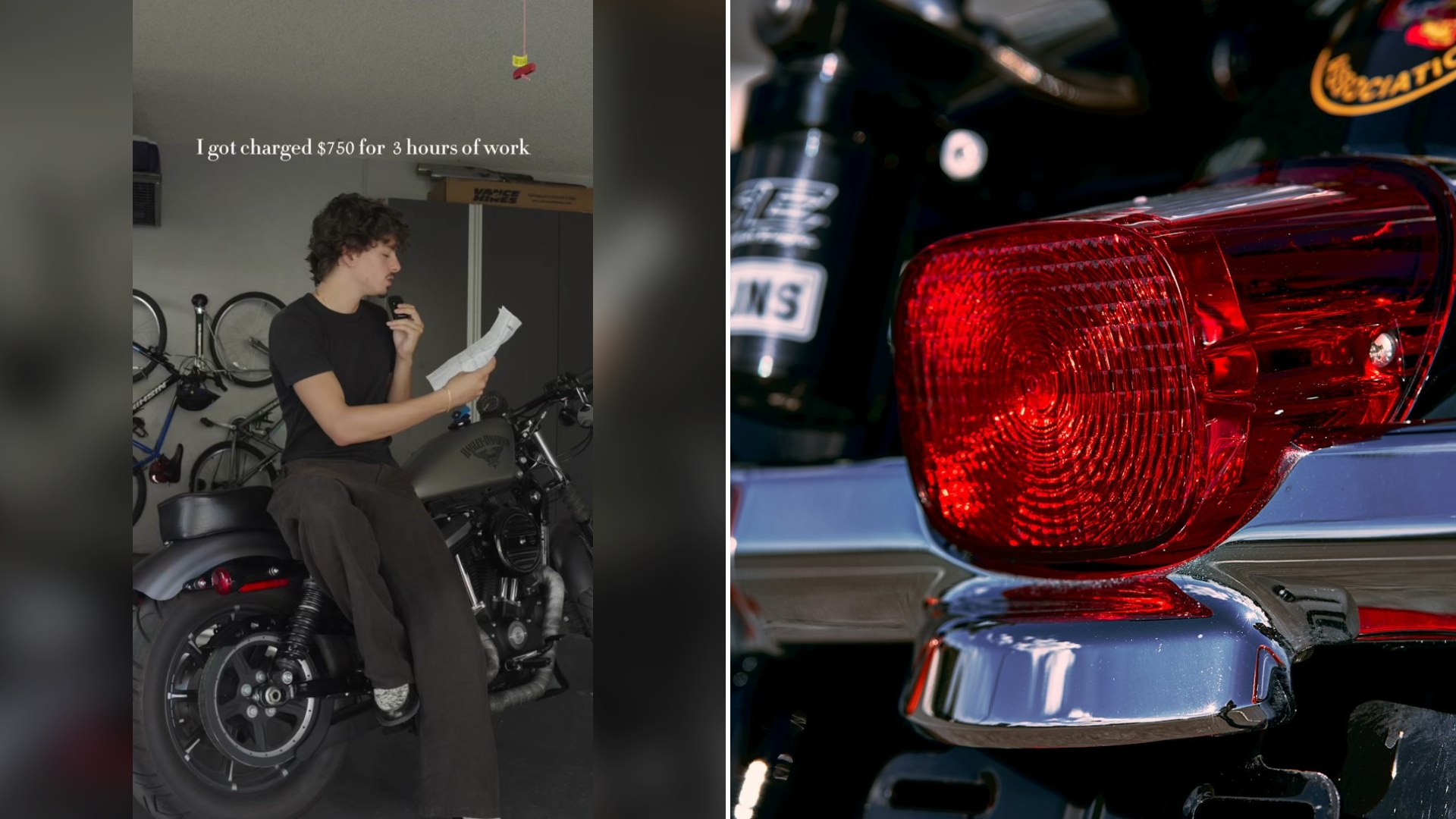
He says he took his bike in and, for a grand total of three hours, was charged roughly 750 dollars. He then walked through it item by item.
First, the shop tightened his exhaust hardware. He explained that he had installed an aftermarket can exhaust himself and admitted he was in a hurry when he did it. For that, he says he was charged $94.50.
Second, his rear tail light was loose, and he says the dealership told him it needed to be replaced. The new light was $372.50, plus another $81.99 to put it on, which made the grand total for that one light $454.49.
Third, he says his bike was not passing emissions, so to get the check engine light off his dash, he was charged another $94.50.
That brought the total, he says, to $748.63 out of pocket. He joked that for the same money he could have flown round trip to Ecuador for a long weekend, and that all the shop really did was tighten some bolts. His closing question: do you think I got scammed?
A Quick Check Of The Math
It is worth adding up the items he read out. The exhaust work at $94.50, the tail light at $454.49 and the emissions fix at $94.50 come to $643.49. That is about $105 less than the $748.63 total he gave, so something else was likely on the bill that he did not describe, such as taxes, shop supplies or another fee. He did not say what it was. This is a good reminder that when a total does not match the lines, you should ask what the difference is before you pay.
Was It A Rip Off?
Based on what he shared, we cannot say. People who replied to his post were split, and a few offered context worth thinking about. One said that three hours of labor at 125 dollars an hour is actually pretty low for a dealership. Another pointed out that some dealerships charge around 160 dollars an hour. Others said he paid what could be called the “I need help” tax, meaning the premium that comes with having a shop do work you could do yourself, and some simply suggested he work on his own bike.
Those points matter because shop labor rates are a major part of any bill. A dealership has overhead that includes factory training, specialty tools, a showroom and a service department staff, and rates in many areas have climbed in recent years. A small job that takes a technician only minutes may still be billed at a minimum charge, and many shops bill by a published flat rate time for each task rather than the actual clock time.
At the same time, the part price for a rear light is a fair thing to question. Lighting assemblies on some motorcycles are expensive, and factory parts can cost far more than aftermarket or used alternatives. Whether $372.50 was reasonable would depend on the exact bike and part, which was not stated.
How To Avoid Bill Shock
Whatever you think of this particular bill, you can take steps to keep your own from surprising you.
- Ask for a written estimate that separates parts and labor, and ask what the hourly rate is. Shops are used to this question.
- Ask the shop to call you before doing anything that is not on the estimate, especially a replacement part. A loose part may only need to be tightened, secured again or repaired.
- Ask whether the part is a factory part or an alternative, and what the warranty is. Compare the price with a quick online search or a call to a parts counter.
- Ask what the minimum labor charge is, so a quick fix does not catch you off guard.
- Request your old parts back. It is a simple way to confirm that a replacement was actually made.
- Check the final invoice against the estimate before you pay, and ask about any line you do not understand.
Know When A Shop Visit Is Worth It
He told his audience he installed his own aftermarket exhaust and admitted he was in a hurry when he did it, and the shop then charged him to tighten the hardware. There is a lesson there. Taking a few extra minutes to torque fasteners, check clearances and double check wiring can save a trip to the shop. For jobs beyond your comfort level, a dealership may be the right call, especially on a newer bike under warranty. Independent shops can also be a good option, and getting two quotes for any job over a few hundred dollars is a smart habit.
Aftermarket modifications can also affect how a bike behaves in an emissions check. If you add a non stock exhaust, find out how it interacts with emissions rules in your area, and ask the seller or an independent shop whether the bike’s settings need adjusting. That may head off a check engine light before it becomes a repair bill.
In the end, the best defense is information. Ask for the details up front, keep your paperwork, and speak up politely if something does not add up. If you still feel the charges were unfair, you can ask for a manager, request an itemized explanation, or contact the manufacturer’s customer service. The conversation costs nothing, and as this rider’s question suggests, plenty of owners are asking themselves the same thing.