

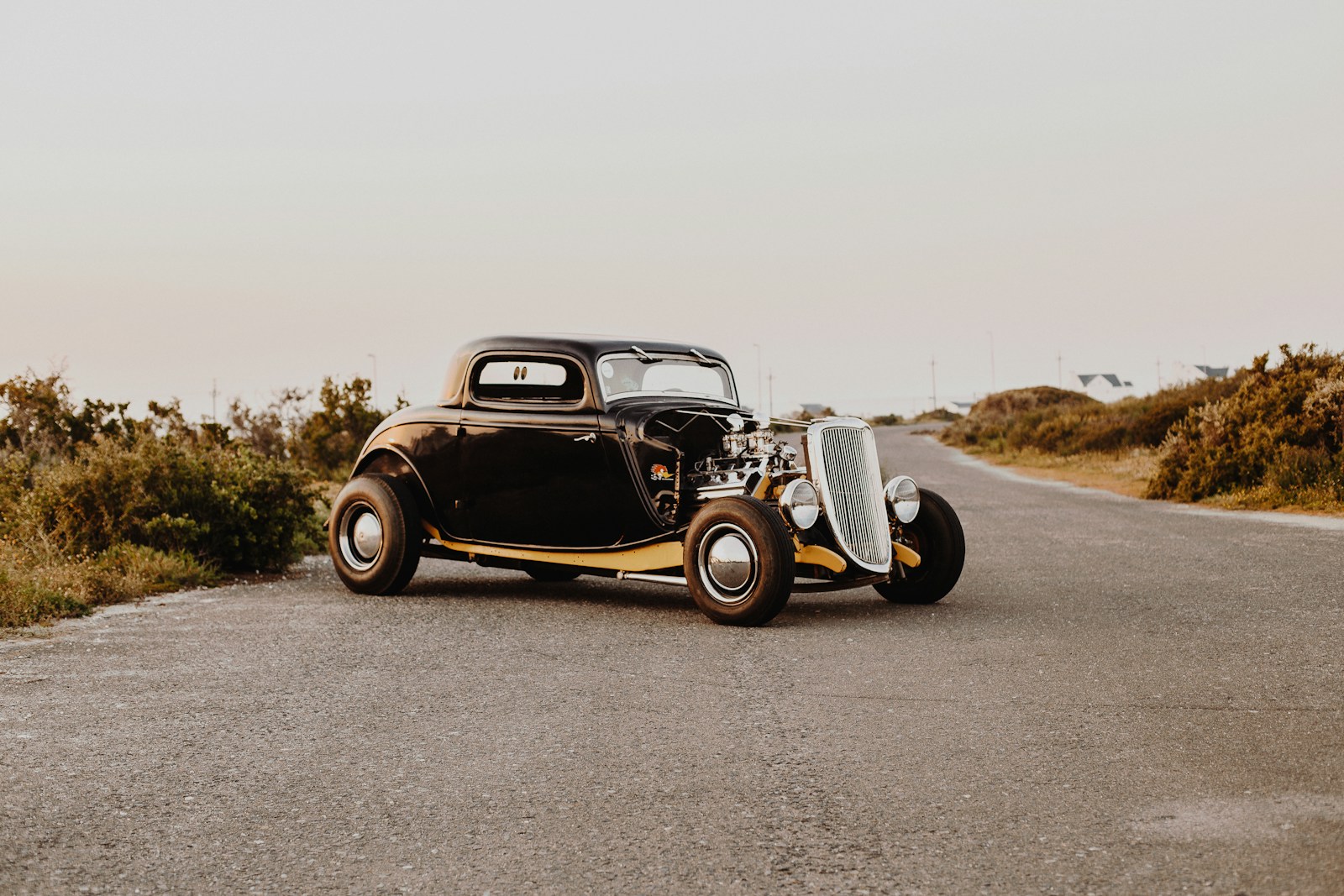
He’d been talking about “finally doing it right this time” for weeks, the kind of sentence that makes everyone in the garage glance at each other without saying anything. The car was a hot rod project that had lived in various states of half-finished for so long it felt like part of the furniture. But that night, with the shop door cracked open and the smell of fresh gas hanging in the air, he was dead set on firing it with a real carb setup instead of whatever temporary contraption he’d been running.
It was his first time setting up this carb from scratch, and he’d done that classic ritual of pretending to be calm while double-checking everything three times. Linkage moved. Fuel line snug. Timing close enough, he insisted, because “it’ll tell us what it wants.” A couple friends were there to watch, the way people show up when there’s a chance something might either roar to life or become an expensive lesson.
The hood was down but not latched—another classic move—because he wanted to reach in quickly if it needed a tweak. Somebody asked if he’d checked for leaks, and he waved it off with a quick flashlight sweep like that counted as a pressure test. The battery was fresh, the engine was primed, and he climbed in with that tight, hopeful posture people get right before they turn a key and find out whether their confidence has any basis in reality.
The “Just a Little Prime” Phase
The first crank sounded normal enough: starter grinding, a couple coughs, that teasing almost-catch that makes everyone lean forward. He gave it a touch of throttle, not much, just enough to say he was in control of the situation. When it didn’t fire, he did what a lot of first-timers do with carbs—he assumed the problem was a lack of fuel and added more.
Somebody near the fender mentioned the smell was getting strong, sharp in a way that wasn’t just “engine smell” anymore. He laughed and said it always smells like that at first, because new lines and fresh gas. Then he pumped it again, and again, and the engine responded with a wet-sounding cough that didn’t inspire confidence so much as suggest it was swallowing something it didn’t like.
Under the hood, the carb sat there looking innocent, air cleaner on top like a little hat. That air cleaner lid is supposed to be boring. It’s supposed to be the least dramatic part of the entire setup—just a piece of metal covering a filter so you don’t suck in shop rag lint and bugs.
The Moment It Caught—And Then Didn’t
On the next crank, it actually lit. Not cleanly, not with a nice crisp idle, but it fired enough that everyone’s shoulders relaxed a half inch. The engine stumbled, then surged, and for a split second it sounded like it might be about to clear its throat and settle down.
Then the intake burped backward like it had been waiting for its chance. It wasn’t a little pop through the carb, the kind old guys shrug off as “timing’s a touch off.” This was a cannon blast of compressed regret that turned the air cleaner into a projectile for the length of its own mounting stud.
The lid slammed upward so hard it hit the underside of the hood liner with a dull, violent thud, like someone had punched the car from inside. The hood itself jumped, even unlatched, and the sound echoed in the garage in a way that made everyone go still. For a beat, nobody spoke, because everyone was busy mentally replaying the physics and deciding whether they’d just watched something break.
He killed the key instantly, like he could turn the last two seconds into something that happened to somebody else. There was a thin wisp of smoke—more like vapor and fuel haze than actual smoke—but it was enough to make everybody take a step back. Somebody finally said, “Dude, that was a backfire,” in the same tone you’d use to announce a tree just fell across the driveway.
Awkward Silence, Then the Smell That Gave It Away
After the bang, the garage had that weird quiet where you can hear the ticking of cooling metal even though the engine had barely run. He sat there, hands still on the wheel, staring at the hood like it had personally betrayed him. One friend walked around to the front and gently lifted the hood the rest of the way, slow and cautious, like there might be another surprise waiting.
The smell was the clue that hit everyone at once. It wasn’t just “running rich.” It was raw gasoline, a puddle-scent that made your stomach tighten because you could practically see the fumes in your head. The air cleaner lid was sitting crooked, and when they pulled it off, the filter element looked damp in spots—never a comforting sight.
Someone ran a finger along the base of the carb and came away shiny. Then they looked down into the carb throat and saw it: fuel sitting where fuel really shouldn’t be sitting, glinting under the shop lights. The engine hadn’t just backfired; it had backfired into a space that was basically pre-loaded with gasoline vapor and, apparently, actual gasoline.
That’s when the mood shifted from “funny story” to “we almost lit ourselves up.” He tried to laugh it off and made a joke about the hood liner taking a hit like a champ, but nobody matched his energy. They were staring at the carb like it was a ticking device and the timer was written in octane.
The Float Bowl Problem Nobody Wanted to Admit
He insisted it had to be timing. That was his first instinct because timing is an easy villain: you can adjust it, argue about it, feel mechanical and competent. He reached for the distributor like it owed him money, and one friend stopped him with a hand on his wrist and said, basically, “Hold on—why is there that much fuel in there?”
They pulled the fuel line and watched it dribble more than it should with the key off, which was its own little warning sign. Then they tapped the carb body lightly like people do when they’re trying to unstick something without admitting they’re improvising. The idea was that the float needle might be stuck open, letting fuel keep pouring into the bowl and overfilling until it had nowhere to go but into the intake.
He didn’t want that to be the answer because it meant his “brand new” carb wasn’t actually ready to run, or worse, that he’d assembled something wrong. It’s hard to keep your ego intact when the fix might be as unglamorous as a needle and seat not sealing. Plus, once someone says “stuck float,” everyone starts replaying the whole sequence and realizing all that “just a little prime” might’ve been flooding the engine like a bathtub with the drain plugged.
They finally pulled the top off the carb, and it wasn’t subtle. The float bowl was full to a level that made the situation obvious even to the guy who’d been defending the timing theory. The needle wasn’t seating right, and there was a little bit of grit in there—tiny trash that had hitched a ride in the fuel system and lodged itself where it could cause maximum drama.
Raw Fuel in the Plenum, and the Fight Over What Counts as “Careful”
Once they realized the float bowl was stuck open, the rest of the story clicked into place in a way that made everyone more irritated instead of relieved. All that fuel had been spilling into the intake, pooling in the plenum like a hidden hazard. The engine had finally caught just enough to ignite the mix, then coughed backward and lit the wrong place at the wrong time.
That’s why the backfire felt so violent—there was extra fuel vapor and raw fuel sitting there waiting. It wasn’t just a lean sneeze; it was a pressure event, a fast burn in a confined space that shoved the air cleaner lid up like it was trying to escape. And the hood liner took the hit because the lid didn’t have anywhere else to go.
That’s also where the personal drama crept in, because now the question wasn’t “what broke,” it was “who ignored what.” One friend pointed out they’d mentioned the fuel smell earlier, and he brushed it off. He shot back that everyone always acts like they’re the safety police after something happens, like they didn’t just show up hoping to hear it run.
The argument wasn’t screaming, but it had that tight edge of people who are friends and don’t want to become enemies, yet also don’t want to pretend the near-miss didn’t matter. Somebody mentioned fuel filters, and another guy mentioned not cranking it endlessly with the hood down. He went quiet and started cleaning parts with aggressive focus, the way people do when they’re trying to do penance without saying the words “my bad.”
They didn’t fire it again that night. The carb sat on the bench in pieces, the float and needle laid out like evidence, and the air cleaner lid had a fresh scuff where it had kissed the hood liner hard enough to leave a mark. He kept looking at that mark like it was a scoreboard, a reminder that the car can throw a punch back when you get sloppy.
What stuck with everyone wasn’t the bang itself—it was how close the garage came to becoming a completely different kind of story. The lid hitting the hood liner was loud, sure, but the real noise was the silence afterward, when they all realized the plenum had been full of raw fuel and they’d been leaning over it like it was harmless. He left the hood popped open when they shut the lights off, like the car needed to breathe, and the tension in that shop didn’t fully drain—it just settled, waiting for the next time he turns the key and everyone decides how close they want to stand.