

By the time the rain started, the argument had already been going for weeks. Not in the loud, door-slamming way—more like the kind that sits in the corners of a marriage and waits for the next opportunity to pop up. The wife had been saying the tires were getting bad, and the husband had been brushing it off like she was being dramatic about “normal wear.”
She’d noticed it first in small ways: the steering felt a little floaty on wet roads, the car took longer to stop at lights, and there was that low, uneven hum at highway speed that didn’t used to be there. Every time she brought it up, he’d do the same routine—tell her tires were “insanely expensive right now,” remind her they were “still legal,” and promise they’d “look at it next month.” Next month kept sliding forward like a calendar you never turn.
The part that made it worse was that it wasn’t even a mystery purchase. She had done the responsible thing: checked the tread, took a picture, got a quote from a local shop, and came home with an actual number. He didn’t like the number, and somehow that meant the tires weren’t a problem anymore.
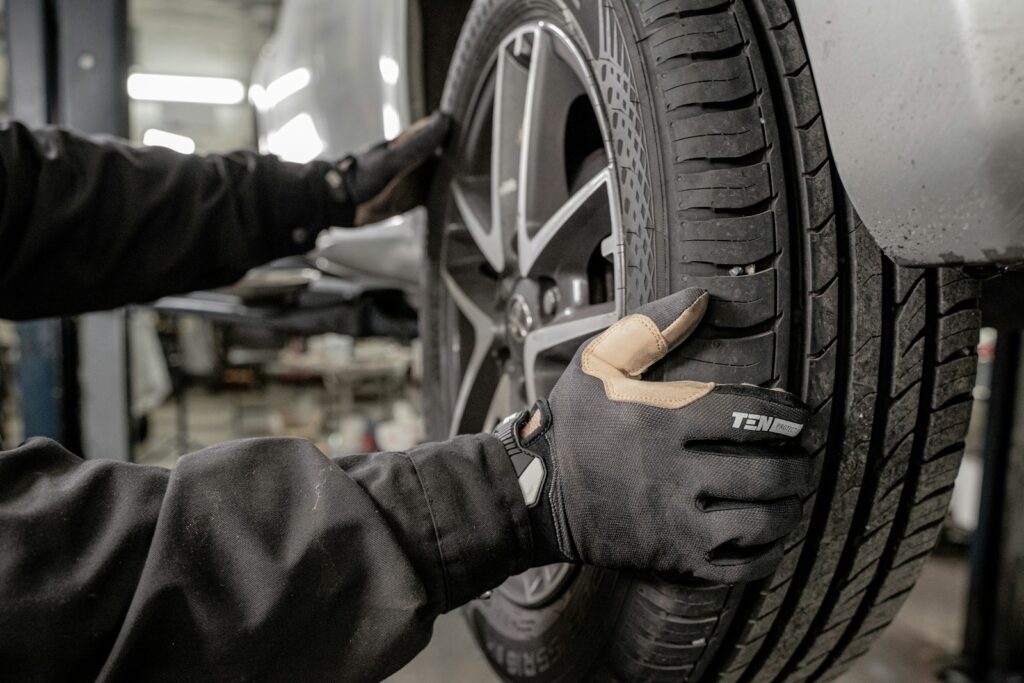
The “Too Expensive” Standoff
He wasn’t subtle about it, either. He’d stand in the kitchen and do mental math out loud, listing bills as if she hadn’t been paying them too. Tires would turn into a debate about priorities, and priorities would turn into a debate about who spent money on what.
She pointed out the obvious: tires aren’t a fun upgrade, they’re the things that keep the car attached to the road. He’d counter with the classic “I’ve driven on worse,” like that was proof the laws of physics were flexible if you were stubborn enough. Then he’d toss in the kind of line that sounds harmless until you hear it for the tenth time: “Just be careful when it rains.”
That phrase became his escape hatch. If he could frame it as a “driving behavior” issue, he didn’t have to admit the car needed anything. And when she pushed, he’d get tight and defensive, like she was accusing him of being cheap instead of asking him to stop gambling with the only vehicle she used to get to work.
She wasn’t asking for top-of-the-line tires, either. She was asking for “not bald,” and she’d even suggested they split it in a way that made sense for their budget. He still said no, in that firm, final way that signaled the discussion wasn’t welcome anymore.
Warnings That Kept Getting Ignored
Over the next couple of weeks, the car kept giving little warnings that made her stomach drop. It slid slightly pulling out of a parking lot after a drizzle, and once the traction light flickered during a turn that shouldn’t have been exciting. She came home shaken, explained exactly what happened, and he hit her with a shrug so casual it was almost insulting.
“You probably hit the gas too hard,” he said, as if he’d been sitting in the passenger seat. When she reminded him she’d been driving for years without mysteriously forgetting how pedals work, he pivoted to the expense again. “We can’t just throw money at every little thing,” he said, while simultaneously treating the tires like they weren’t a “thing” at all.
She tried to compromise one more time, suggesting a cheaper set, used tires, anything that wasn’t “wait until something happens.” He didn’t want used tires because “you never know what you’re getting,” but he also didn’t want new tires because “that’s ridiculous.” The only option he liked was the one where she stopped bringing it up.
It turned into this weird little power struggle where she felt like she had to justify basic safety. She started checking the weather forecast more obsessively, timing errands around rain, taking side streets instead of highways. He read all of that as proof she was overreacting, not as a sign that she’d lost trust in the car.
The Day It Finally Happened
The day it happened wasn’t a dramatic storm, which is almost the cruelest part. It was steady rain, the kind that turns the whole world gray and makes the road look like it’s been lacquered. She was driving home the way she always did, not speeding, not weaving, just trying to get back before rush hour stacked up.
She hit a stretch of highway where water tends to pool, and for a second everything felt normal. Then the steering went light, like the front end had detached from the rest of reality. The wheel didn’t respond the way it should, and the car started drifting sideways in that slow, sickening way that tells you you’re no longer driving—you’re just waiting to see where you’ll end up.
She did what you’re supposed to do: eased off, tried not to overcorrect, kept her eyes where she wanted to go instead of where she was sliding. It didn’t feel heroic; it felt like being helpless in a controlled panic. The car fishtailed, crossed a lane, and she somehow managed to straighten it out without hitting anyone, coming to a stop on the shoulder with her heart slamming against her ribs.
She sat there for a minute with her hands locked on the wheel, listening to the rain hammer the roof. Her legs were shaking so hard she wasn’t sure she could step out if she needed to. When she finally called her husband, she expected him to be scared for her—because that’s what you want in that moment, not logic, not lectures, just someone to be scared with you.
The Phone Call That Made It Worse
He picked up, and she started with the facts: she hydroplaned, the car slid, she pulled over, she was okay. There was a beat where she could almost hear him deciding what kind of conversation he wanted this to be. Then he landed on the one that didn’t require him to feel guilty.
“Were you driving too fast?” he asked. Not “Are you hurt?” Not “Do you need me to come get you?” Just immediate cross-examination, like he was an insurance adjuster looking for a reason to deny the claim. She told him no, she was going with traffic and it still happened.
That’s when he went for the line he’d been saving: “You always do this in the rain,” he said, as if hydroplaning was a personality trait. He implied she was careless, overconfident, not paying attention—anything to make it her flaw instead of the car’s condition. She reminded him, carefully at first, that she’d been asking for tires and he’d refused.
He got sharp. “Don’t start,” he said, which is what people say when they know exactly what’s being started and they don’t like where it leads. He insisted hydroplaning can happen to anyone, and in the same breath insisted it happened to her because of how she drove, which somehow made sense in his head.
She was still on the shoulder in the rain, trying to steady her breathing, and now she was also arguing about blame. When she told him she wanted to replace the tires immediately, he said, “We’ll talk about it later,” as if “later” wasn’t the entire reason she’d almost spun into another car.
The Fight When She Got Home
She drove the rest of the way like the road was booby-trapped, white-knuckling it and flinching at every puddle. When she got home, she didn’t even take her shoes off before she started in again. She told him what it felt like when the car stopped listening, how close she came to losing control completely, and how she couldn’t believe he was still treating this like a debate.
He listened with his arms crossed, the posture of someone who’s already chosen his side. He repeated that she needed to be “more cautious” and said she was “making it dramatic.” Then he did the thing that really lit the fuse—he framed it like she was trying to guilt him into spending money, like safety was just her latest angle.
She brought up the photos she’d taken of the tread and asked him to come look, right now. He glanced at them like they were receipts for a purchase he didn’t authorize, and said he’d check the tires “this weekend.” It was Wednesday.
At that point, the argument stopped being about rubber and rain and turned into something uglier: the way he dismissed her judgment unless it aligned with his, the way he treated her concerns like an inconvenience, the way he could watch her come home shaken and still prioritize being right. She said she didn’t feel safe driving the car, and he took it as an insult instead of a problem to solve.
What hung in the air wasn’t just the question of whether they’d buy tires. It was the realization that she’d had to nearly lose control of the car to get his attention, and even then he was more committed to blaming her than admitting he’d been wrong. And that kind of stubbornness doesn’t stay on the highway—it follows you into the house, into every future “we’ll deal with it later,” until one day “later” becomes something you can’t undo.
More from Steel Horse Rides: