

She knew something was off the second she pulled into the driveway and didn’t see her SUV. Not “maybe he moved it to wash it” off—more like the empty spot looked staged, too clean, like someone had been waiting for this moment. Her husband was on the porch, weirdly upbeat, hands in his pockets, rocking back on his heels the way he did when he thought he’d nailed a surprise.
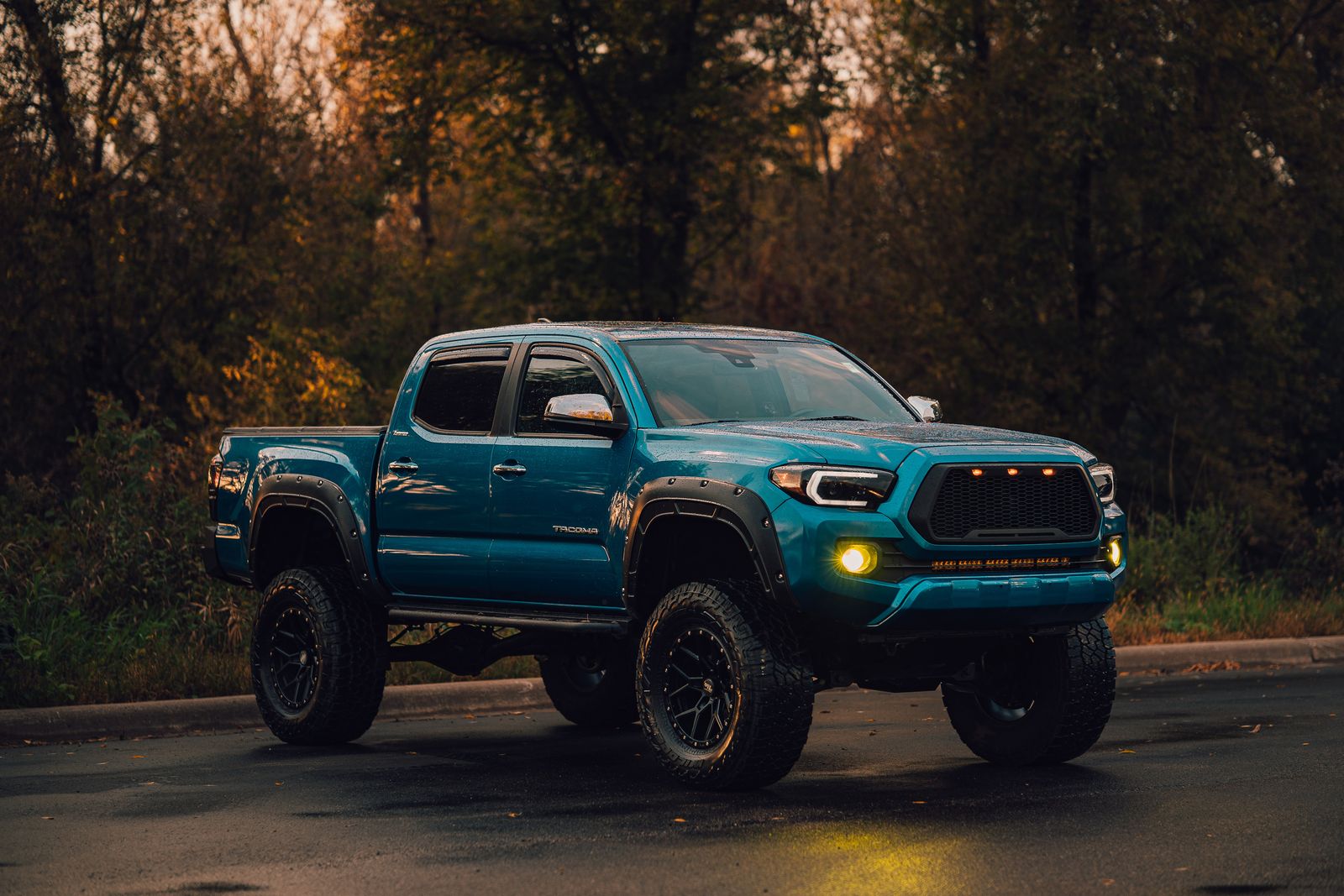
He didn’t even let her ask the full question. He just grinned and said, “Before you freak out, come look.” And there it was, sitting where her SUV always parked: a truck. Not just any truck, either—a big, shiny, “I’ve always wanted one of these” truck with an aggressive grille and tires that looked like they belonged in a catalog for guys who say things like “payload” in casual conversation.
She stood there with her keys still in her hand, staring at it like it might explain itself. He was already talking, words spilling out fast, like if he kept moving he wouldn’t have to stop and see her face. He told her he’d traded her SUV in that afternoon, and then, like he was offering a reasonable compromise, said she could “learn to love it” because the deal was done.
The SUV Wasn’t a “House Car,” It Was Her Car
This wasn’t a situation where they shared one vehicle and he swapped it without thinking. The SUV was hers: the car she drove to work, the car she used for groceries, the car she’d configured the way she liked—with the seat set just right, her phone mount, her emergency stuff tucked into the side pocket. She’d picked it because it was reliable and easy to drive, and because she was the one actually behind the wheel every day.
Her husband, meanwhile, had been in a long-term flirtation with the idea of owning a truck. He watched videos, pointed them out on the road, talked about “utility” and “how it’d be nice” the way some people talk about a vacation they’ll never book. She’d heard it all before, and it had always ended the same way: the numbers didn’t make sense, they didn’t need it, and she didn’t want to drive one.
They’d even had a recent conversation about it because he’d been pushing harder than usual. She’d been clear: if he wanted a truck, they could talk about him buying one when they could afford it, but her SUV wasn’t up for negotiation. He’d nodded like a person who understands boundaries, which, in hindsight, was apparently just him waiting for a better moment to ignore them.
The “Surprise” Was Really a Done Deal
He walked her around the truck like a salesman, tapping the side, pointing out features she hadn’t asked about. “Look at the bed,” he said, like she’d been secretly longing to haul plywood. “This thing can tow anything,” he added, despite the fact that the heaviest thing she’d ever towed was a small U-Haul once, and she’d hated every second of it.
She asked where her SUV was, even though she knew the answer. He said it was traded in, papers signed, everything handled, like he was proud of how efficient he’d been. She asked how he could trade in a car that was in her name—because surely, surely, that had to be a problem.
That’s where the story got murky in a way that made it more unsettling. He said he “took care of it,” which is the kind of phrase that can mean anything from “I handled the boring paperwork” to “I did something legally questionable and don’t want to get into it.” He brushed off her questions with the same confidence he’d used to introduce the truck, as if her confusion was just an early stage of eventual gratitude.
When she didn’t brighten up, his tone started to harden. He told her she was being dramatic, that it was “a better vehicle” and she’d get used to it. And then he dropped the line that made her feel like she’d stepped into somebody else’s marriage: “You can learn to love it. The deal is done.”
Why the Truck Felt Like a Trap
Her reaction wasn’t about being ungrateful for a “newer” vehicle. It was about the way the whole thing was constructed to box her in: the surprise, the paperwork, the insistence that the decision was already made and now her job was to adapt. He wasn’t asking what worked for her life; he was rewriting her daily logistics to suit his wants.
She climbed into the driver’s seat just to see if she was overreacting, and immediately felt ridiculous. The hood stretched out like a runway, the seat sat higher than she liked, and the steering felt heavier. She couldn’t see the ground near the front, and she could already picture trying to park it at her office or squeeze into the grocery store lot without feeling like she was driving a boat.
Then there were the practical things that suddenly became her problem. The SUV fit into their garage with room to walk around it; the truck barely cleared. She asked about gas mileage, insurance, and whether the payment changed, and he gave vague answers that sounded like someone who didn’t want the mood to get ruined by math.
What made her stomach drop wasn’t just the truck itself—it was the realization that he’d been planning this. He’d known she’d say no, so he waited until he could make no irrelevant. He didn’t surprise her with something thoughtful; he cornered her with something expensive.
The Fight Wasn’t Loud at First, It Was Cold
At first she tried to keep it calm, because part of her couldn’t believe this was real. She asked him, point blank, why he thought he could make that decision for her. He kept circling back to the same points: it was an upgrade, it was practical, it would be good for “the family,” and she’d come around.
When she pushed harder—about titles, about permission, about the fact that she was the one expected to drive it—he started acting offended. He told her she was focusing on the wrong thing. He said he’d done something “nice” and she was making him feel like a villain, which is a neat trick when the villainous part is literally the part you did.
The more she tried to talk about it like adults, the more he treated it like a tantrum he could wait out. He suggested they take it for a drive together, like a test drive would reset her emotions. When she didn’t agree, he went sulky and quiet, the kind of quiet that’s meant to punish.
Later, when she started looking for paperwork—anything that explained how her SUV could be traded—he asked what she was doing in that irritated, defensive way. She told him she wanted to see the documents. He said, “Why? It’s done,” like the paperwork was a formality and not the entire point.
The Fallout Lingered in the Smallest Moments
That night didn’t end with a tidy resolution, just a house full of tension and a truck outside like a monument to a decision she didn’t get to make. She didn’t want to drive it the next morning, but she also didn’t have her SUV. He offered to “help her get comfortable” with it, which somehow made it worse, like he was her instructor and not the person who caused the problem.
When she did drive it, it wasn’t empowering—it was humiliating. She had to adjust the mirrors three times, backed out slowly, and still felt like she was guessing where the corners were. Every time she stopped at a light she felt people’s eyes on the truck, and she hated that she was now visually associated with his choice, his fantasy.
She started making calls during lunch, not because she wanted revenge, but because she needed to understand her options. She asked about the trade-in, about whose name was on what, about whether she could unwind anything if something had been signed without her. Each answer depended on details she still didn’t have because he’d kept her out of the process on purpose.
By the time she got home, the issue wasn’t even the vehicle anymore. It was the dynamic: him deciding, her adapting; him spending, her figuring out the consequences; him calling it love, her feeling like a prop in someone else’s life. When she tried to explain that, he kept returning to the same stubborn refrain—“It’s already done”—as if repetition could turn control into inevitability.
What hung in the air after all of it wasn’t the smell of new upholstery or the novelty of a bigger engine. It was the question she couldn’t shake: if he could trade in her car and expect her to “learn to love it,” what else did he think he could change and call a surprise, as long as he moved fast enough that she couldn’t stop him?