
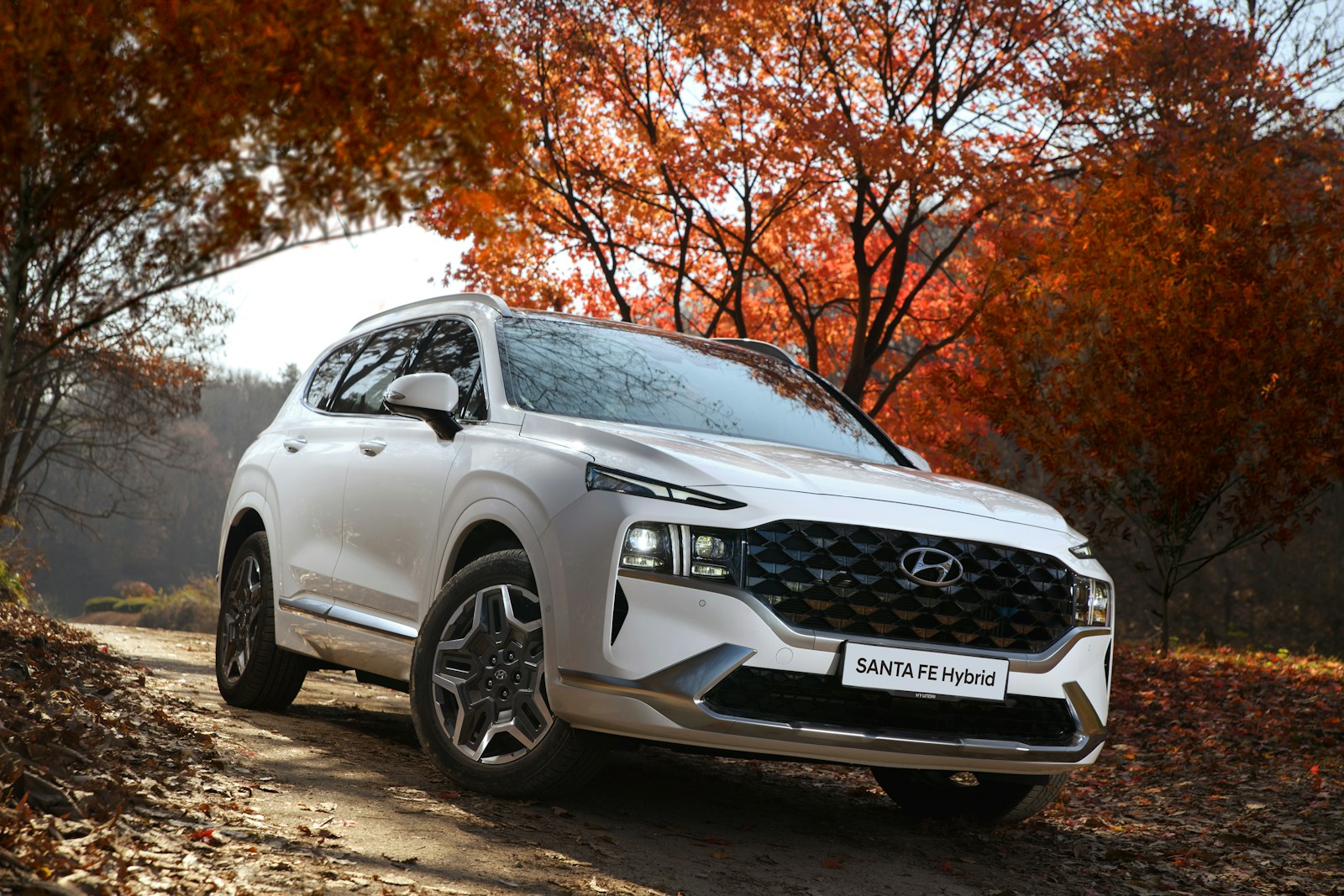

Hyundai says it will launch or refresh more than 100 vehicles worldwide by 2030, and the headline act is a Santa Fe with no plug required for daily driving and over 600 miles of total range. The numbers came out of the automaker’s 2026 CEO Investor Day presentation, and they’re a lot more specific than the usual “electrified future” pitch.
Key Points
- Hyundai is committing to over 100 new or upgraded models globally by 2030, broken out as 58 for North America, 49 for Korea, 41 for Europe, 26 for India, and 22 for China, per the company’s own investor materials.
- The Santa Fe EREV — an extended-range EV that pairs a battery with an onboard gasoline generator instead of a plug-in-only setup — is targeting more than 600 miles of total range when it launches in the first half of 2027, according to Hyundai’s release.
- Hyundai says the EREV architecture uses less than half the battery capacity of a comparable full EV, which is how it gets the range and cost math to work.
- Genesis, Hyundai’s luxury arm, is targeting 350,000 annual sales across more than 40 markets by 2030, expanding into Spain in Q4 2026 plus India and Asia-Pacific.
- Electrified vehicles (hybrids, plug-ins, EVs, and EREVs combined) are supposed to hit 60% of Hyundai’s global sales mix by 2030, up from 23% in 2025 — a shift Yahoo Finance’s coverage of the investor day framed as a deliberately profit-driven plan rather than a chase for volume.
The Numbers Behind the Pitch
Hyundai’s 2030 global sales target sits at 5.55 million units, about 6% worldwide market share, alongside an operating margin goal raised to above 9%. In the first half of 2026 the company posted 95.2 trillion won in revenue with a 5.6% operating margin, so the new target is a real jump, not a rounding adjustment.
Manufacturing capacity is expanding by 1.27 million units of global output by 2030: 500,000 units in North America, 320,000 in India, 250,000 across CKD (assemble-locally) sites, and 200,000 in Korea. That’s a company betting on building closer to where it sells, which matters given ongoing EV tariff and incentive uncertainty in the U.S. market.
Why the EREV Matters More Than the Model Count
A hundred new or refreshed nameplates by 2030 sounds impressive until you remember that number includes trim refreshes and regional variants that will never cross an ocean. The EREV commitment is the part worth watching: it runs mostly on battery power with a small gas engine acting purely as a generator, never turning the wheels directly, sidestepping both charging time and range anxiety. If Hyundai can deliver 600-plus miles of total range on a Santa Fe built in Alabama, per Electrive’s coverage of the product offensive, that’s a genuinely different pitch than most of what’s currently badged as an EV alternative.
Genesis chasing 350,000 annual sales is the other number worth flagging, since the brand has spent most of its existence well under that. Getting there means real expansion into European and Asia-Pacific markets, not just selling more GV70s to existing American buyers. None of this is guaranteed — automaker five-year plans get revised constantly, and EREV technology still has to prove itself at scale rather than in a slide deck — but the specificity here is more than most competitors have committed to in writing this year.