
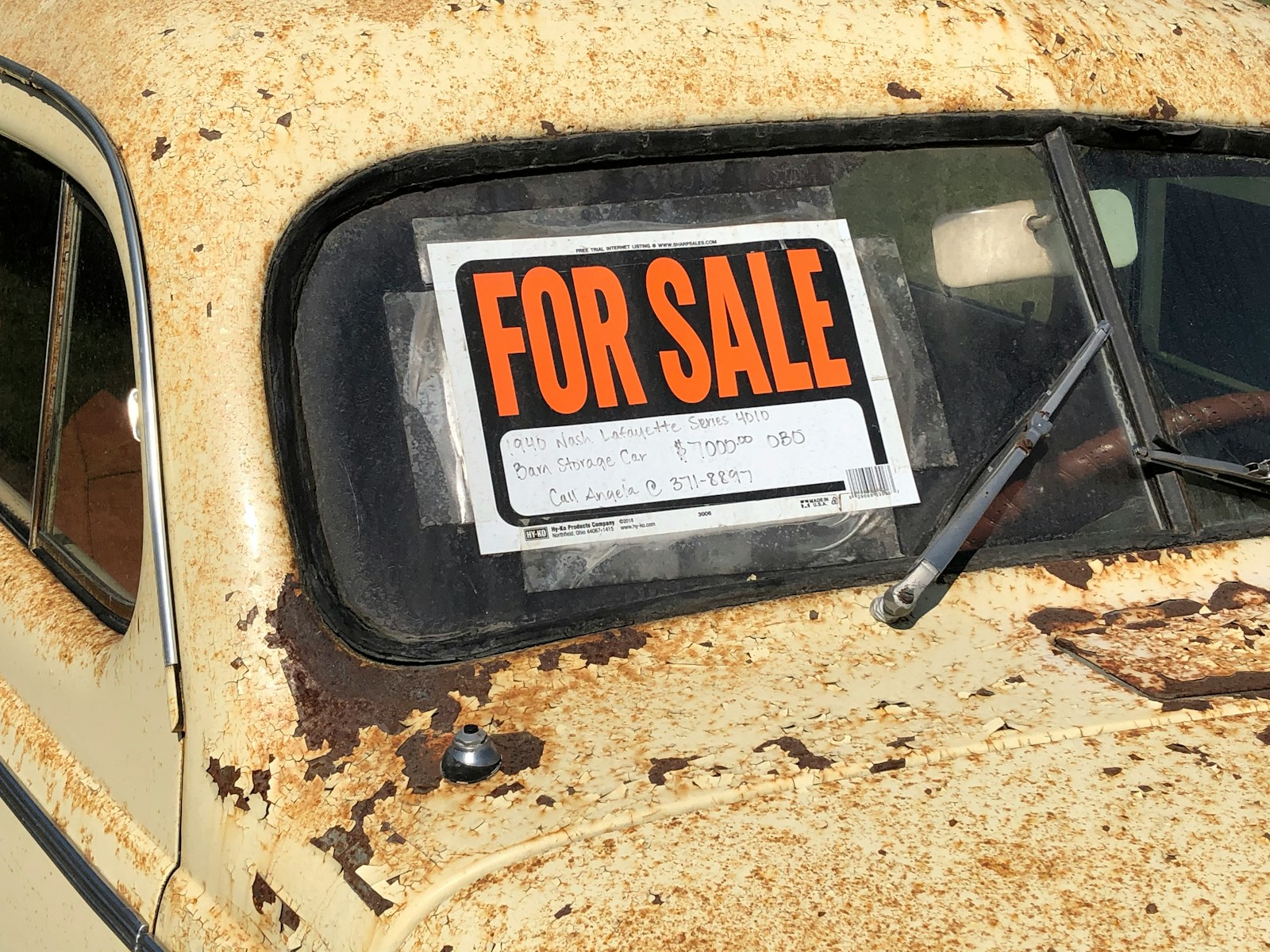

When Maya’s dad died, the car was the one thing she couldn’t deal with right away. Not because it was the most valuable, or the most practical, but because it was the most him. It still smelled faintly like the pine air freshener he swore made the ride “feel newer,” and the driver’s seat had that familiar worn-in dip where he’d sat for years.
The problem was distance and money. Maya lived in a small apartment two states away, her dad’s place was getting cleared out, and she didn’t have a driveway or the cash to tow, register, and store an old sedan on short notice. So when her dad’s longtime friend—Dale—offered to keep it on his property “as long as you need,” it sounded like the rare simple solution in the middle of grief.
For months, that was the story Maya told herself: the car is safe, it’s being stored, I’ll get it when I can breathe again. Then one night, scrolling through a local marketplace site out of habit more than intention, she saw a familiar thumbnail: silver paint, small dent on the rear bumper, and her dad’s old aftermarket rims. The listing title might as well have screamed her name.

The “Just Leave It Here” Agreement
Dale wasn’t a random guy from the neighborhood; he’d been in her dad’s orbit for as long as she could remember. He was the kind of friend who showed up to barbecues with a six-pack and opinions, who called her “kiddo” even when she was pushing thirty. When Maya’s dad got sick, Dale did the occasional check-in and helped move a few heavy things, enough that people assumed he was reliable.
After the funeral, everything moved too fast: the landlord wanted the apartment emptied, family members wanted decisions, and Maya was drowning in paperwork she didn’t understand. She mentioned the car to Dale in the same exhausted way you mention a broken appliance—like it was one more object asking something from you. Dale told her not to stress, he had room behind his garage, and “your dad would want it kept nice.”
They didn’t draw up a formal contract, because who does that with a family friend when you’re still putting together memorial photos? Maya did have the title, though, and that was her one anchor point. Dale’s role was supposed to be simple: keep it parked, maybe start it now and then so it didn’t die completely, and wait until she could arrange transport.
Slow Drip Communication, Then Silence
At first, the contact was normal. Maya would text every few weeks, mostly checking in and half-apologizing for not being ready yet, and Dale would respond with breezy updates: “All good,” “Still here,” “Ran it for a bit today.” Once or twice, he added little guilt-tinged comments about space, how his wife didn’t love the “extra clutter,” but he always ended with something like “no rush.”
Then the tone shifted. Maya got hit with a surprise bill tied to the estate, her hours at work got cut, and she started spacing out the check-ins because she couldn’t handle one more thing that might become a fight. When she did reach out, Dale’s replies got shorter and later, like he was annoyed she was reminding him the car existed.
The last message she had from him was a month earlier: “Need you to figure it out soon. Can’t keep it forever.” Maya replied that she understood, that she was trying, that she’d pay storage if needed. Dale never answered that part, and Maya told herself he was just busy.
The Listing That Felt Like Being Punched
The ad wasn’t subtle. It included a handful of photos taken in daylight, the car angled as if for presentation, like it was being offered up with pride. The description was written in the casual, salesy language of someone who’d done this before: “Runs great,” “Clean title,” “No lowballers,” and a line about it being “an older man’s car, well cared for.”
Maya recognized the background immediately: Dale’s gravel driveway, the ugly green trash bins, the side of the garage with the peeling paint. She zoomed in like she needed to prove to herself she wasn’t hallucinating, and there it was—her dad’s faded parking pass still tucked in the corner of the windshield. The asking price was higher than she expected, high enough to make it clear this wasn’t a “help me cover storage costs” situation.
For a few minutes she did the thing people do when something feels impossible: refreshed the page, clicked away, clicked back, stared at the date. It was posted that morning. She noticed the seller’s name too, right there on the profile, like Dale wasn’t even trying to hide it.
Calling Dale and Hearing the Story Change in Real Time
Maya didn’t start with a dramatic accusation. She called him and said, as evenly as she could manage, “Hey, I saw the car listed online. What’s going on?” Dale’s first move was a pause that lasted just long enough to feel like he was choosing a version of reality, then a sigh like she was the one causing trouble.
He claimed it was a “misunderstanding,” that he’d listed it “just to see what it might go for.” When Maya pointed out that “just to see” doesn’t usually include a price, multiple photos, and a “message me for serious offers,” Dale pivoted. Now it was about how the car had been “abandoned,” how he’d tried to get ahold of her, how keeping it was costing him money.
Maya reminded him she had text messages, and that she’d offered to pay storage. Dale’s tone sharpened. He told her she was being “emotional,” that her dad “wouldn’t want it sitting there rotting,” and that he’d put work into it—new battery, oil change, maybe even tires, depending on which sentence you caught him in. Every claim sounded designed to make her feel indebted while also justifying why he should get to sell it.
When she asked directly if he had the title, he said no, but acted like that didn’t matter. He floated the idea that he could “handle the paperwork,” which is the kind of phrase that makes your stomach drop because it suggests he’s already been Googling how to do it without you. Maya ended the call shaking, not because she’d yelled, but because she hadn’t—and she could hear in his voice that he expected her to fold.
Scrambling for Proof, Finding New Worries
That night Maya dug through her dad’s documents like a person trying to piece together a life from envelopes. She found the title in her own file where she’d put it months earlier, along with a few repair receipts and an insurance card. It was all proof she owned the car, but it didn’t answer the nastier question: what else had Dale done while she was grieving and distracted?
She checked the listing again and saw the status shift—someone had messaged, there were more views, the ad had been edited to include “available now.” Maya started imagining a stranger test-driving it down the street, imagining the car getting sold in a parking lot with a bill of sale and a handshake, her dad’s last tangible thing slipping away while she sat powerless in another state. She messaged the listing from a friend’s account, just to see how quickly “Dale” responded, and he replied within minutes with meet-up options.
In the middle of this, Dale texted her as if they were negotiating a used couch. He said he’d “hold off for a few days” if she could “come up with something,” implying a fee, implying she had to pay him to not sell her own property. He also slipped in a vague line about “back taxes and tags,” which didn’t make sense, but sounded complicated enough to scare someone who already felt behind on everything.
Maya’s friends pushed her toward practical steps: save screenshots, get the VIN, call local non-emergency police, talk to a lawyer, call the marketplace to report stolen property. She did the screenshot part immediately, hands sweaty, heart racing, clicking through every photo and capturing his words before he could delete them. The rest felt heavier, because it meant turning a dead dad’s friend into an actual opponent, and Maya hadn’t been ready for that kind of fight.
Showing Up Isn’t Simple When Grief Ate Your Bandwidth
The most maddening part was how many people told Maya to “just go get it,” like it was a jacket left at someone’s house. She couldn’t snap her fingers and appear in Dale’s driveway, and even if she could, she wasn’t sure what she’d find—would the car be blocked in, “missing,” already sold, or suddenly “in the shop”? Dale had a way of speaking that made you feel like you were asking for too much, even when you weren’t.
Her dad’s other acquaintances were no help either. A couple of them hinted that Dale had money issues lately, that he’d been “wheeling and dealing” more than usual. Nobody wanted to take sides, but nobody sounded surprised, which was its own kind of sickening. Maya kept replaying every moment she’d trusted him: the sympathetic head tilt at the funeral, the “anything you need,” the easy promise that the car would be safe.
By the end of the week, the listing was still up, but the price had changed slightly, like Dale was adjusting it based on interest. Maya had sent one last message: take it down, don’t touch the car, she’s arranging retrieval. Dale responded with a thumbs-up and then another line about “not keeping it for free,” as if he hadn’t just tried to sell it out from under her.
What stuck with Maya wasn’t even the money angle, though that hurt too. It was the way the situation forced her to realize how grief makes you vulnerable in boring, logistical ways—titles, storage, deadlines—and how quickly someone can turn that vulnerability into leverage. The car was still out there on Dale’s property, listed like any other item for sale, and Maya was left staring at her phone, wondering which would run out first: her ability to fight, or Dale’s patience for pretending he hadn’t already made his decision.
More from Steel Horse Rides: