
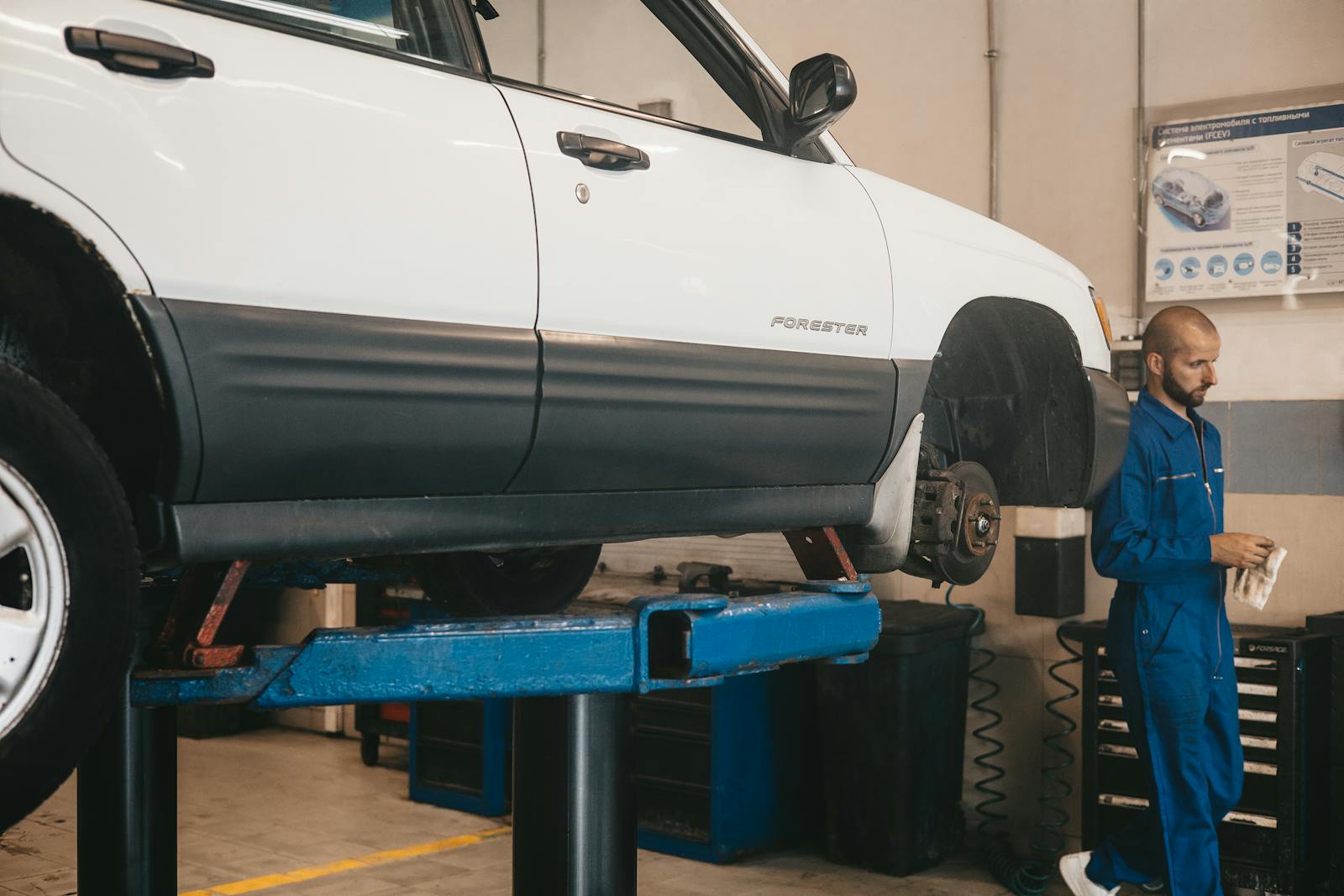

There are a few phrases you never want to hear from your mechanic, and “It’s the transmission” is right up there with “You might want to sit down for this.” Transmissions are complicated, expensive, and when they start going, they rarely get better on their own. And while plenty of cars live long, happy lives after a repair, there’s a point where throwing more money at the problem starts to feel like paying rent on a house you don’t even like.
If your mechanic says certain things about your transmission, it may be the universe (or at least your wallet) gently suggesting you move on. Here are the lines that should make you pause, ask follow-up questions, and maybe start browsing listings—just in case.

“It needs a rebuild… and it’s not cheap.”
A transmission rebuild is one of those repairs that sounds reasonable until you hear the number. Depending on the car and where you live, you could be looking at a bill that rivals a decent down payment on your next vehicle. And unlike brakes or tires, this isn’t routine maintenance—it’s major surgery.
The big issue is risk: even a good rebuild can come with surprises once the unit is opened up. If your mechanic is already hinting that the cost could climb, that’s not them being dramatic; that’s them being honest about how fast “estimated” can turn into “actually.”
“We can replace it, but we can’t guarantee a used one.”
Sometimes the recommendation isn’t a rebuild, it’s a replacement—often with a used or remanufactured transmission. On paper, a used unit can look like a bargain. In reality, it’s a little like buying a mystery box that weighs 300 pounds.
If your mechanic says they can’t confidently stand behind the used transmission option, listen. It doesn’t mean they’re trying to upsell you; it means they’ve seen enough “worked great for two weeks” stories to know better. A replacement that comes with a short warranty—or a lot of hedging—can turn into a second major repair before you’ve emotionally recovered from the first.
“There’s metal in the fluid.”
This one is the transmission equivalent of finding glitter in your carpet after a party: it means something happened, and it’s not going back to normal. Metal in the transmission fluid usually means internal parts are wearing down—gears, bearings, clutch packs—basically the important stuff. And once that material starts circulating, it can accelerate the damage like sandpaper in a blender.
Could you limp along for a while? Sometimes, yes. But if a mechanic shows you the fluid and it looks like it came from a robot’s nosebleed, that’s a sign you’re on borrowed time.
“It’s slipping, and the codes point to internal failure.”
Slipping is when the engine revs up but the car doesn’t really go the way it should—like your transmission is trying to remember its job description. It can start subtle, then become a daily routine of hesitation, jerking, or the car randomly acting like it’s towing a boat. Not fun.
And while some transmission issues can be sensor-related (cheaper, fixable), “internal failure” is the phrase that should make you sit up. If the diagnosis is pointing inside the transmission, your options narrow quickly—and they usually get expensive.
“It’s not just the transmission… it’s everything around it too.”
The transmission bill is bad enough, but sometimes the real problem is the domino effect. A failing transmission can stress engine mounts, axles, differentials, and even cooling systems—especially on vehicles that use a transmission cooler integrated into the radiator. When a mechanic starts listing secondary repairs, it’s not a scare tactic; it’s a math problem.
At that point, you’re not deciding whether to fix a transmission. You’re deciding whether to re-invest in the whole car. If it also needs tires, suspension work, or is one check-engine light away from a new catalytic converter, the “just fix it” argument gets weak fast.
“This is a common failure on this model.”
This line can be oddly comforting at first—like, okay, it’s not just my bad luck. But it also means you might be stepping into a cycle. If a certain transmission is known for failing at a certain mileage, replacing or rebuilding it doesn’t always guarantee long-term peace, especially if the underlying design is the issue.
A good mechanic will often add context here: whether improved parts exist, whether updated software helps, or whether the same failure tends to happen again. If they’re implying “we see this a lot,” it’s worth considering whether you want to keep playing that game.
“Even after fixing it, the car won’t be worth much.”
This is the blunt-but-kind moment. A trustworthy mechanic isn’t just thinking about the repair—they’re thinking about your total situation. If the car’s value after the repair is still low, you’ve effectively paid a premium to keep a car that the market treats like an afterthought.
It’s not about shame or “should’ve bought something else.” It’s about avoiding the trap where you spend $4,000 to keep a $3,000 car on the road, then still worry every time it shifts a little funny.
When it makes sense to sell (and when it doesn’t)
Here’s the annoying truth: sometimes fixing the transmission is still the smartest move. If the car is otherwise solid, paid off, and you know its history, one big repair could buy you years of relatively cheap driving. New car payments have a way of making a transmission rebuild look like a bargain.
But it’s usually time to consider selling when the transmission repair is a huge chunk of the car’s value, the vehicle has other big-ticket issues waiting in line, or the fix involves uncertainty (used parts, weak warranties, “we’ll see once we open it up”). Another red flag: if you’ve been stacking repairs lately and the car still doesn’t feel dependable. Reliability isn’t just a feature—it’s the whole point.
A few smart questions to ask before you decide
If you’re on the fence, ask your mechanic for numbers and options in plain language. What’s the best-case cost, and what’s the “this happens all the time” cost? What kind of warranty comes with a rebuild or replacement, and what exactly does it cover?
Also ask how confident they are in the diagnosis and whether a simpler fix is realistically on the table—fluid service, solenoid, valve body, software update. If they hesitate or keep circling back to internal damage, that tells you plenty. And if they say, “If it were my car…” don’t interrupt them—just listen.
The bottom line
A transmission can fail in a way that’s fixable, or it can fail in a way that’s basically a financial dare. When your mechanic starts using words like “rebuild,” “internal failure,” “metal in the fluid,” or “not worth it,” they’re not being dramatic. They’re translating a messy mechanical reality into a simple message: this might be the point where you stop investing and start moving on.
If you do decide to sell, you don’t have to panic-sell it in a parking lot for a handshake and a “good luck.” Get a couple repair quotes, check the car’s value in both working and non-working condition, and be honest in the listing. Someone will want it—just maybe not for what it would cost you to keep it.
More from Steel Horse Rides: