

In Oregon, Illinois, there is a salvage yard called Mopar City that holds more than a thousand vehicles. Hidden among the rows is a 1970 Dodge Charger R/T that once had the rare 440 Six-Pack, and now it is just a shell.
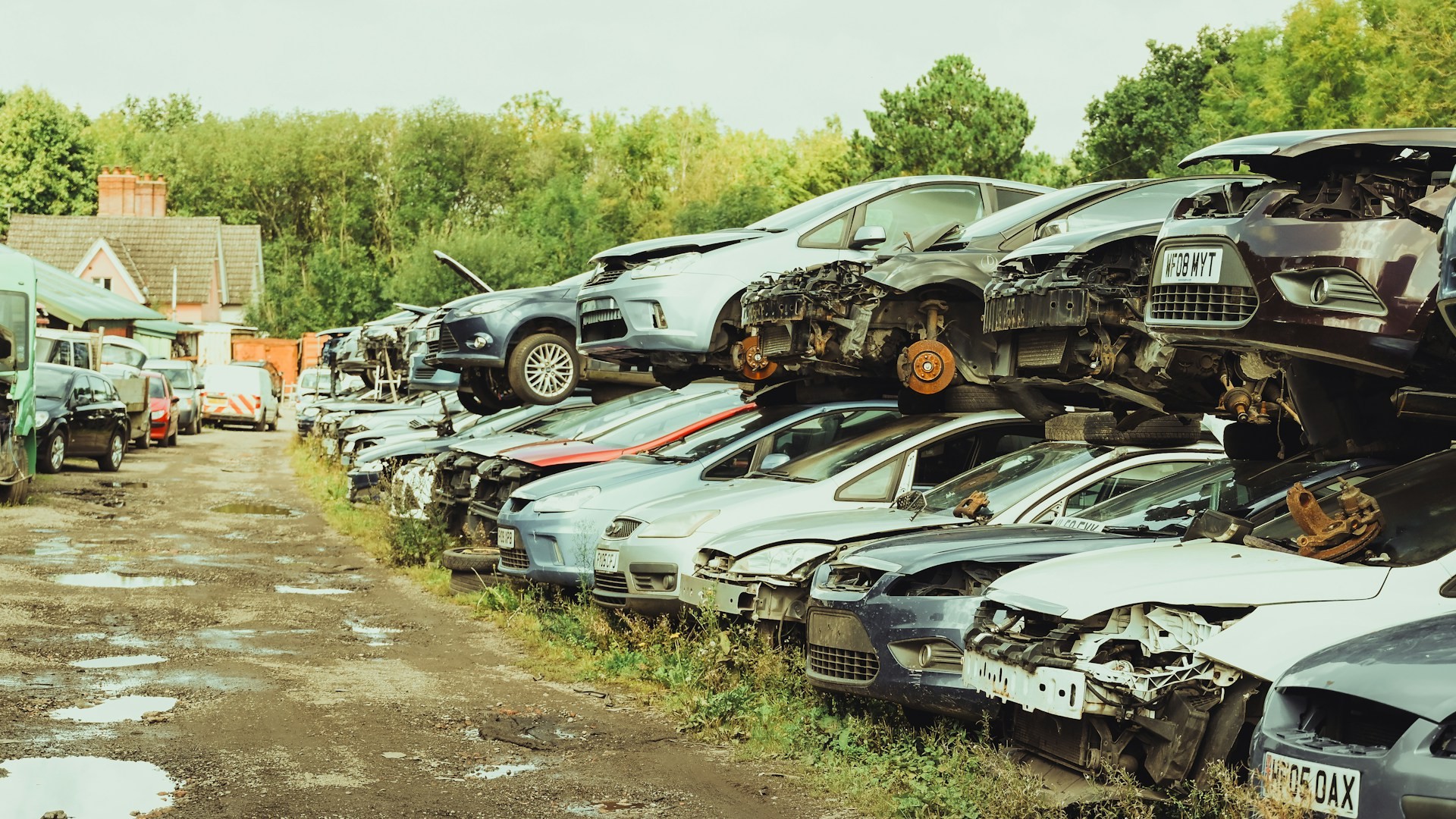
A YouTube explorer named Ryan Brutt, who runs the channel Auto Archaeology, has been walking the yard and showing what is sitting out in the weeds.
Report: autoevolution
A Thousand Cars, Four Body Styles, And One Big Surprise
The yard holds A-body and E-body compacts, B-body intermediates and C-body full-size cars. The latest tour focused on the section packed with B-body Mopars.
The B-body platform underpinned Chrysler’s mid-size cars from 1962 to 1979. It carried the Dodge and Plymouth muscle cars many readers grew up with.
Common four-door models included the Dodge Coronet and the Plymouth Belvedere, and the yard has plenty of two-door coupes too.
The Road Runners Were All Plain Jane 383s
The Plymouth Road Runner was a strong seller, so the yard has plenty of them. Every one of the Road Runners in the video carries the 383-cubic-inch V8, with no Hemi and no Six-Barrel among them.
That makes sense. Plymouth built the car to be cheap, and most buyers picked the standard engine.
A White 1970 Charger R/T Held A Six-Pack Secret
The gem of the tour is a 1970 Dodge Charger R/T. Dodge built about 10,000 R/Ts that year, and this one left the factory with the 440 Six-Pack, a V8 rated at 390 horsepower.
Only 684 cars got that engine in 1970. This one has an automatic transmission, and it is one of 337 examples with that drivetrain.
The color is EW1 white. The 1970 Charger Registry says 4.3% of R/Ts were ordered in that color, and the writer estimates fewer than 15 units were made with this drivetrain setup.
Sadly, the car is described as just a shell. The big engine that made it special is not there.
Charger Sales Were Huge, But The R/T Was Not Common
Dodge delivered more than 370,000 Chargers from 1966 to 1971, mostly with small-block V8s. The base Charger is a common junkyard find.
The R/T, though, is somewhat rare, which explains why spotting one in a yard with this much history gets enthusiasts talking.
The Belvedere Hides A Two Tone Mystery
Another stop on the tour is a 1970 Plymouth Belvedere, the entry-level B-body. 1970 was the last year for the nameplate.
Plymouth built 24,246 Belvederes in 1970, down from nearly 190,000 in 1966. This car is a two-door coupe, the rarest body style that year, with only 4,717 ordered.
It appears to wear white over B5 Blue with a painted top, a very rare option on B-body cars. Experts estimate 1% to 3% of cars had it, which works out to between 47 and 142 coupes.
A V02 code on the fender tag is what proves a true two-tone car, and that little tag is where every question about a Mopar ends up.
Why The Fender Tag Is Every Mopar Fan’s Best Friend
Chrysler stamped a small metal tag on the fender of these cars. It lists codes for the paint, trim, engine, transmission, axle and options.
Restorers decode it to find out how a car left the factory. A rare engine code, such as the one for the 440 Six-Pack, can turn a junkyard shell into a car worth saving.
That is exactly why so many explorers photograph tags first and ask questions later.
Why Cars Like This End Up In Rows Of Weeds
For decades, a worn muscle car was just a used car. Owners parked them when the engines failed or the rust got bad, and the bodies sat while values rose around them.
Now a shell with the right VIN is worth real money to a restorer, since a good body is the hardest part of a build to find.
What A Junkyard Visit Can Teach Even If You Never Buy A Car
Salvage yards are open-air libraries for restorers. A sheet of original metal, a trim piece or a dash pad can save weeks of searching.
If you visit one, bring gloves, sturdy boots, a flashlight, basic hand tools and plenty of water. Watch your step around broken glass and rusted metal.
Always ask the owner before you take photos or pull parts. Many yards have rules, and some charge an entry fee.
When you find a part, compare it carefully to what you need. Part numbers, casting dates and mounting points matter, and a part that almost fits is no bargain.
Photograph the VIN plate, fender tag and build numbers of any interesting car. Those records help enthusiasts identify real muscle cars, and they help keep history from vanishing.
The saddest lesson from Mopar City is how many special cars sit forgotten. A rare engine, a good color, and a story like this one’s are all the reasons a car can be saved, but only if someone steps in before it is gone.
More Stories You May Like
- Ford Recalls 10,001 Brand New 2026 Explorers, Broncos, Mustangs And Rangers Over Piston Domes That Could Cause Engine Failure, With The Fix Not Expected Until December
- Only 66% Of Drivers Believe Their State Law Requires Action Near A Stopped Police Car, And Move Over Fines Run From $30 In Florida To $2,500 In Virginia
- Explorer Drives Over Five Hours Back To An Eerie Yard Full Of Rare Vehicles Including Milk Floats And A Bedford Van And Says The Place Feels Very Uneasy