

It is the split-second decision every driver dreads. A deer bolts out of the trees and into your headlights, and your instincts scream at you to yank the wheel. Insurance agent @samtheinsman has blunt advice for that moment, and it surprises plenty of people. “In case nobody has told you yet, hit the deer,” he says. His reasoning comes down to safety and to how your insurance company will treat the claim.
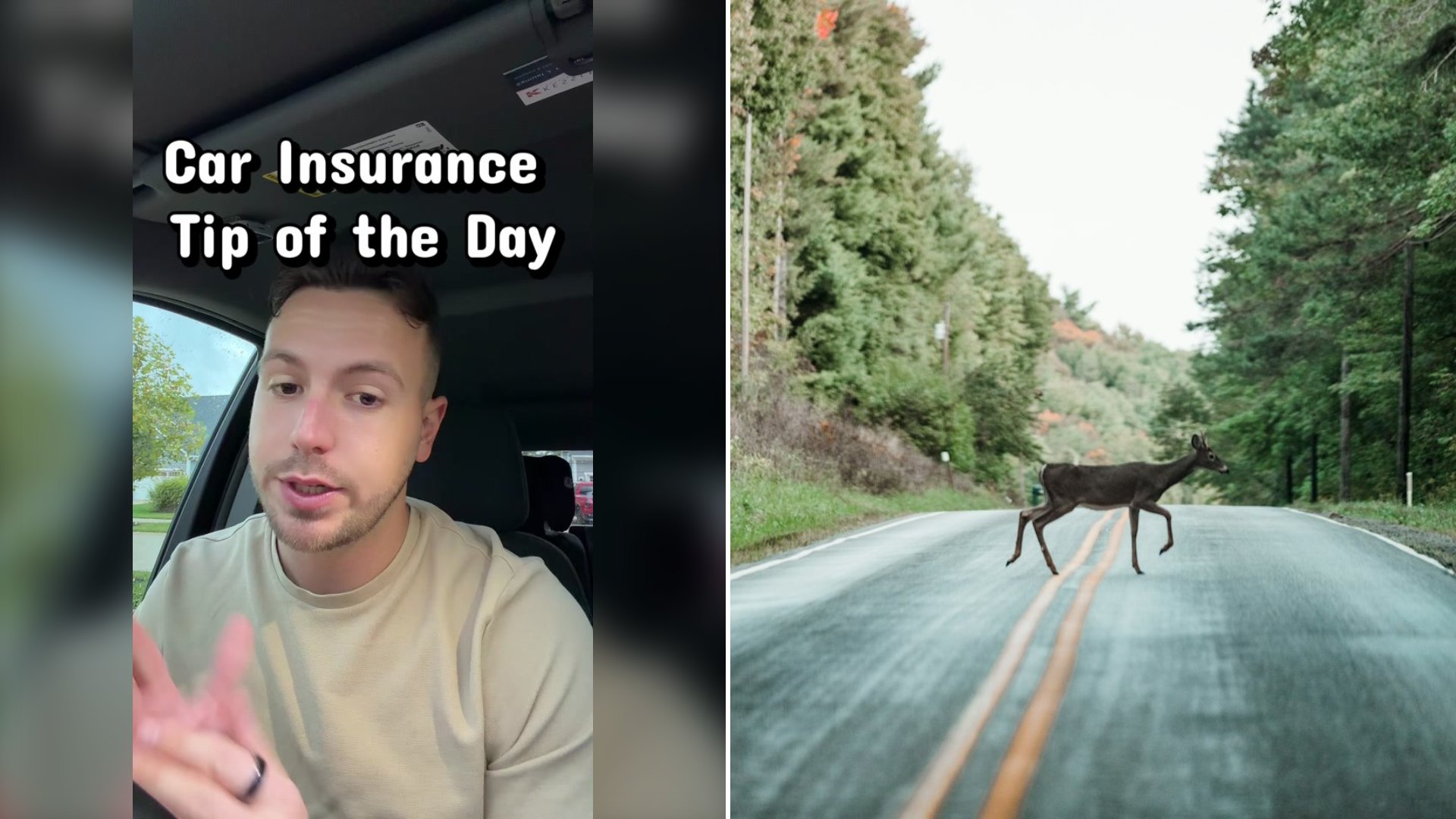
In a quick video, he explains the difference between hitting the animal and swerving to avoid it. “If you swerve and you end up hitting anything else, you hit the guardrail, a tree, another car, anything else, that’s your fault,” he says.
Hitting the deer, on the other hand, is treated differently. “If you hit that deer, it’s gonna be a comprehensive claim,” he explains. “If you have a good policy, you might not even have a deductible on it.” His bottom line is that staying the course can save you “a couple hundred bucks on your collision deductible” compared with swerving into something else.
He was careful to add a disclaimer in his caption. “I’m not saying to intentionally hit a deer,” he writes. “If a collision is unavoidable, braking and maintaining control is generally safer than swerving. Every situation is different, and safety comes first!” He also notes that the video is general information, not legal or personalized insurance advice. His short version: “Brake, stay straight, and stay safe!”
@samtheinsman
Comprehensive Versus Collision, in Plain English
Most full-coverage auto policies include two separate parts that pay for damage to your own car.
Collision coverage pays when your car hits another vehicle or an object, such as a guardrail, pole, tree, or ditch. If you swerve to miss a deer and hit something else, that is generally a collision claim. Depending on the circumstances and your insurer, it may be considered at fault, which can raise your premium.
Comprehensive coverage pays for damage from things largely outside your control, such as theft, hail, fire, falling trees, and contact with animals. Hitting a deer typically falls here. Comprehensive deductibles are often lower than collision deductibles, and some policies carry a very low or even zero deductible for comprehensive. Animal strikes are generally not treated as at-fault accidents, though every insurer has its own rating rules.
One important catch: if you carry only liability insurance, neither type of claim applies to your own car. Liability covers damage you cause to others, not repairs to your vehicle. If you drive an older car with liability only, a deer strike will come out of your own pocket.
Why Swerving Is So Dangerous
The financial argument is only part of the story. Safety experts have long warned that swerving to avoid a deer can lead to worse crashes than hitting the animal. A sudden jerk of the wheel at highway speed can send a car into oncoming traffic, off the road, down an embankment, or into a rollover. A deer strike is frightening and can cause serious damage, but drivers who stay in their lane and brake are generally less likely to suffer the most severe outcomes.
Here is what to do when a deer appears ahead:
- Brake firmly and steadily. Modern anti-lock brakes let you brake hard while keeping steering control.
- Hold the wheel straight. Stay in your lane rather than swerving.
- Use your horn. A long blast can sometimes startle a deer out of the road.
- Expect more than one. Deer often travel in groups. If one crosses, slow down and watch for others following.
- Buckle up every time. A seat belt is your best protection in any crash.
When and Where Deer Strikes Happen Most
Deer are most active around dawn and dusk, which unfortunately overlaps with many people’s commutes. Collisions also tend to rise in the fall, especially from October through December, during the mating season. That is also when shorter days put more drivers on the road in the dark.
Use your high beams on empty rural roads when it is safe to do so, since they can help you spot the glow of eyes earlier. Pay attention to deer crossing signs, which are placed where animals are known to move. Slow down on wooded stretches and near fields, and scan the shoulders, not just the road ahead.
What to Do After You Hit a Deer
If the worst happens, move your vehicle to a safe spot if you can and turn on your hazard lights. Check yourself and your passengers for injuries. Do not approach the animal, since an injured deer can kick and cause serious harm. Call the police if anyone is hurt, if the deer is blocking the road, or if your state requires a report. A police report can also help support your insurance claim.
Take photos of your car, the scene, and any visible damage, then contact your insurance company as soon as possible. Before driving on, check for leaking fluids, broken lights, or a damaged hood that could fly up. When in doubt, call for a tow.
His advice may sound harsh, but the logic is simple. Brake hard, stay straight, and let your comprehensive coverage do its job.
More From Steel Horse Rides
- Car Insurance Averages $143 A Month, But Full Coverage Runs $302 In Maryland Versus $85 In New Hampshire, And 32 States Are Projected To See Hikes By Year End
- Cameras And Radar Are Making Fender Benders Cost More, With AAA Finding Driver Assistance Systems Can Add Up To 37.6 Percent To Repair Bills, Including $1,540 After A Minor Front Hit
- Hybrid And EV Myths That Older Drivers Still Believe Could Cost You Money, So Here Is What Is True Before You Dismiss Or Buy One For Yourself