


A BMW M8 Gran Coupe owner pays $6,744 a year just to keep the car legally insured, according to CarInsurance.com’s 2026 ranking of the most expensive vehicles to insure. Break that into monthly terms and it’s $562 — before a single loan payment, oil change, or tank of premium gas. The national median rent in the U.S. sat at $1,390 a month as of August 2026, per Apartment List’s National Rent Report. Run the math and a single year of full-coverage insurance on the wrong car can outstrip an entire month of keeping a roof over your head, with room to spare.
The Full 2026 List, and It’s All One Brand at the Top
CarInsurance.com pulled quotes across more than 3,000 vehicle models using rate data from Quadrant Information Services, based on a 40-year-old driver with a clean record carrying full coverage (100/300/100 limits, $500 deductibles) and a 12-mile commute. Five of the priciest results all wear the same roundel:
- BMW M8 Gran Coupe — $6,744 per year
- BMW M5 Touring — $6,708 per year
- BMW M5 — $6,593 per year
- BMW M8 Competition xDrive — $6,423 per year
- Audi RS e-tron GT Performance — $6,291 per year
That’s not a fluke of methodology, either. A separate 2026 breakdown syndicated to local newsrooms including KEYT News Channel 3 in Santa Barbara ran the identical top five off the same underlying data, putting roughly $4,400 of daylight between the cheapest car to insure in America — the Subaru Crosstrek at $2,299 a year — and the M8 Gran Coupe at the top.
Where the 911 Turbo and the Corvette Actually Land
The headline math gets more interesting once you isolate specific sports and performance cars rather than the sedan-and-wagon-heavy top of the chart. CarInsurance.com’s own model-by-model breakdown puts the Porsche 911 Turbo at $3,200 for six months of coverage — $6,400 a year — right in the same neighborhood as the BMW M cars, and just ahead of the track-focused 911 GT3 at $3,018 for six months. A separate insurance-comparison analysis from The Zebra, built on its own Dynamic Insurance Rating tool pulling ZIP-code-level filings from Quadrant and S&P Global, lands the Porsche Panamera at $483 a month ($5,796 a year) using a different driver profile — different inputs, same conclusion: German performance cars dominate both ends of the premium chart.
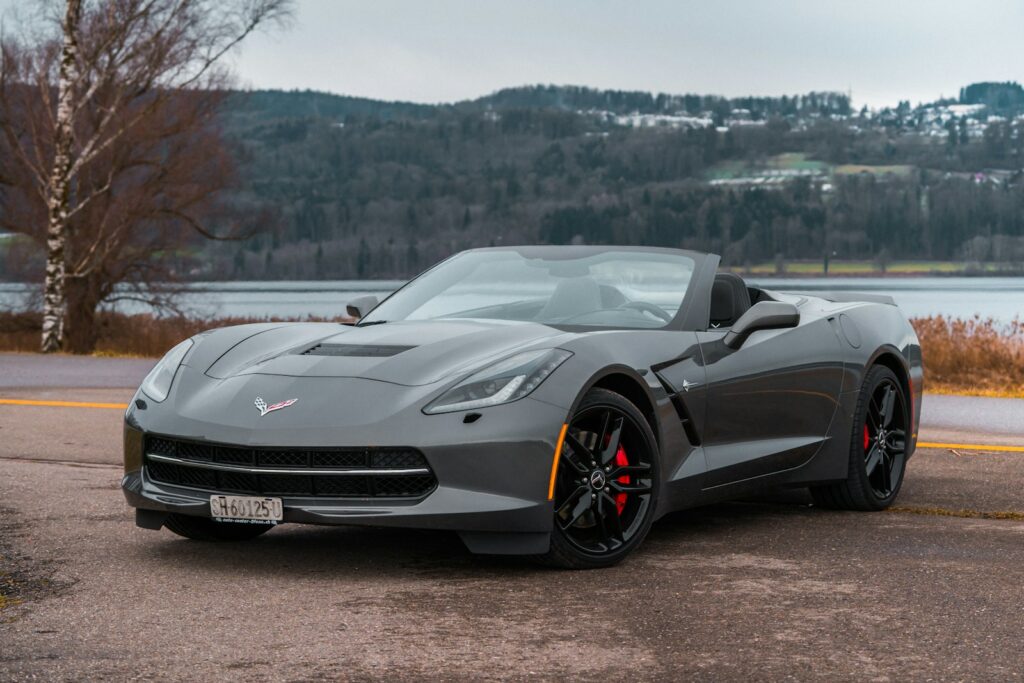
Corvettes generally price lower than the Porsche and BMW M-cars in most insurer quote engines, largely because GM’s volume and parts network keep repair costs down relative to low-volume European rivals — but a well-optioned Z06 or ZR1 with a lengthy claims history in the driver’s file can still push into the same multi-thousand-dollar-a-year territory, especially once at-fault accidents or a driver under 25 enter the equation.
Why the Premiums Run This High
CarInsurance.com’s analysts point to the same handful of factors across every car on the list: expensive-to-source parts, specialized labor for repairs, high theft or total-loss rates, and the raw physics of what happens in a crash involving 500-plus horsepower. “Some vehicles are more expensive to insure because they’re more costly to repair or replace and more likely to lead to expensive claims,” The Zebra’s research team notes, adding that “replacement parts are often made from premium materials and produced in smaller quantities” — a carbon-ceramic brake rotor or a bespoke aluminum body panel doesn’t come off a shelf the way a Camry fender does.
What It Looks Like Against a Typical Household Budget
Context matters here. NerdWallet’s own analysis of AAA’s national driving-cost data puts the average annual insurance bill for a typical new vehicle at roughly $1,694 — meaning an M8 Gran Coupe owner pays close to four times the national average just for coverage. Stack that $6,744 against $1,390 in median monthly rent and the comparison isn’t close: insuring one of these cars for a single year consumes nearly five weeks’ worth of the typical American’s housing budget, and in dozens of more affordable metro areas where rent runs well under the national median, that single insurance bill can eclipse two full months of rent. The sticker price gets all the attention when someone buys a performance car. The bill that shows up every six months from the insurer is the one that actually reshapes a budget.