
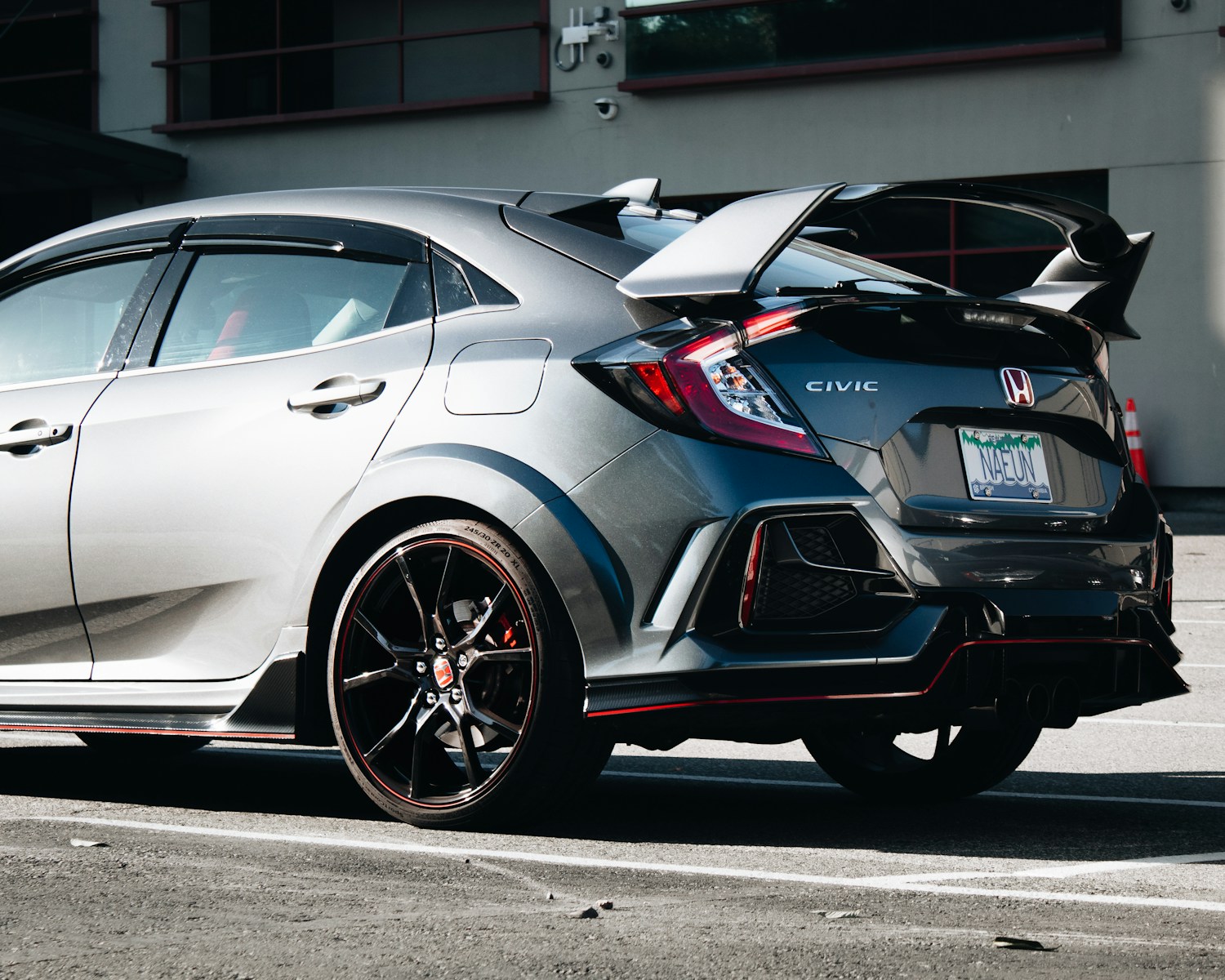

Honda didn’t sell an official Civic Type R in the United States until 2017, but Japan had already been building them for two full decades by then. The first one, a hand-built hatchback called the EK9, went on sale in Japan in August 1997 and was never federally certified for American roads. Under the same 25-year rule that has been slowly unlocking Skylines and other JDM legends, the entire run of that original car has now aged into legal importability, and a second, far rarer Japan-only Type R is just now crossing that same threshold.
What the 25-Year Rule Actually Says
U.S. Customs and Border Protection lays out the mechanism plainly: “As a general rule, motor vehicles less than 25 years old must comply with all applicable Federal Motor Vehicle Safety Standards (FMVSS) in order to be imported permanently into the United States,” according to CBP’s own import guidance. Once a specific car passes that 25-year mark from its date of manufacture, it’s exempt from the FMVSS and EPA emissions certification that would otherwise make importing a car Honda never sold here practically impossible. That’s the loophole that has let a steady stream of Skyline GT-Rs, Kei trucks and other forbidden-fruit Japanese cars into American driveways over the past decade, and it now applies fully to the car most JDM enthusiasts consider the purest Type R ever built.
The EK9 Was a 16,000-Unit Science Project
The EK9 Civic Type R was sold exclusively in Japan and never adapted for any export market. Honda built roughly 16,000 of them between 1997 and 2000, each fitted with a hand-ported B16B four-cylinder making 182 horsepower at a screaming 8,200 rpm, a seam-welded chassis for extra rigidity, a helical limited-slip differential, and interior sound insulation stripped out purely to save weight. Nothing about it was built for comfort. Because the earliest cars were manufactured in 1997 and the last in 2000, the entire production run has now cleared the 25-year import threshold, with the final holdout cars becoming eligible within roughly the past year.
Collector interest didn’t wait for American import eligibility to catch up. A pristine EK9 with only 2,549 kilometers on the odometer sold for ¥7.64 million, about $73,000, at a USS Tokyo dealer auction, according to a report on the sale that described the car as “about as close to perfect as one can get.” That result, achieved entirely within Japan’s domestic market years before most of these cars could legally cross the Pacific, is the clearest signal available that global demand for the EK9 was already well ahead of the paperwork.
The Real 2026 Story Is a Much Rarer Car
Here’s where the popular narrative about this import wave gets a detail wrong. The four-door FD2 Type R sedan, which Honda built for Japan only between March 2007 and August 2010, is nowhere close to 25 years old yet; those cars won’t start clearing customs until the early 2030s. The Japan-market car actually crossing the threshold alongside the EK9 right now is the second-generation EP3 Type R, which arrived in 2001. Unlike its European cousin, built in the same Swindon, England factory but detuned for the UK market, Honda equipped the Japanese-spec EP3 with the more powerful K20A engine borrowed from the JDM DC5 Integra Type R, giving it a meaningfully different character behind the wheel. Honda built just 1,464 of these for the Japanese market, a fraction of the 24,334 sent to Europe, which makes the earliest examples now becoming import-eligible dramatically scarcer than either the hatchback that came before or the sedan that came after.
What This Means for Buyers Right Now
For anyone actually shopping this segment, the practical takeaway is that the EK9 is now a fully open book, no longer gated by which specific model year happens to have aged out, while the JDM EP3 is only beginning its window and will remain a thin trickle of available cars for several more years as later production years age in one at a time. The FD2 sedan, despite plenty of enthusiast chatter suggesting otherwise, simply isn’t part of this particular wave; anyone hunting one through a broker claiming import eligibility this year should ask exactly which build date is on the compliance paperwork. With clean EK9 examples already fetching close to $73,000 in Japan’s own domestic market before wider global access, and the EP3’s minuscule Japanese production run only now becoming available at all, both cars look positioned to keep climbing rather than leveling off anytime soon.