
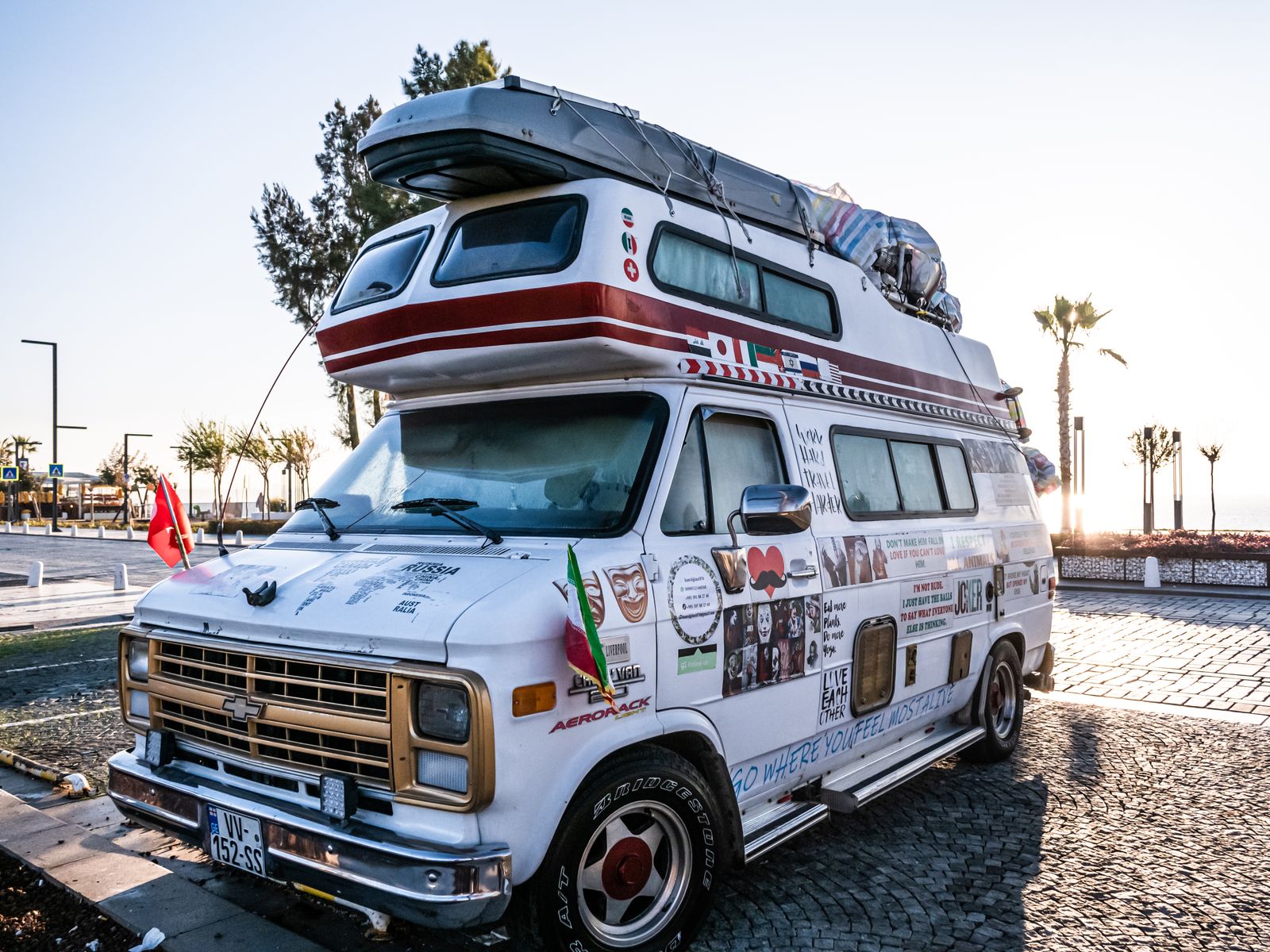

He didn’t come home with groceries or a new tool. He came home with a camper.
Not a little pop-up, either. A full-size, “sleeps six if you don’t mind knees in ribs,” double-axle travel trailer with glossy brochure photos taped inside the window and that sharp, new-plastic smell still hanging in the air. He backed it into their driveway like he’d just landed a trophy fish, hopped out, and started talking before the engine even cooled.
His wife stood on the porch in socks, coffee in hand, watching a small mobile apartment slowly block the view of their flower beds. She didn’t say “wow.” She didn’t say anything at first, which was somehow worse, because he kept filling the silence with numbers and plans and “I got a great deal.”

The “Great Deal” That Wasn’t Part of the Marriage Budget
He’d been in a phase for a while—YouTube channels about off-grid living, weekend fantasy routes through national parks, little comments at dinner like, “You know what would be fun? Just taking off for a bit.” She’d heard it all, nodded along the way you do when someone’s hobby isn’t hurting anyone, and assumed it would stay in the realm of browsing and daydreaming.
Except he didn’t browse. He bought. And he didn’t frame it as a discussion; he framed it like a reveal, like she was supposed to be impressed by his initiative. The way he said it—“I already handled the hard part”—made it sound like a favor.
The price was the first crack. He tossed out the monthly payment like it was a phone bill, not a new loan, and when she asked what he’d put down, he got vague in that way that means, “Please don’t make me say it out loud.” It turned out he’d financed almost the entire thing, because the dealer “had a special” and “it would be stupid not to.”
She did the math in her head and didn’t like where it landed. Even if the payment was technically “manageable,” it was now part of the household whether she wanted it or not, and the decision had been made in a vacuum where her opinion apparently didn’t exist.
The Driveway Test That Turned Into a Problem
He was still riding the adrenaline when he suggested they take it out that weekend. He walked her through the interior like a realtor: tiny shower, tiny stove, a table that turned into a bed with the kind of optimism only manufacturers have. He kept opening cabinets to show storage space, as if cupboards could solve the main issue.
She asked, carefully, what the plan was for towing. He had an SUV—decent, reliable, the thing they used for errands and family visits—but it wasn’t exactly built to haul a miniature house. He waved it off with, “It’ll be fine,” which is what people say right before something expensive proves them wrong.
They didn’t even make it to the street before reality started tugging at the fantasy. The rear of the SUV dipped when he lowered the hitch, and the front end lifted enough that the headlights pointed slightly upward, like it was trying to look away. The camper sat behind it like a stubborn dog refusing to move, and when he pulled forward a few feet, everything looked wrong—weight distribution, sway, the whole setup.
A neighbor wandered over in that casual, “I’m not trying to watch, but I’m watching,” way. He asked what the trailer weighed, and the husband answered with a number that sounded rehearsed. The neighbor nodded slowly, then said, “And what’s your tow rating?”
That question hung there. The husband blinked like he’d never been asked it, which was basically an answer by itself.
The Moment He Realized He Needed a Truck
He spent that night on his phone, Googling towing capacities like someone cramming for a test they didn’t know was happening. The next morning he was in a different mood—less triumphant, more “okay, so here’s the plan.” He announced that, technically, yes, the SUV wasn’t ideal, and no, it wasn’t safe, and yes, they’d “probably” need a truck.
Not in six months. Not after saving. Now. Because he’d already pictured their first trip and didn’t want the camper to sit in the driveway like a monument to impulse control.
His wife’s face did that thing where it goes still, like she’s trying to decide whether to laugh or scream. She asked how, exactly, he planned to buy a truck after financing a trailer. He said he’d trade in the SUV and “roll it together,” because car salespeople had told him there were ways to make it work.
That’s when the second shoe dropped: his credit wasn’t good enough on its own. He’d overextended before, apparently, and while he could qualify for the camper loan, adding a truck was a different conversation. The finance guy had been polite about it, but the message was clear—he needed a co-signer.
He needed his wife.
The Co-Sign Ask and the Way It Was Delivered
He didn’t come at it with an apology. He came at it with logistics. He sat at the kitchen table with his laptop open, already on a dealership website, showing her trucks like she was shopping with him for patio furniture.
He said it like it was obvious: “All you’d have to do is co-sign.” Not “Would you?” Not “I messed up.” Just “You’d have to,” as if she was a missing puzzle piece he’d misplaced and now needed back in the box.
She asked if he understood what co-signing meant. He said, “Yeah, it’s just so they’ll approve it.” She repeated the question, slower. He frowned, because he understood the words but didn’t like the direction the conversation was going.
Her point was simple: co-signing meant it wasn’t his truck loan, it was their truck loan, and if he stopped paying, the bank would come for her. She’d be tied to the debt, tied to the risk, tied to a decision she hadn’t been invited into twice now—once with the camper, and now with the truck needed to make the camper usable.
He started bargaining immediately. He promised he’d handle the payments. He said the truck would be “for the family,” because they’d use it on trips and for hauling stuff, as if borrowing a justification could make it true. When she didn’t soften, he pivoted to irritation, like her reluctance was an obstacle, not a boundary.
He told her she was being unsupportive. She told him he was being reckless. And right there, it stopped being about towing capacity and became about trust.
The Awkward Fallout Living in the Driveway
The camper sat there all week, visible from the street, bright and clean and completely useless. Every time she pulled into the driveway, she had to maneuver around it like it was a physical manifestation of their argument. He kept tinkering with it—checking seals, adjusting the hitch, watching videos about sway control—busywork that looked productive but didn’t change the math.
He tried a different angle: he’d list the SUV and “maybe” sell it privately for more. He’d look at used trucks instead of new. He’d ask his brother about co-signing. Each idea came with the same unspoken premise that the original decision was already locked in, and now everyone else just needed to arrange their lives around it.
His wife didn’t explode. She got quieter, which in a household is its own kind of alarm. She started asking pointed questions about their finances—what else was on his credit, what the interest rate was, what the payoff was if they sold the camper, whether there were penalties—questions that weren’t angry so much as surgical.
He didn’t like that tone. He wanted her to share the excitement, not audit the damage. He wanted her to be the partner who “had his back,” while ignoring the fact that he’d made a major purchase without having hers.
By the time he finally said the words “I should’ve talked to you,” it didn’t land like a repair. It landed like a late admission, tossed out because he’d run out of better tactics. She didn’t say “thank you.” She asked what his plan was if she didn’t co-sign, and he didn’t have an answer that didn’t involve either selling the camper or letting it sit there as a very expensive reminder.
That’s where it stayed: a driveway standoff, shiny and silent. He could either swallow his pride and unwind the deal, or keep pushing her to attach her name to a mess she didn’t create. And she could either protect her credit and her sense of agency, or sign and hope his enthusiasm didn’t fade the moment the payments felt less like adventure and more like a bill.
The camper didn’t move, but the atmosphere in the house did. Every conversation about dinner or errands had this low hum beneath it: the realization that he’d treated “we” like an afterthought, until he needed it to get approved.
More from Steel Horse Rides: