
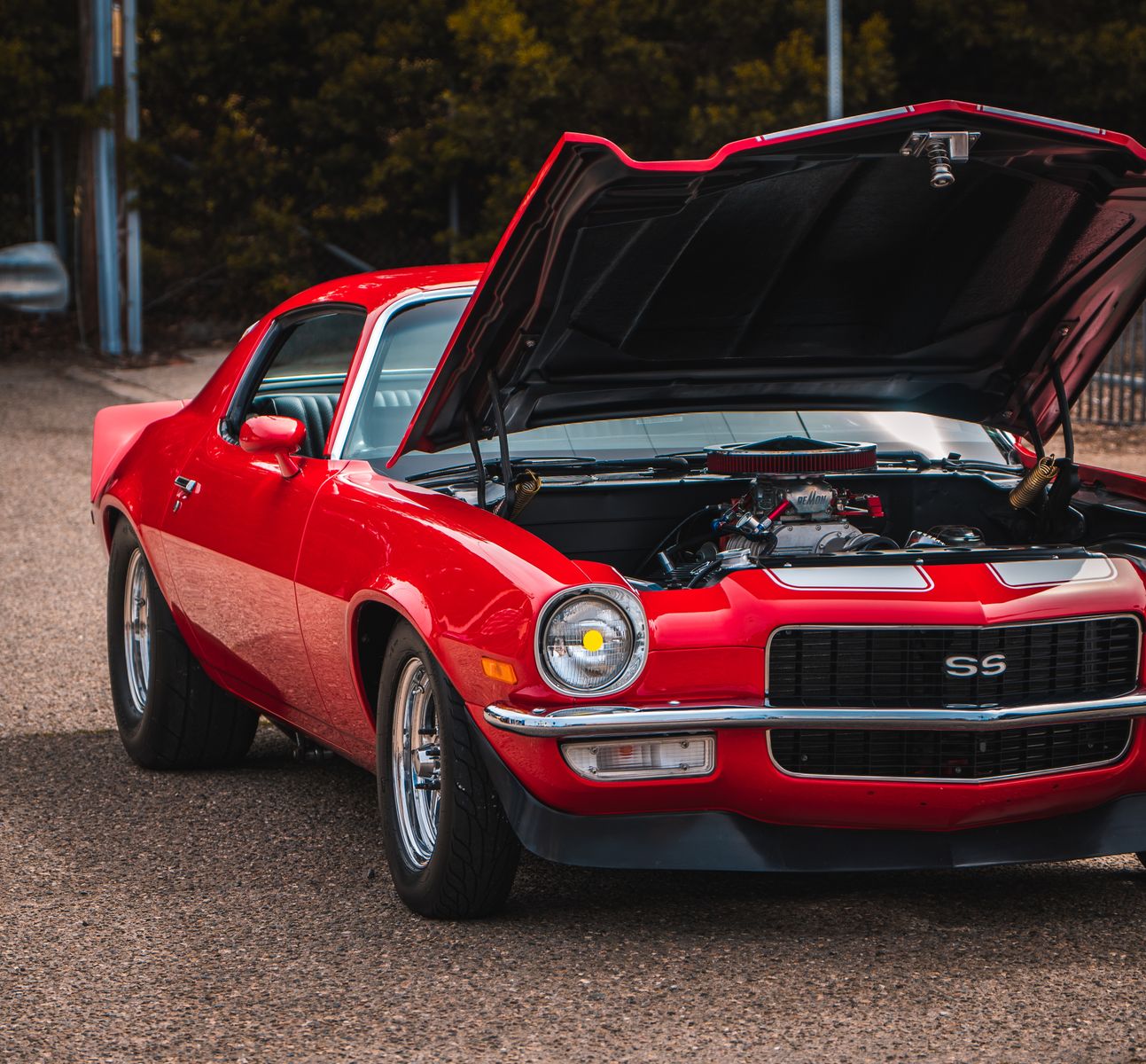

It started the way these things always start: one guy deciding he deserved a little fun on the weekends, and another guy on the same street who’d been quietly collecting ammunition for years. The drag car wasn’t some secret midlife crisis purchase, either. He had it delivered on a trailer in broad daylight, like a trophy, like a dare.
His name was Kyle, mid-30s, works in tech, the kind of neighbor who waves with his whole arm and says “buddy” to men he doesn’t know. He’d been daily-driving a sensible SUV and talking forever about “getting back into cars,” which mostly meant watching videos and sending his friends links at 1 a.m. When the black, primer-spotted Camaro showed up—caged interior, fat rear tires, no back seat—he acted like he’d adopted a rescue dog that just happened to have a supercharger.
Two houses down lived Dan, late-40s, married, always outside doing something “real” with his hands. Dan’s vehicle situation was pure suburbia: a silver Honda Odyssey with a cracked fog light and a car seat permanently imprinted into the second row. It was the kind of van that smelled like goldfish crackers no matter how many times you vacuumed, and Dan drove it with the resigned pride of a man who’d won different battles.
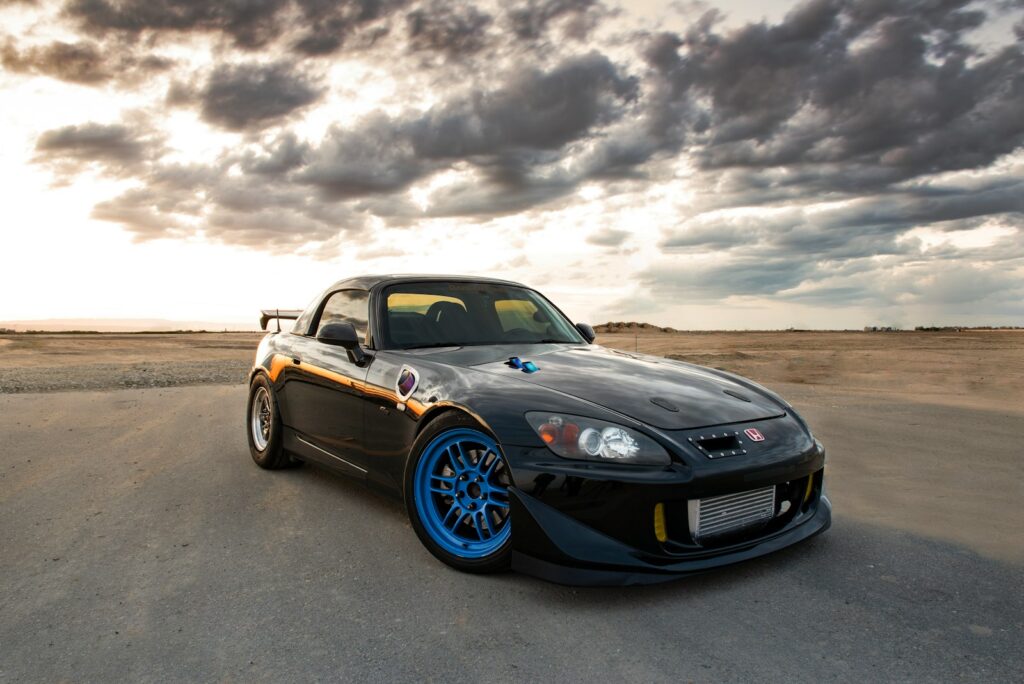
The drag car arrives, and the neighborhood gets a front-row seat
Kyle didn’t buy the Camaro to commute; he bought it to feel something on Friday nights. The first weekend it was in his driveway, he had the hood up like he was performing heart surgery, even though he kept checking his phone for tutorials. He’d fire it up for “just a second,” which turned into long, thudding idle sessions that made patio cups vibrate on nearby decks.
He also couldn’t keep himself from narrating it. When neighbors walked by, he’d give the same upbeat speech: stripped interior, built motor, “should be around six hundred at the wheels once I get it sorted.” He said “sorted” a lot, like the car was a stubborn coworker who simply needed better communication.
Dan watched all of it from his lawn with the expression of someone listening to a leaf blower at 7 a.m. He wasn’t openly hostile, but he had that quiet, irritated competence that makes enthusiastic people feel stupid. The only thing he ever really said to Kyle was, “Hope you got a muffler in there somewhere,” and Kyle laughed like it was friendly banter.
The minivan joke that didn’t land
The tension didn’t come from the car itself so much as the way Kyle treated it like a social event. He’d rev it a couple times before loading it onto the trailer, and he’d roll it off like he was unveiling a statue. Every time Dan backed the Odyssey out, Kyle would toss out little comments—“Careful, that thing might gap me”—the kind of jokes that are only jokes if everybody’s smiling.
One night, after Kyle came back from a local meet, he was still wired and talking too loud in the driveway. Dan was dragging garbage cans to the curb, and Kyle called out, “Dan, you ever race that thing? Bet it’s got, like, launch control for soccer practice.” It was meant to be harmless, but it had that edge of “I’m the fun one and you’re the boring one,” whether Kyle realized it or not.
Dan didn’t laugh. He just set the cans down carefully, like he was placing something fragile, and said, “You’d be surprised what a van can do.” He said it flat, not as a warning, not as a challenge—more like a fact Kyle hadn’t bothered to learn.
Kyle grinned anyway and went back to fussing with his tie-down straps. The whole thing might’ve died right there if Kyle had been able to let it go. But he had the kind of confidence that needs an audience, and Dan was right there, refusing to play along.
The stoplight, the passenger, and the perfect timing
A few days later, Kyle decided to take the Camaro out for a quick shakedown run after work. Not the track, not the meet—just a “let me make sure nothing’s leaking” lap around the main road, the kind of drive that definitely includes a few second-gear pulls. He had a friend in the passenger seat, another car guy, and they were already in that shared mood where everything is a potential story.
Dan, meanwhile, was coming back from the grocery store, alone in the Odyssey, still wearing his work shirt. The van was loaded with the ordinary weight of adult life: paper towels, a case of seltzer, probably something that would melt if he didn’t get home soon. He wasn’t out looking for anything.
They ended up side by side at the same light, the kind of suburban intersection with a gas station on one corner and a fast-food place on the other. Kyle’s Camaro was idling hard, choppy and loud enough that the cars behind them kept extra distance. Dan’s van sat there quietly, except for the faint rattle of something plastic in the cup holder.
Kyle glanced over, saw the Odyssey, and his brain did what his mouth always did: it turned life into a bit. He nodded at Dan like, “What’s up,” then gave the Camaro a little blip—just enough to announce himself. Dan looked over, didn’t smile, and then—this is the detail that made the whole thing sting—he gave the smallest nod back, like he was acknowledging a lane merge.
The loss that turned into a clip nobody could ignore
When the light changed, Kyle did what he’d been picturing since he bought the car. He went for it, hard, trying to leave clean without roasting the tires, trying to look effortless while also making a point. The Camaro barked, lurched, and for a half-second it was all noise and promise.
Except it didn’t hook the way he wanted. Whether it was cold tires, the street surface, or the fact that “built” doesn’t automatically mean “dialed,” the rear stepped just enough to make Kyle breathe out and modulate. That tiny hesitation was all the gap needed for something ridiculous to happen.
The Odyssey didn’t leap forward like a rocket, but it moved with that smooth, immediate torque modern vans have when they’re not dragging a trailer of kids. Dan stayed in it, steady, no drama, just a clean roll into the lane like he was getting ahead of a slow driver. For the first thirty feet, it looked like the van was actually out in front.
By the time Kyle got the Camaro settled and pulling, he was already playing catch-up, and that’s the part his passenger captured perfectly. The video wasn’t cinematic; it was a shaky, excited phone clip with loud crosstalk and the Camaro’s engine dominating the audio. But you could still see the van’s tailgate in frame longer than it had any right to be, and you could hear the moment Kyle’s friend stopped laughing and started yelling, “No way, no way, no—” like he was watching a prank unfold in real time.
Kyle eventually reeled it in, but it was too late to matter. The story wasn’t “drag car pulls on minivan,” it was “guy with loud weekend toy gets embarrassed by the family hauler at the exact moment someone is recording.” They drove another mile in tense silence with the engine still loud, like the car was mocking him even after it proved itself.
Back on the street, it stops being funny
The next morning, Kyle’s driveway turned into a workshop again, but the vibe was different. Hood up, tools out, laptop perched on the fender, like he could wrench his dignity back into place. He was suddenly very interested in traction, tire pressure, and the fact that “these things are geared weird until you really set them up.”
Dan didn’t parade around like he’d won a trophy. He did, however, start taking the Odyssey to the end of his driveway and back for no reason anyone could identify, like he’d discovered errands that only existed on his street. When Kyle was outside, Dan would wave the same way he always did, except now it had this calm, annoying friendliness to it.
Other neighbors picked up the vibe immediately, because neighborhoods run on whispered context. People started walking their dogs past Kyle’s house a little slower, looking at the Camaro like it might do something entertaining again. Somebody asked Kyle, a little too casually, “Hey, you ever race Dan?” and Kyle’s face did that tight smile thing where you can tell he’s measuring how much he hates you.
Kyle tried to reclaim the narrative by telling a different version of it. He’d say the road was dusty, or he was “just rolling into it,” or Dan “must’ve had it in sport mode,” like the minivan had a secret NOS button next to the hazard lights. But it didn’t help that the clip showed the exact opposite of his calm explanation—his friend shouting, the shaky camera, the unmistakable moment where the van is just… ahead.
Dan didn’t say much at all, which somehow made it worse. The only time he addressed it directly was when Kyle finally muttered something like, “Man, I can’t believe that happened,” and Dan replied, “You wanted weekend fun, right?” Then he walked inside with his groceries like it was the most ordinary conversation in the world.
Kyle kept the drag car, but the energy around it changed. It wasn’t a cool toy anymore; it was a loud object that now came with a story he couldn’t control, attached to the guy in the minivan who didn’t even have to try. And every time Kyle fired the Camaro up in the driveway, you could feel him listening—not for the engine, but for the Odyssey to start somewhere down the street, just to remind him that the most humiliating part wasn’t losing at a stoplight. It was knowing his neighbor could probably do it again whenever he felt like it.
More from Steel Horse Rides: