

It was one of those muggy, half-awake mornings on a busy job site where everybody’s running on caffeine, sarcasm, and the hope the foreman doesn’t add “one more thing” before lunch. Trucks were lined up along the gravel edge like a dealership lot—mud-splattered, lifted, dented, all of them with something to prove. And right in the middle of it, Derek was doing what Derek always did: talking about his truck like it was a member of the crew.
Derek had a newer heavy-duty pickup, the kind with tires that look expensive even when they’re bald. He treated it like a trophy, parking it where it got seen, backing it in slow and careful, wiping dust off the badge with his glove like anybody cared. The guys mostly let him have it because arguing with Derek was like trying to stop a leaf blower with a screen door.
That morning he was leaned up against the bed, telling a couple apprentices about “doing it right” with money—how he’d “stacked cash,” how banks were a scam, how he didn’t owe anybody a dime. He said it loud, too, so the whole site got the message: his truck was paid off, and that made him smarter than everyone still making payments.
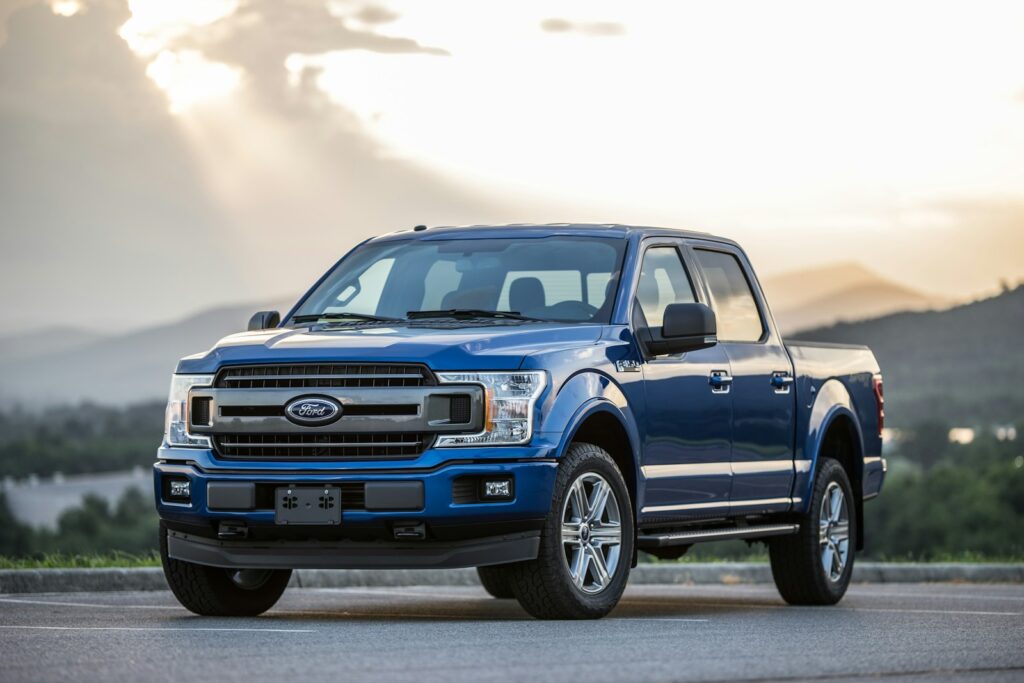
The bragging got louder the more people listened
Derek didn’t just mention the truck being paid off once. He worked it into everything, like it was a credential. Someone asked where the extension cords were and he answered, “In the gang box—same place I keep my receipts, because I actually pay for my stuff.”
By mid-morning break he was holding court by the tailgate with a coffee in one hand and his keys spinning on a finger. A couple guys smirked and kept eating, but a few listened anyway because it’s hard not to when someone’s broadcasting confidence like it’s a radio station. The foreman was within earshot and didn’t tell him to shut up, which only made Derek more animated.
He started aiming it at one guy in particular—Miguel, an older hand who drove an ancient work van and never said much. Derek made a crack about “some people still living in the Stone Age” and nodded toward Miguel’s van like it offended him personally. Miguel just chewed, looked at Derek like he was a fly, and went back to his sandwich.
That’s when Derek got that little spark behind his eyes, like he’d found an audience that might finally clap. He raised his voice and said, “I’m not like these dudes out here drowning in payments. My truck? Paid. Off. Title in my name. No bank. No stress.”
A strange truck rolled in like it belonged there
About an hour later, when the site noise had settled into the usual rhythm—compressors, saws, guys yelling measurements—an older white tow truck eased up to the entrance. It didn’t come in fast, didn’t throw dust, didn’t honk. It just rolled like it had all the time in the world, which is exactly how trouble shows up when it’s confident.
Most of the crew barely looked up at first. A tow truck on a job site isn’t automatically weird; sometimes someone’s car won’t start, sometimes a contractor needs a skid steer moved. But this one didn’t head toward the equipment or the trailer. It drove straight along the line of personal trucks, slow, like it was reading license plates the way a cashier scans barcodes.
Derek noticed it before anyone else did, because Derek watched his truck like a guard dog. He straightened up and did that half-joking, half-nervous thing people do when something feels off but they don’t want to admit it. “Who’s getting towed?” he called out, laughing too hard, as if the idea was hilarious.
The tow truck stopped in a clean little angle behind Derek’s pickup, not blocking traffic, just positioning. The driver got out calmly—middle-aged, work shirt, clipboard, no drama. He walked toward Derek’s truck with the practiced stride of someone who’s had a lot of conversations he didn’t enjoy but didn’t lose sleep over either.
The repo driver didn’t match Derek’s energy
Derek strutted over like he was about to win an argument he hadn’t heard yet. “Hey, man,” he said, still grinning. “You lost? This ain’t a tow yard.”
The driver glanced down at the clipboard, then at the VIN plate area like he was confirming what he already knew. “I’m looking for Derek H.,” he said, tone flat, not rude, just business. That alone made the air change around them, because nobody says your name like that unless it’s payroll, court, or trouble.
Derek’s grin froze in place for a second before he recovered. “Yeah, that’s me,” he said, and tossed his keys in his palm like a prop. “What’s up?” He looked back toward the guys like, watch this.
The driver nodded toward the truck. “I’m here for the vehicle,” he said. “It’s a repossession order.” No big announcement, no lecture, just the sentence landing like a brick in a five-gallon bucket.
For a beat, Derek didn’t respond. He just blinked, like the driver had spoken another language. Then he laughed—sharp and quick. “Nah,” he said. “Wrong truck. This thing’s paid off.”
The repo driver didn’t argue in circles. He flipped the clipboard around slightly, not shoving it in Derek’s face, but close enough to be obvious. “According to the lender, it’s not,” he said. “Last payment posted four months ago. Account’s charged off. Order says recover the vehicle.”
It got awkward fast, and then it got loud
Derek’s face went through a whole sequence—confusion, anger, embarrassment, and then that special kind of panic people get when their image is slipping in front of an audience. He snapped, “That’s impossible. I paid it. I got proof.” He said it like proof was a physical object he could pull out of his pocket, like a magic trick.
The repo driver stayed calm, which somehow made Derek look worse. “If you have documentation, you can contact the number on the notice,” the driver said, still even. “I’m not the bank. I’m here to pick it up.”
Guys had stopped working. Nobody said, “Ooooh,” out loud, but the silence did it for them. A couple workers pretended to keep busy while clearly watching, tools in their hands doing nothing, like they needed plausible deniability for witnessing a public humiliation.
Derek tried to pull rank with attitude. “You can’t just take it,” he said, stepping closer to the truck like his body could block paperwork. “This is my job site.” That was when the foreman finally wandered over, not running, just walking with that tired look of a man who has seen every variety of stupidity.
The foreman asked the driver, “You got the order?” The driver nodded and held up the paperwork. The foreman glanced at it, then at Derek, and didn’t say much—just, “Derek, handle it.” It wasn’t supportive. It was the kind of “don’t make this my problem” that hits harder than yelling.
Derek’s voice got higher. “This is messed up. I’m calling my wife,” he said, like that would reverse it. He started dialing with trembling fingers, turning away so nobody could see his face, but everyone saw his hands. The driver, meanwhile, walked around the truck, checked the wheels, and started setting up like he’d done it a thousand times.
The correction landed in front of everybody
When the driver reached for the wheel-lift controls, Derek spun back and shouted, “Bro, you’re not taking my paid-off truck!” He practically yelled “paid-off” like volume could convert debt into equity. The repo driver looked up, not annoyed, just direct, and said, “Sir, if it was paid off, I wouldn’t be here.”
It wasn’t a witty one-liner. That’s what made it brutal. It was a simple correction delivered at normal speaking volume while Derek was performing panic for the entire site.
A couple guys couldn’t help it and let out little cough-laughs, the kind you try to swallow but it escapes anyway. Miguel, the quiet older guy, didn’t laugh—he just shook his head once and went back to work like he’d seen the ending coming from the beginning. That tiny reaction somehow felt louder than a whole group roaring.
Derek kept talking, rapid-fire explanations that didn’t add up. First it was “the bank messed up,” then it was “my payments are automatic,” then it was “my ex handled the account,” then it was “I paid cash, I swear.” The more he spoke, the more it sounded like he wasn’t trying to convince the repo driver. He was trying to convince the handful of coworkers who’d listened to him brag about being smarter than everybody.
The driver gave him one last chance to take personal items out. Derek yanked the door open and started grabbing stuff—tools, a gym bag, a crumpled fast-food receipt pile—throwing it onto the gravel with more force than necessary. Every time something hit the ground, it felt like his pride landing with it.
Then the truck went up, slow and inevitable. The repo driver secured it, checked the straps, and climbed back into his tow truck like this was just another Tuesday. Derek stood there with his keys in his hand—keys that suddenly meant nothing—and stared at the empty spot where his whole personality had been parked.
When the tow truck rolled out, the job site noise started again, but it didn’t really return to normal. Derek didn’t say much after that, just paced in short loops like he was looking for a place to put his anger. And the worst part wasn’t even the truck leaving—it was that the thing he’d been using to talk down to everyone was gone, and the only thing left was the fact that everybody had heard him swear, loudly and repeatedly, that it was paid off.
More from Decluttering Mom: