


He found the car the way a lot of “easy project” cars get found: late at night, one hand on his phone, the other on a half-finished energy drink, scrolling through listings that all sounded like dares. The ad was short and smugly optimistic—older coupe, cheap, “just needs a sensor,” starts but “runs rough,” priced low because the seller “doesn’t have time.” The photos were taken in the dark with the kind of flash glare that makes any paint look decent and any engine bay look like a mystery.
The guy—let’s call him Aaron—wasn’t clueless. He’d done brakes, swapped coils, chased down vacuum leaks, all the usual weekend-warrior stuff. He’d been telling his friends for months he wanted something he could wrench on without relying on a shop, something “simple” that wouldn’t turn into a life event. The listing hit that exact fantasy: a cheap car with a single obvious gremlin, a couple hundred bucks in parts, and the satisfaction of bringing it back.
So he drove out to meet the seller in a strip-mall parking lot, because of course it was a strip-mall parking lot. The car started after a couple seconds of cranking and immediately settled into a shaky, uneven idle that made the whole hood tremble like it was cold. The seller shrugged and did the classic, “It’s probably just plugs,” like he was talking about changing a light bulb.
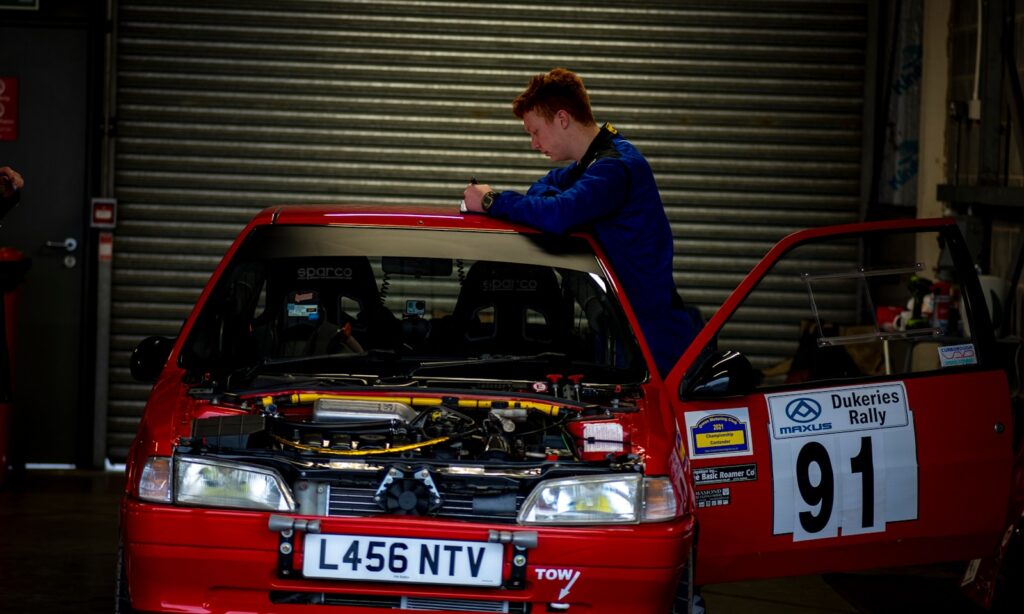
The “Easy Fix” Pitch
The seller had a story ready: it started misfiring, he replaced “a few things,” then got busy, then it sat. He pointed at a new-looking ignition coil on one cylinder like it was proof of good intentions, and he kept saying the words “cheap fix” in different arrangements. Aaron asked about codes, and the seller waved it off—didn’t have a scanner anymore, but his buddy said it was “definitely a sensor.”
Aaron did the usual quick checks you can do in public without looking like you’re dismantling the car: looked for milkshake under the oil cap, checked the dipstick, sniffed for raw fuel. The oil looked dark but not catastrophic, and there wasn’t that sweet coolant smell in the exhaust. The engine noise, though—there was a faint metallic tap under the misfire that didn’t match the rhythm of the rough idle, like someone lightly knocking a wrench on a pipe.
He hesitated, and that’s where the whole thing turned. The seller, sensing the wobble, lowered the price on the spot—just enough to make Aaron feel like walking away would be irrational. Aaron texted a friend a quick video of the idle, got back an immediate “probably plugs/coils,” and that was all the permission he needed. Money changed hands, title got signed, and Aaron drove it home with his hazard lights on, convincing himself the tapping would disappear once the misfire was handled.
First Night in the Driveway
In his driveway, with actual light and time, the car started showing its personality. Aaron pulled the engine cover and found little clues: hose clamps that didn’t match, a couple connectors half-seated, and one spark plug wire with an old burn mark like it had been arcing for a while. None of that screamed “full rebuild.” It screamed “somebody was in here panicking.”
He scanned it properly and got a mess: multiple misfire codes, a lean condition, and a random cylinder contribution warning that kept changing. He did the simple stuff first because that’s what you do when you’re trying to keep a project from becoming a tragedy. New plugs, swapped coils around to see if the misfire followed, cleaned the MAF, checked the intake boot for cracks.
It did improve, briefly, in the way that tricks you into celebrating too early. The idle smoothed out just enough that Aaron took it around the block, and for the first few minutes it felt like the ad had been telling the truth. Then he got on the throttle a little harder, the engine stumbled, and that metallic tapping turned into something sharper—more like a fast rattle under load—before the check engine light started flashing like it was begging him to stop.
He limped it back, shut it off, and sat in the driver’s seat for a full minute with both hands on the steering wheel, doing that silent mental math of “How bad could this actually be?” Then he did what every stubborn project-car buyer does next: he went back to the driveway and kept diagnosing, because the alternative was admitting the seller’s “easy fix” was a baited hook.
The Tests That Ruined the Mood
Compression test time. Aaron pulled the plugs again—annoying, but manageable—and threaded the gauge in like he was performing a ritual. The first cylinder read fine. Second one, fine. Third one was low enough to make him recheck the tool, then the battery charge, then the procedure, because the number didn’t fit the story he’d been telling himself.
He did a leak-down test next, and that’s when it stopped being theoretical. Air hissed where it shouldn’t: into the crankcase, through the oil fill, with that unmistakable sound of rings not sealing or a cylinder wall not being the shape it’s supposed to be. On another cylinder he could hear it bleeding past the valves. The misfire wasn’t from a lazy coil or an aging plug—at least not primarily. The engine had internal problems, plural.
Aaron started pulling what records he could from the car itself. A couple old receipts were stuffed in the glove box: oil changes that were way too far apart, a cheap coolant flush, a note about “overheat concern” that had been “resolved.” That last one sat in his head like a splinter. Because overheats don’t always resolve; sometimes they just get quiet for a while and then come back as warped heads, cooked rings, and bearings that don’t want to be bearings anymore.
He messaged the seller with the test results, trying to keep it calm. The seller replied with a breezy shrug in text form—he “had no idea,” it “ran when he parked it,” and besides, Aaron bought it as-is. The tone wasn’t hostile; it was worse. It was dismissive, like Aaron was making it complicated on purpose.
The Tear-Down Spiral
Aaron could’ve cut his losses right there and listed it as a project for the next optimist. Instead he did the thing that turns a weekend hobby into a months-long obsession: he started taking it apart “just to see.” Valve cover off first. Then the timing cover. Then the moments that make your stomach drop—sludge in places that should be clean, varnish baked onto metal like the engine had been run hot and neglected for a long time.
When he dropped the oil pan, it got uglier. Metallic glitter stared back at him from the bottom, the kind of sparkly sludge you can’t unsee once you know what it means. He found a chunk of something that used to be part of something else—bearing material, maybe—and he didn’t even want to say it out loud because saying it made the rebuild real.
The moment he pulled the head, the “easy fix” fantasy finally died. The head gasket didn’t look like it had catastrophically blown, but the mating surfaces looked tired, and one cylinder wall had scoring deep enough that you could catch a fingernail on it. Aaron stared at it for a long time, because it’s one thing to suspect an engine is worn. It’s another thing to see physical proof that the block itself has been through something.
He started pricing parts like a person possessed: machine shop quotes, gasket kits, rings, bearings, a new oil pump “just in case,” timing components because why not, head work because it’d be irresponsible not to. Every number was bigger than the one before it. He’d paid cheap-project money for the car, and now the spreadsheet was drifting into “you could’ve bought a running example” territory.
The Fallout Nobody Mentions in Listings
It wasn’t just the money. It was the space, the time, the way the car now lived in the driveway as a half-disassembled monument to optimism. Friends who had hyped him up at purchase time started getting quieter when he sent updates. His partner—who had been politely tolerant of “a small project”—started asking questions that weren’t really questions, like when the driveway would be usable again and whether the car was going to stay on jack stands through another season.
Aaron tried to stay upbeat by framing it as a learning experience, but the emotional swing was obvious. One day he’d be excited, talking about doing things “right” and building it stronger than stock. The next day he’d be doom-scrolling engine rebuild threads and finding new ways to be scared, like discovering that the crank might need machining, or the block might need sleeves, or the head might be cracked in a way you can’t see until it’s pressure-tested.
He also kept replaying the buying moment in his head. The seller’s casual confidence. The lowering of the price like a magician’s flourish. The way the car had just barely run well enough to get him home. Maybe the seller genuinely didn’t know. Maybe he knew too well and just didn’t want it to be his problem anymore. Aaron couldn’t prove either, and that uncertainty gnawed at him more than a clear scam would’ve.
By the time the dust settled, “easy fix” wasn’t even part of the vocabulary anymore. It was a question of whether Aaron was going to commit to a full rebuild—machine shop, weeks of waiting, hundreds of little decisions—or fold and sell the car as a cautionary tale. And the worst part was that the car still looked good from ten feet away, sitting there like it could run any day now, while the engine sat in pieces, quietly demanding an answer Aaron wasn’t ready to give.
More from Steel Horse Rides: