

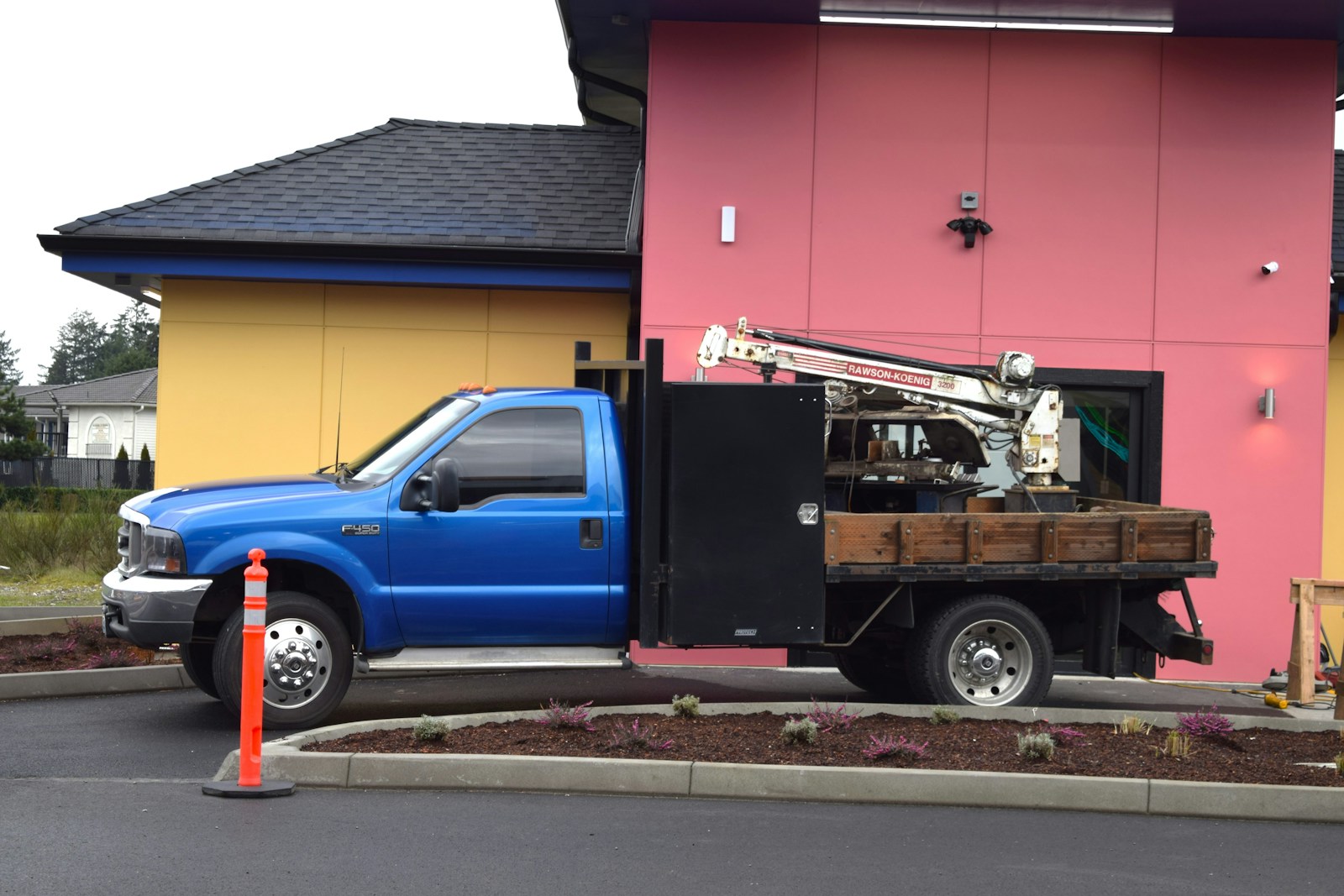
He bought the truck the way a lot of people buy their first “business vehicle”: fast, optimistic, and with just enough denial to feel like confidence. It was an older work truck with sun-faded paint, a ladder rack bolted on like an afterthought, and an asking price that sounded like a loophole in reality. He told himself it didn’t need to be pretty, it just needed to run.
This was supposed to be his clean start—new business, new schedule, no boss breathing down his neck. He’d picked a simple niche that looked straightforward on paper: small hauling and junk removal, the kind where your biggest tools are a strong back and a pickup with room to spare. He even had a first client lined up before the title transfer ink was dry, which felt like the universe rewarding him for taking the leap.
And then, on the very first job, with the client standing there watching like a referee, the transmission decided it had seen enough.
The “Good Deal” Truck With a Lot of Little Stories
The guy—let’s call him Mark—found the truck through a local marketplace listing with three grainy photos and a description that basically said “runs good, needs nothing.” When he went to look at it, the seller talked fast and casual, like they’d done this transaction a dozen times and didn’t want to get stuck answering questions. Mark noticed the check engine light flicker once when the key turned, then disappear, and the seller joked about “these old dashboards being dramatic.”
There were hints, if you wanted to see them. The transmission fluid on the dipstick wasn’t exactly a healthy red; it had that darker, burnt look that people pretend not to recognize. The test drive was short—down a side street, a slow loop, no highway speeds—and the seller kept talking to fill the silence whenever Mark paused, like he didn’t want him listening to the truck too closely.
Mark had a budget, though, and it was mostly made of hope. He’d spent the last month watching videos about starting small service businesses, and every one of them said the same thing: start cheap, reinvest, don’t overthink it. So when the seller knocked a few hundred off “because you seem like you’re actually gonna use it,” Mark felt like he’d just unlocked some secret adult level.
First Client, First Impressions, and the Pressure to Look Legit
The first job was a simple one, at least by the standards Mark had been picturing. A woman in a quiet neighborhood wanted an old sectional couch and a couple busted bookshelves hauled off, plus a pile of yard debris that had been sitting behind her garage since spring. She wasn’t rude on the phone, but she had that brisk tone of someone who doesn’t like surprises and definitely doesn’t want a “learning experience” happening on her driveway.
Mark showed up early because being early is the easiest way to look professional when you’re new. He parked on the street, climbed out, and did that quick scan people do when they’re trying to see their own situation through someone else’s eyes. The truck looked… fine, if you didn’t stare too long at the mismatched tailgate and the way the rear bumper sagged slightly on one side.
The client came out holding her phone like she might be timing him, or maybe just ready to take a picture if something went sideways. She did the polite smile, pointed toward the garage, and asked, “So you can take everything today?” Mark said yes without hesitating, because saying “I think so” felt like asking to be replaced by the next guy in her contacts.
Loading Up: The Truck Starts Talking Back
At first it went smoothly in that sweaty, awkward way junk removal always does. Mark wrestled the couch out with the client’s teenage son helping from the other end, and the whole time Mark was trying to look like this was just Tuesday for him. He kept making light conversation—where to dump it, how long she’d lived there—while mentally counting how many trips the truck could handle.
He noticed something when he backed up to the garage: the shift from reverse to drive had a little delay. Not huge, not dramatic, just a pause that made the truck feel like it was thinking about whether it wanted to cooperate. He told himself it was nothing, that older automatics could be sluggish, and kept loading.
By the time the bed was packed, the truck was sitting lower in the back, and Mark could feel the pressure of the moment. He needed to leave cleanly, no stalling, no weird noises, no fumbling with straps while the client watched from five feet away. He climbed into the cab, started it up, and forced his body language into that calm, “I do this all the time” posture.
The Transmission Breaks at the Worst Possible Time
He put it in reverse to pull away from the garage and the truck moved, but it did it reluctantly, like it was dragging something it didn’t want to drag. The client had stepped out onto the driveway, arms folded now, watching him angle the truck out. Mark tried not to look at her in the mirror because it made every movement feel like a performance.
Then he shifted into drive.
The engine revved, the truck didn’t move, and for a second Mark didn’t understand what he was feeling. It was that strange disconnect where your foot is doing the right thing and the machine is responding like you’re not even connected. He eased off the gas, tried again, and the engine made a higher, hollow sound, like it was spinning into nothing.
Mark did the classic panic routine: back to neutral, back to drive, then reverse, then drive again. Reverse still worked, sort of, but drive was gone. The truck jerked once like it might catch, then it made a sharp clunk that felt more like a verdict than a noise.
He rolled down the window and called out something too upbeat, too casual. “Hey, sorry, give me one second—this thing’s being weird.” The client didn’t move, just stood there watching, eyes flicking between Mark and the loaded truck like she was recalculating how much of her afternoon was about to get stolen.
Awkward Negotiations in a Driveway Full of Someone Else’s Trash
Mark climbed out and tried to play it off as a minor hiccup, like he just needed to “reset” something. He popped the hood even though transmissions don’t get fixed by staring at an engine bay, because at least it looked like action. The client stayed on the driveway, now with her phone up, and asked, not unkindly but very directly, “Is it going to leave?”
Mark called a buddy who’d offered to help if things got busy, except this was not the kind of help you want to ask for on your first day. He tried to keep his voice low, but the street was quiet and the client was close enough to hear pieces of it. “Yeah, it’s stuck… no, it won’t go into drive… I’m at the job, everything’s loaded.”
The client’s expression changed in that subtle way people do when their patience turns into suspicion. She asked if he was insured, and Mark said yes because he had basic coverage, but the way he said it—too quick, too eager—didn’t sound like the steady reassurance she wanted. She also asked what happens if the truck can’t move, because now her junk was technically in his possession but physically blocking her driveway like a hostage situation made of plywood and upholstery.
Mark offered to knock money off the price, which was the kind of offer that seems reasonable until you realize the client didn’t hire him to be cheap. She hired him so her house wouldn’t be surrounded by the remains of old furniture anymore. A discount didn’t solve the problem that her stuff was now trapped in a broken truck, and she didn’t know if that truck was going to be there for an hour or three days.
When the tow truck finally arrived, it felt like the final humiliation. The driver did that professional, neutral assessment—asked Mark to try shifting through the gears while he listened—and then gave him the look that says he’s seen this exact scenario a hundred times. The client stood there and watched her junk get hauled away in a vehicle that looked like it needed to be hauled away itself.
Mark kept trying to salvage the impression. He promised he’d still finish the job, he’d get the load to the dump, he’d be back if there was anything left behind. The client nodded like she was agreeing to end the conversation, not like she believed him, and she asked where she should send the invoice if her driveway got damaged in the tow process.
Later, Mark was stuck on the curb, staring at the empty spot where his “new business” was supposed to be idling proudly. He had a customer who’d watched his operation collapse in real time, a tow bill he hadn’t budgeted for, and a truck that was suddenly not a tool but a problem with a price tag. The worst part wasn’t even the transmission—it was the lingering sense that this client now knew exactly how fragile his whole plan was, and she’d be the first person to tell someone else not to hire him.