
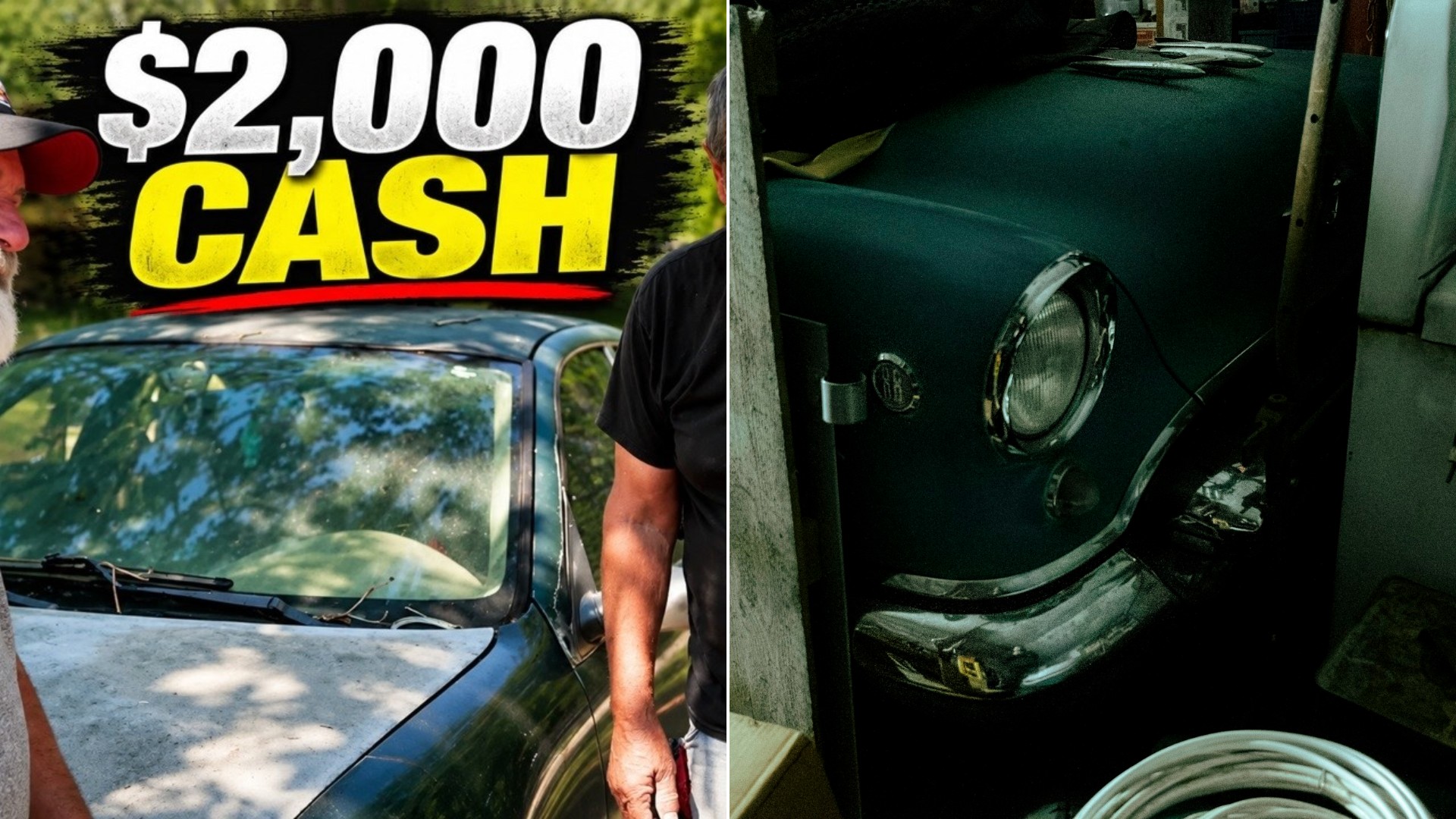

The ad said the car had no motor and no transmission, and the seller wanted $3,000 for it. Darren Cheney went to take a look anyway, because the car in question was a 1963 Oldsmobile Jetfire, and by his own count it was only the second Jetfire he had ever seen. When the deal was done, he walked away with the car for $2,000 in cash, paid out in crisp $100 bills.
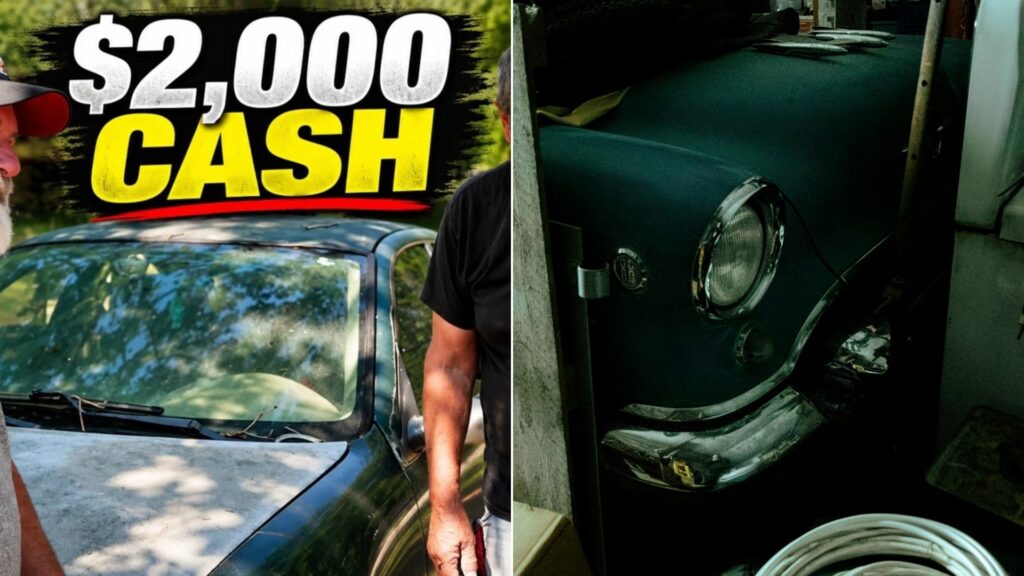
The story, captured by 289 Film Co., starts with a handshake between Darren and the seller, Charles, at Charles’s place. Charles pointed out that the car was pretty much complete, aside from the missing drivetrain, and that a chrome piece which had fallen off was sitting inside the car.
What a Jetfire Is, and What Was Left
The Jetfire is one of the odd stories of the early sixties. It was a compact Oldsmobile built in 1962 and 1963, famous for its turbocharged engine. Darren spotted the clue right away: the bottle holder for the rocket fuel, a reference to the fluid used with the turbo, was still in the car. The exhaust was still under it, along with the steering box and everything else. Charles said the car simply had its motor and transmission pulled.
The body was in good shape for its age. Charles said there was just a little rust spot on one fender and on the bottom of another. Darren guessed the factory color was a dark red, and Charles thought it was called crimson red, though he would have to look it up. There was one small dent, up on top, and Darren was impressed by how nice the body was.
A Walk Around the Interior
The interior was a pleasant surprise. One door was tied shut because the latch would not catch, but everything inside was there, including the turbo gauge. The door panels were in good shape, the seats did not need to be redone, and the inside rear view mirror was lying behind the seat. A dome light was sitting on the seat, and the windows rolled up and down. Darren also found the radio antenna and confirmed it was the right one that bolts on, and he hoped the hubcaps might be in the trunk.
The floors told a mixed story. Charles said the back floor pans were not rusted through, while the front ones would need some patching. Darren asked about the area behind the back seat, and the seller joked that if there were any dead bodies in there, he should not tell him.
Charles said he originally planned to put a 350 from a race car into it and build a little hot rod. One customer who called about the ad wanted to buy the seats out of the car, but Charles said no, because he was not going to part it out. He told Darren he was going to hold on to it, and a few people who called seemed to know what it was.
Haggling Over Price
Then came the good part. When Darren asked what he was asking for the car, Charles said he would like $3,000 and thought it was well worth that because of the rarity. He added that being rare does not necessarily make a car worth a lot. Darren said that if it had the motor and transmission he would not even try to negotiate, but since it did not, he opened at $1,500.
Charles listed the reasons to come down: rust in the floorboards, the title might be a hassle, and he still had to put air in the tires. He offered the car for two grand, today, in $100 bills. The two shook on it. Darren went to get the money and came back to count it out one bill at a time, turning each one straight because, as he said, he is a little OCD. The count reached $2,000, and Darren was now the proud owner.
Rare Cars and Parts Plans
Darren explained that he already had another Jetfire, a complete car that has some rust on the front hood from its time in Virginia, and it does not have the Jetfire chrome piece or the emblem. The two talked about the numbers. Only 1962 and 1963 were Jetfire years, and the pair said only 12 cars were registered in the United States for the 1963 model year. Darren said the one he had, with all the drivetrain, would be the 13th. He said this one probably will not get registered unless he puts a different motor in it, so he plans to use it as a parts car for the other one, which has a title.
Charles said he had traded a car hauler trailer for the Jetfire, and he joked that he was not trailer poor since he had five trailers right there and two more at his house. He also had a lot of projects: a 1939 Dodge coupe, a 1929 Ford Model A that runs and drives, and an S10 that will get an engine swap.
Loading was simple. The tires were small and held air, so the two aired them up with a tank from the truck, rolled the Jetfire onto the trailer and hauled it away. They agreed to keep each other posted with pictures of the car and the other one.
Tips for Buying a Project Car With No Drivetrain
This is the kind of deal that comes from patience and homework. Check whether the interior and trim are complete, because missing small parts like chrome pieces and badges can cost more to find than a motor. Look at the floor pans and the body for rust before you talk money. Ask about the title early, since a car without a drivetrain may still be hard to register. Bring cash if you plan to negotiate, because a pile of $100 bills on the table can seal a deal. Finally, have a plan for what you will do with it, whether that is a restoration, a hot rod or a source of parts for a car you already own.
More Stories You May Like
- Classic Car Hunter Chases Down a Rare 1969 Mustang 428 Super Cobra Jet With a $50,000 Asking Price, Then Sees What Kind of Shape It Is Really In
- True Barn Find 1967 Corvette L71 427 Is Found in Georgia with Only Three Thousand Miles on It
- Creator Stumbles on a Massive Classic Car Graveyard in America Where Mustangs, Camaros and Firebirds Are All Selling for Less Than $2,000 Each