
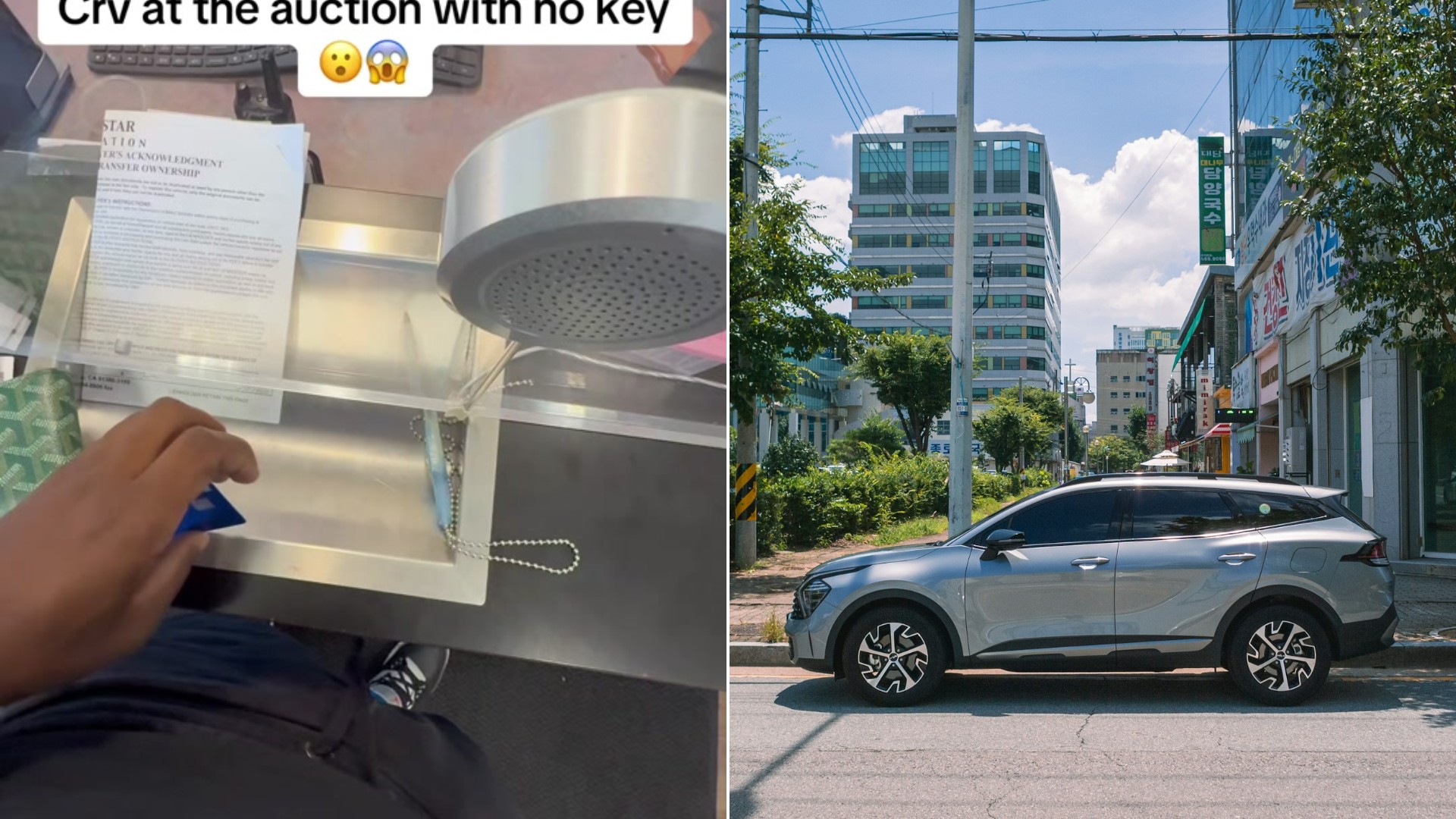

Seven hundred dollars is not much for a car, and that is exactly why one auction buyer took a chance. He picked up a 2003 Honda CR-V with no key and no way of knowing whether the engine even turned over, and then he set out to find out whether the gamble would pay off.
The buyer is @thegoldenwealth, who posts auction flips and shared the whole process on camera. His caption asks the question every bargain hunter wonders about: “was this car worth the money?”
“We picked up a 2003 Honda CRV from the auction for only $700,” he says as the video starts. He had just finished paying, and the car was on its way out on a forklift.
@thegoldenwealth
The CR-V Came Out On A Forklift Because There Was No Key
With no key, the auction crew could not simply drive the Honda out of the lot. They brought it out on a forklift instead.
That also meant he had bid without knowing whether the car ran. He explains that based on how the outside looked, he had a great feeling that it did.
Inside, he found a bunch of trash. The registration tags were expired, which he says is probably the reason the car got towed in the first place.
A History Report, A Look At The Oil, And A Mileage Surprise
Before touching the ignition, he ran a vehicle history report. It showed mileage of around 170,000.
Then he checked the coolant and the oil. Everything seemed to be okay, and the oil only needed to be changed a little, which he called nothing bad.
These steps cost almost nothing, and they are a smart habit for anyone looking at a car they cannot test drive. Clean-looking coolant and oil at least suggest the engine has not been abused.
A Locksmith Pulls The Aftermarket Ignition To End The Guessing Game
He brought a locksmith to the auction lot to answer the big question. The car had an aftermarket ignition, so it had to be taken out in order to be changed.
That detail matters. An aftermarket ignition is a sign that something happened earlier in the car’s life, and it is one reason a keyless purchase can turn into a bigger project than expected.
Once the old ignition came out, it was time to find out whether the CR-V would run. “The car did end up firing up with no problems at all,” he says, and the odometer showed 190,000 miles. For a 2003 vehicle, he says, you really cannot complain too much, and it is a Honda.
Three Trouble Codes Show Up, Then The Transmission Gets Its Test
The check engine light was on, so he plugged in a scanner to see why. There were only three codes, which he put up on screen.
He cleared the light to see whether it would come back while he was driving. His advice is plain: if you buy and sell cars, always own a scanner so you can see the trouble codes and what is going on with the car.
The engine passed what he calls phase one. Next came phase two, the transmission. He pulled the car out of the auction and drove it, and he says it passed the transmission test too.
He also keeps the whole thing in perspective. This is not a restoration or a show car. It is a basic 2003 Honda with high miles, bought cheap, checked carefully and cleaned up, which is the kind of car flippers and first-time buyers hunt for.
A Car Wash Finishes The Job
From there, he took the CR-V to a car wash and got it all cleaned up. After the dirt and trash were gone, he showed the finished look and asked viewers what they thought of the deal.
A cleaned-up CR-V that starts, drives and shifts for $700 sounds like a win. Whether it makes money depends on what it costs to fix the three codes, replace the ignition, handle expired tags and sort out the title.
How To Buy A No Key Auction Car Without Getting Burned
Buying a car you cannot start is a gamble, but a few habits can tilt the odds. Walk the lot early, look at the paint, the glass and the tires, and check the oil and coolant before you bid. A car that has been cared for usually shows it.
Run the VIN through a history report so you know the last reported mileage and whether there are any red flags. Expect the odometer to tell its own story, as it did here when the report showed about 170,000 miles and the dash showed 190,000.
Budget for the extras. A locksmith, a new ignition, a scanner, an oil change and some cleanup supplies can add up, so a $700 buy is rarely a $700 car. Set a ceiling before the bidding starts and stick to it.
Finally, make sure you can get a title and register the car. Expired tags and a tow are common reasons cars end up at auction, so ask what paperwork comes with the sale. Do that, and the next $700 gamble is a lot less scary.
More Stories You May Like
- First Timer Redoes Honda Civic Head Without Dowel Pins, Car Sits 2 Years Then Overheats Again, Mechanic Says The 288,000 Mile Engine Did Nothing Wrong
- Broad Arrow Zurich Sale Totals CHF 24,723,338 With A 2015 LaFerrari Bringing CHF 5,856,250, Then A Veyron Grand Sport Vitesse At CHF 2,368,750
- Dealership Chokes Like Swallowing A Big Bone When Man Pulls Out His 2007 Honda Ridgeline Free Oil Changes For Life Card, Then Quotes $400 For A Key He Found Online For $150