

He wasn’t trying to be reckless. He was trying to be responsible in the way a lot of people are when money’s tight: keep the car running, don’t miss work, don’t fall behind, and pray nothing big breaks. So when his brakes started doing that ugly squeal-grind combo every time he rolled up to a light, he did what he always did—asked his buddy if he knew someone who could do it cheaper than a shop.
His buddy did that quick “I got a guy” smile and said his cousin could handle it. Not a mechanic cousin, exactly—more like a cousin who’d “done brakes before” and had tools. The price was basically unbeatable: a case of beer, some cash, and the promise that it’d be done in a couple hours in his apartment complex parking lot.
He knew, on some level, that “buddy’s cousin” isn’t the same as “licensed tech,” but the car was still stopping. It just sounded like it was complaining about it. And when you’re staring down a quote from a real shop, the part of your brain that does math starts negotiating with the part of your brain that’s trying not to die on the freeway.
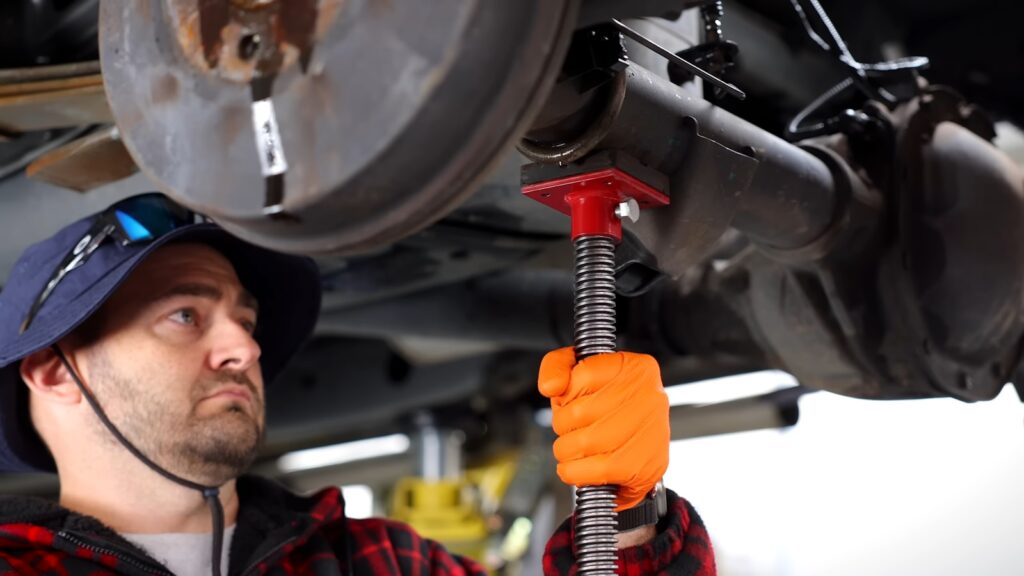
The parking lot brake job that felt sketchy in real time
The cousin showed up late, in slides, carrying a battered jack and a plastic grocery bag that clinked like it had loose sockets in it. He was friendly in that overly confident way—asking for a smoke, calling the car “clean,” and insisting brakes were “easy, bro.” The guy tried to be chill about it, even when he realized the cousin hadn’t brought jack stands.
They ended up using the scissor jack from the trunk and a chunk of wood, which is exactly the kind of detail that makes a story feel bad while it’s happening. The cousin popped the wheels off and started talking through it like he was filming a tutorial in his head. He kept saying things like, “You don’t need all that extra stuff they try to sell you,” which, in hindsight, was basically the theme.
At one point, the guy noticed the brake fluid reservoir cap just sitting there on the cowl, not screwed on. The cousin waved him off and said he was “burping” the system. There were also moments where the cousin would disappear into his car to look for something, come back with the wrong tool, then improvise anyway.
When it was finally back on the ground, the cousin told him to pump the brake pedal a few times. The pedal felt soft for a second, then firmed up enough that the guy’s anxiety quieted down. The cousin wiped his hands on his jeans, collected his money, and said, “You’re good—just don’t slam ‘em the first couple days.”
The first drive felt fine, which is how this stuff gets you
That night, the guy did a cautious lap around the block, then a longer loop to the grocery store. The brakes seemed normal—no horrible grinding, no steering wheel shake, no weird pulling. The squeal was gone, and the car stopped when it was supposed to, which is basically all a stressed-out driver wants to believe.
He even texted his buddy a quick thanks and tossed in a “tell your cousin he did good.” His buddy responded with a bunch of thumbs-up emojis and a “told you he’s nice with it.” That’s the point where the whole thing got sealed in his mind as a win: he saved money, avoided the shop, and everything was fine.
Over the next couple days he drove like normal—work, errands, the usual highway on-ramps. The only hint something might be off was a faint smell after longer drives, like hot metal or burnt dust. He chalked it up to new pads bedding in, because he’d heard that phrase before and it sounded technical enough to be reassuring.
Then came the morning he had to take the freeway to get across town for an early appointment. Traffic was moving, not stop-and-go, just that steady 65-to-75 flow where you’re not thinking about your brakes much at all. Which is exactly when brakes decide to become your whole personality.
The moment on the freeway when the pedal went wrong
It started with something small: he tapped the brakes because the car in front of him drifted a little and slowed. The pedal didn’t feel normal. It went down farther than it should’ve, and it had that hollow give like stepping on a sponge.
He did the instinctive second press, harder, expecting it to catch. Instead, the pedal sank even more and the car barely shed speed. His brain did that quick math—distance, speed, closing gap—and his stomach dropped so hard it felt like the seat belt tightened by itself.
He swerved into the next lane, hazards on, trying not to be the reason three people met their insurance deductibles all at once. He pumped the pedal rapidly and got a tiny bite, enough to slow from “definitely going to hit someone” to “maybe I can find an exit.” The whole time he could smell something sharp, like overheated brakes mixed with the chemical tang of fluid.
He downshifted and let the engine help, eyes scanning for the shoulder. Every time he touched the brake pedal it felt less connected, like the system was losing the argument. He made it onto the shoulder with a lurch and stopped using the handbrake, because he didn’t trust anything anymore.
On the shoulder: smoke, silence, and the terrible phone call
When he got out, one front wheel area was visibly smoking. Not “a little heat haze,” but actual smoke curling up like a warning sign. He didn’t touch anything; he just stood there a second, listening to the ticking of hot metal and the whoosh of cars flying past, and tried to slow his breathing down.
He popped the hood and immediately saw the brake fluid reservoir looked lower than it should’ve. The cap was on now, but there were wet streaks and grime around the master cylinder area that hadn’t been there before. It wasn’t a clean leak, either—it looked like something had been disturbed and never put back right.
He called his buddy first, because that’s what people do when the disaster has a name. His buddy picked up cheerful, and the guy’s voice came out tight and flat: “Your cousin did my brakes, and I almost ate a minivan on the freeway.” There was a pause long enough that the guy could hear traffic roaring through the phone, then his buddy started asking questions like he was trying to rewind the whole week.
“Did you pump them?” “Did you let them cool?” “Are you sure it’s not just new pads?” The guy snapped at him—said he was on the shoulder with smoke coming off the wheel and a pedal that went to the floor. That finally broke through, and his buddy’s tone changed into something defensive and panicky at the same time, like he was trying to protect his cousin and the friendship in one breath.
The cousin, when they got him on the phone, acted annoyed. He said the guy must’ve “done something” or “hit a pothole,” because the brakes were fine when he left. Then he offered to come “take a look” later that day, like this was a loose cabinet hinge and not the difference between stopping and plowing into strangers.
The shop visit that turned “cheap” into “expensive” instantly
A tow truck ended up being the first bill, and it wasn’t gentle. The guy had it hauled to a real shop because he couldn’t handle another parking lot diagnosis from someone wearing slides. Sitting in the waiting area, he kept replaying that pedal drop, the way the car didn’t respond, and how close he’d been to becoming the reason someone else’s day turned into paperwork and ambulances.
The shop called him back and didn’t sugarcoat it. According to them, the caliper on one side wasn’t seated right, one of the slide pins was essentially not doing its job, and the pads had been wearing unevenly in a way that suggested they’d been installed wrong or forced. They also said the brake line connection looked like it had been cracked open and re-tightened without being properly checked, which would explain the fluid loss and the soft pedal.
The mechanic’s tone was the worst part—not angry, not dramatic, just that calm “I see this all the time” voice. He told him the brakes had overheated, likely boiled the fluid, and that once that happens, the pedal can vanish in a very real way. The fix wasn’t just “tighten a bolt.” It was a redo: new pads, possibly new rotors, a proper bleed, and replacing any compromised parts, plus flushing the system because the fluid was cooked.
The estimate landed like a punch. The guy had saved a couple hundred dollars and now owed way more than he would’ve paid in the first place. And he didn’t even get the clean comfort of blaming a random shop; this was tied to his own choice and to a friend who’d vouched for family like it was a coupon code.
That’s where the emotional mess really started. His buddy kept trying to mediate, saying his cousin could “make it right” or refund him, but the guy didn’t want the cousin touching the car again. The cousin, meanwhile, oscillated between offering to fix it and insisting it wasn’t his fault, which was somehow worse than just admitting he’d messed up.
By the time the car was actually safe again, the guy wasn’t just out money—he was out trust. He stopped answering his buddy’s casual texts because every “what’s up” felt like a reminder of that freeway shoulder, the smoke, and the feeling of pressing a brake pedal that didn’t care. And the last thing still hanging there, unresolved and ugly, was the cousin’s half-offer to “pay back what he could,” like the real debt was the beer money and not the few seconds on the freeway where the guy learned exactly how expensive “cheap” can get.