

He wasn’t trying to be cheap-cheap. He was trying to be “adult about it,” the kind of guy who keeps a spreadsheet for bills and hates surprise expenses more than actual pain. The brakes on his aging sedan had started doing that slow, embarrassed squeal at stoplights, and every time he pressed the pedal the steering wheel gave a tiny shudder like the car was clearing its throat.
So when his friend—an old buddy who was always “between jobs” but somehow always had a toolbox—offered to do a brake job for a fraction of what the shop quoted, it sounded like a win. The friend talked fast and confident: “I’ve done brakes a million times. Shops rip you off. Bring it over Saturday, I’ll knock it out in a couple hours.” He even said it with that offended tone like the idea of paying a professional was a personal insult.
The man hesitated just long enough to remember his bank account, then agreed. He figured brakes were basically adult Lego: parts off, parts on, done. And honestly, the friend made it sound like he’d be doing him a favor, not like he was about to hand the most important safety system of his car to a guy who borrowed money for vape pods.
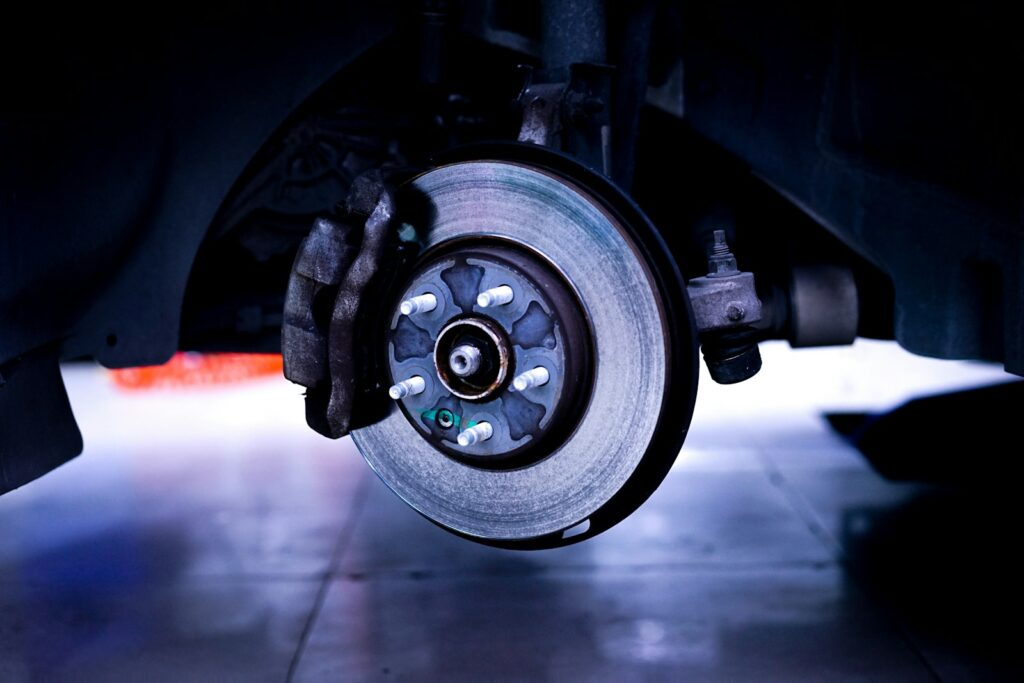
The “brake job” that looked like a backyard magic trick
Saturday came, and the man drove over with coffee and the kind of optimism you only have before something expensive breaks. The friend had the car up on a jack in the driveway, one wheel off, music blaring, and a cigarette slowly burning itself out on the edge of a flower pot. He waved him off when he asked if he needed anything: “Nah, just chill. You’ll see.”
It got weird pretty quickly. The friend didn’t use jack stands—just the jack—and every time the man shifted his weight nearby, the car gave a tiny creak like it was thinking about sliding. The friend also didn’t have a torque wrench, which he dismissed as “shop stuff,” and when the man asked what brand of pads he bought, the friend shrugged and said, “They’re pads. They pad.”
At some point the man noticed the friend reusing hardware that looked like it had been dredged out of a river. There was also a moment where the friend held up a small metal clip, squinted at it, and said, “This always confuses me,” before tossing it onto the driveway like it was optional. The man laughed nervously because that’s what people do when they don’t want to be rude and don’t know enough to argue.
By late afternoon, the friend wiped his hands on his jeans, announced it was done, and asked for cash. The brakes felt… fine-ish on the test drive around the neighborhood, if you ignored that the pedal was a little spongier than before and there was a faint scrape at low speed. The friend blamed “new pad break-in” and told him to “give it a couple days, it’ll settle.”
The first warning signs he tried to talk himself out of
Over the next week, the man noticed the car didn’t stop the same way it used to. The pedal travel felt longer, like he had to persuade it to work, and the steering wheel shudder got worse instead of better. Every time he braked at a red light, he could feel a soft pulsing through his foot, and he found himself creeping forward like he didn’t trust it to hold.
He texted the friend about it, trying to keep it light. Something like, “Hey, brakes still feel a little weird, is that normal?” The friend replied with a voice memo—always a bad sign—laughing and saying, “Dude, you’re overthinking it. They’re new. Stop babying the pedal.”
That answer didn’t calm him down, but it gave him an excuse to ignore his gut. He didn’t want to be the guy who got a deal and then complained. Plus, every shop quote he’d looked at sat in his inbox like a reminder that he’d chosen the cheap path for a reason.
Then came the freeway drive. He had errands on the other side of town, mid-day traffic, the usual mix of people weaving and riding bumpers like it’s a sport. It was the first time he’d taken the car above neighborhood speed since the “brake job,” and he told himself it would be fine because it had to be fine.
On the freeway, the brake pedal turned into a suggestion
The moment happened fast, the way these things always do. Traffic ahead suddenly compressed—someone tapped their brakes, then everyone tapped theirs, and the ripple turned into a hard slow-down. The man pressed his pedal like normal and felt that spongy resistance, then pressed harder, expecting the car to bite.
Instead, the pedal sank farther than it should’ve, like stepping on a soaked sponge. The car slowed, but not with the confident, immediate grab you need when you’re doing 70 and the lane in front of you is turning into a parking lot. He pumped the pedal once, twice, his brain doing that cold math of distance and speed while his stomach dropped.
The steering wheel started shaking violently, and there was a nasty metallic grinding that cut through the road noise. He had just enough braking to avoid plowing into the SUV ahead, but it wasn’t clean—more like a negotiated near-miss with inches to spare. He swerved onto the shoulder, hazards on, hands shaking, heart doing that frantic drumbeat like it wanted out.
When he stepped out, he smelled it immediately: that hot, sharp, chemical stink of overheated brakes. One of the front wheels had a thin thread of smoke curling out from behind it, and he stood there on the shoulder staring like he’d just caught his own car lying to him. A passing semi blasted wind at him, and he realized how close he’d been to turning into a freeway story other people tell.
The tow truck guy didn’t even have to be dramatic
He called for a tow because there was no universe where he was driving it again, not even slowly. While he waited, he tried the pedal once more out of pure disbelief and it felt even softer, like whatever was holding on had started letting go. The friend was the first person he wanted to call and the last person he wanted to hear from.
The tow truck driver took one look and did that quiet whistle people do when they don’t want to freak you out but they’ve seen this movie. “Who did your brakes?” he asked, not accusatory, just curious in the way a doctor asks how long you’ve been feeling chest pain. The man mumbled, “A friend,” and the driver’s face tightened like he’d expected that answer.
At the shop, the mechanic didn’t talk down to him, which almost made it worse. He just walked him through what they found: loose caliper bolts that weren’t properly tightened, hardware missing, pads installed wrong on one side, and fluid that looked like it had been bled by someone who watched half a video and decided the rest was vibes. One of the calipers had been riding crooked enough to chew things up, and the rotor looked like it had lost a fight.
The man kept hearing the same phrase in different forms: “This could’ve come apart.” Not hypothetical, not dramatic—just a blunt statement. The shop gave him a number that made his throat go dry, because now he wasn’t paying for brakes, he was paying for brakes plus fixing the damage plus undoing whatever backyard experiment had happened in that driveway.
The confrontation was uglier than the bill
He texted the friend a photo of the shop’s write-up, not even adding a caption at first. The friend responded instantly, defensive like he’d been waiting for a chance to argue. He said the shop was “scamming,” said mechanics always blame the last person who touched it, and asked if the man had been “slamming the brakes like an idiot.”
When the man finally called, his voice came out sharper than he meant it to. He described the freeway moment—the pedal sinking, the shaking, the smoke—and said, “I almost hit someone. I could’ve killed somebody.” There was a pause, then the friend said, “Dude, you’re being dramatic,” which is the kind of sentence that makes a friendship suddenly feel very small.
The man asked for the money back. Not the full shop bill, just what he’d paid the friend, because he couldn’t stomach the idea of funding his own near-accident. The friend laughed—actually laughed—and said, “I did the work. I’m not giving you money because you got paranoid.”
That was the moment it stopped being about brakes and started being about character. The man realized the friend wasn’t embarrassed, wasn’t worried, wasn’t even curious about what went wrong. He was just offended that his cheap solution had consequences, and he was trying to bulldoze his way out of responsibility with confidence and volume.
He paid the shop, because what else was he going to do—argue with physics? The car got fixed properly, the pedal finally felt firm again, and the steering wheel stopped trying to rattle itself off the column. But the part that stuck with him wasn’t the money or the embarrassment of admitting he’d trusted the wrong person; it was that split-second on the freeway where he learned exactly what “cheap” can mean when it’s attached to something that’s supposed to stop you. And the friend kept texting like nothing happened, tossing out memes and casual invites, as if the real damage was just a bruised ego that would heal on its own.
More from Steel Horse Rides: