
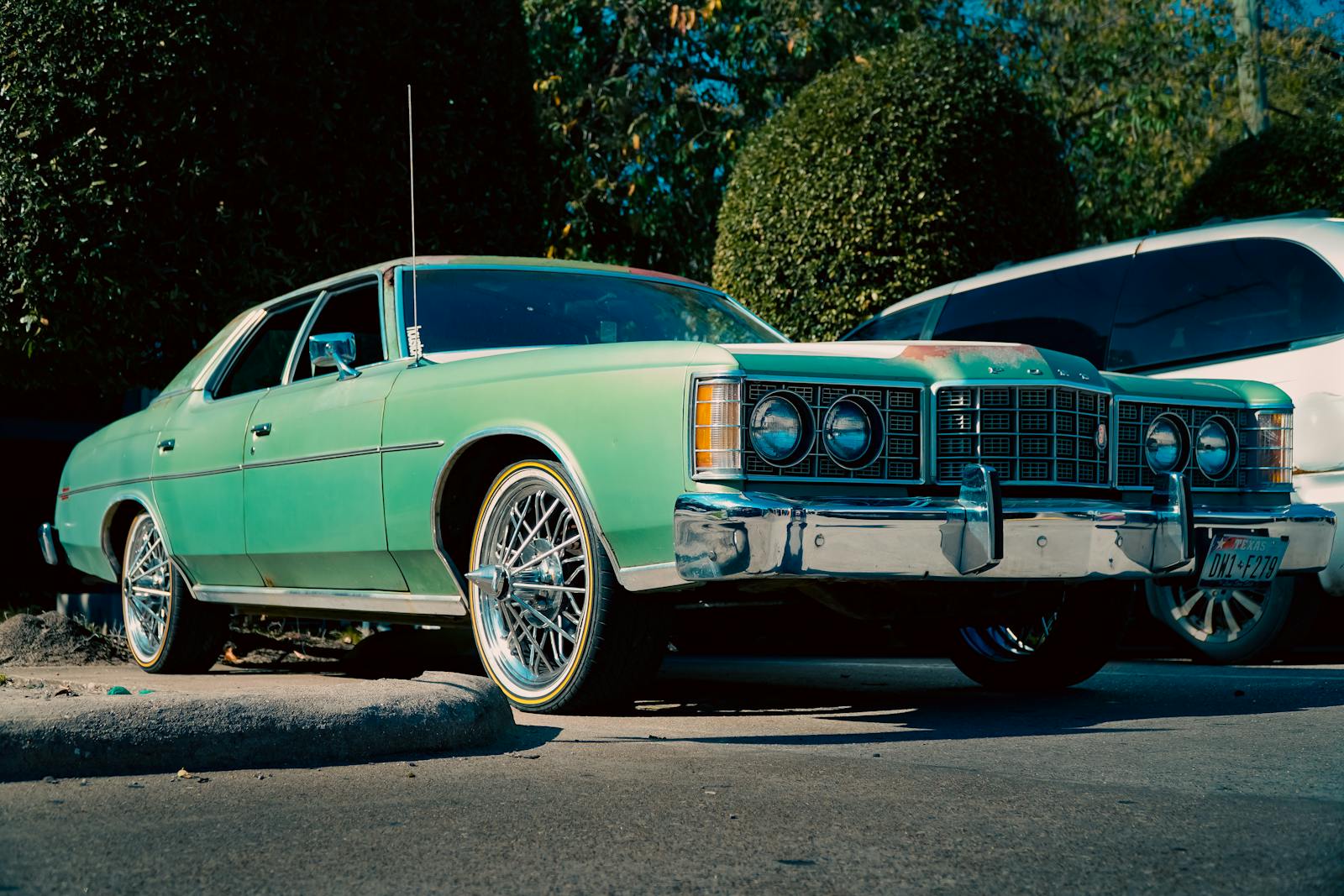

He’d spent the whole Saturday morning doing the kind of gentle, meticulous work people only do for something they love: microfiber cloth, two buckets, the good wax he saves for “special occasions.” The car wasn’t just old, it was classic-old—the kind with chrome that actually shines and paint you can fall into if you look at it too long. He parked it on the street in front of his house afterward, partly because he wanted to admire it and partly because the garage was full of tools and half-finished projects.
Across the way, his neighbor’s place was doing its usual weekday chaos. A basketball thumped somewhere, a dog barked, a garage door groaned up and down like it was being operated by a bored teenager. The man noticed the neighbor’s kid—new driver, maybe sixteen, maybe younger—moving a car around in the driveway and thought, fleetingly, “Hope they’re careful.” Then he went inside to grab something, because nothing ever happens in the thirty seconds you step away, right?
He heard the sound before he saw anything: a dull, wrong kind of thud, followed by a pause so quiet it felt deliberate. When he came back out, there was the kid’s car angled weirdly at the curb and his classic car’s rear quarter panel wearing a fresh dent like a bruise. The kid was standing there with both hands on their head, staring at the damage as if staring hard enough could reverse it.
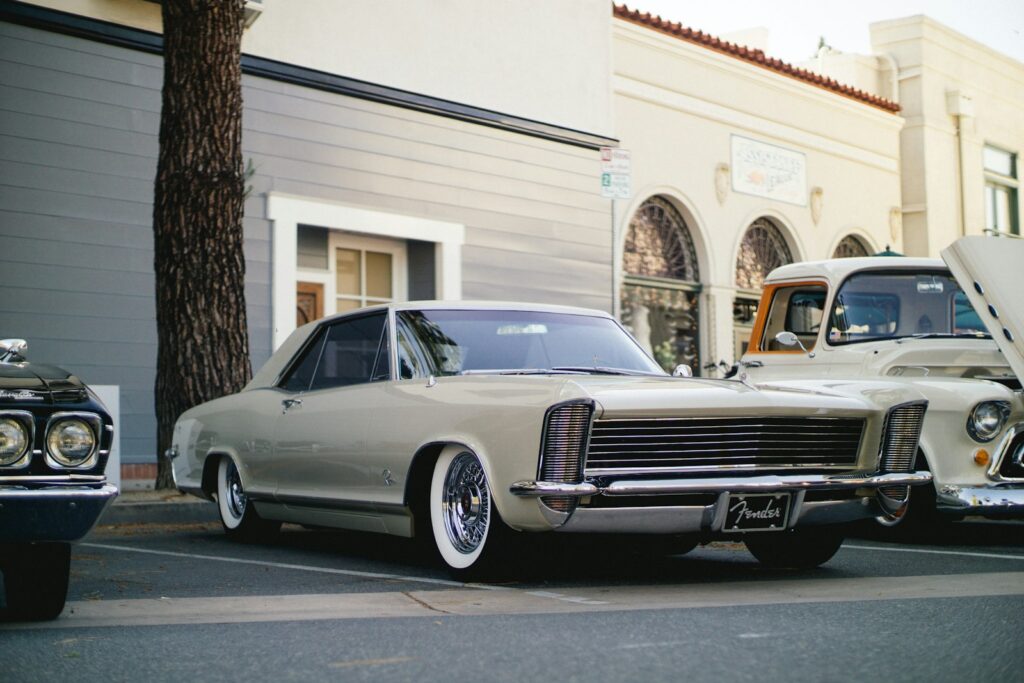
The moment everyone tries to pretend it’s not that bad
The man walked up slowly, the way you do when you’re hoping your eyes are lying to you. Up close, the dent wasn’t catastrophic, but it was painfully clear: the metal was creased, the paint was cracked, and there was a smear of the neighbor’s bumper transferred across his car like chalk. You could see where the impact had pushed the panel just enough to throw off the line of the bodywork.
The kid started talking fast, apologizing in that breathless way people do when they’re terrified of getting in trouble. They’d “barely moved,” they “didn’t even hit the gas,” they “thought it was in drive but it was in reverse,” the story changing shape as they tried to find the version that sounded least awful. The man didn’t yell, but he also didn’t do the comforting adult thing the kid seemed to be fishing for.
He asked if the parents were home. The kid said yes and trotted inside, leaving the man standing there with his arms folded, staring at a piece of his weekend pride and joy now permanently altered. It wasn’t just money, even though money was obviously involved; it was that specific anger of watching someone’s carelessness leave a mark on something you’ve cared for carefully.
The parents show up with “Oh noooo” energy
The neighbor’s mom came out first, wiping her hands on a dish towel like she’d been interrupted mid-chore and wanted everyone to know it. She took one look at the dent and did that long “Oh noooo,” the kind that’s more about mood than accountability. Behind her, the kid hovered like a shadow, eyes wide, waiting to see if they were about to be grounded until retirement.
The man explained, calmly, what happened: the kid backed into the car, and the damage wasn’t something he could just pop out with a plunger. He wanted insurance information and he wanted it handled properly. He even said he understood mistakes happen, but the next steps weren’t negotiable.
That’s when the dad appeared, and the tone shifted. He didn’t even fully step off the porch at first; he just looked at the cars, squinted at the dent like it was a math problem, and said something like, “It’s not that big.” It landed wrong, immediately, because the man hadn’t asked for a review of the damage—he’d asked for responsibility.
Cookies as currency, and the “can’t you just” negotiation
The mom did the thing where she tried to soften the whole conversation with friendliness, like if she smiled enough it would become a misunderstanding. She said the kid felt terrible and they wanted to “make it right,” then offered to bring over some cookies later, because she’d been baking anyway. It was presented like a peace offering, as if the dent was an interpersonal conflict and not damage to a vehicle.
The dad followed up with the real pitch: could they just handle it “between neighbors”? He talked about how insurance rates are brutal, how it was the kid’s first accident, how they didn’t want this to “become a whole thing.” There was a lot of emphasis on how inconvenient this would be for them, which was interesting, considering who was now holding the inconvenience in the shape of cracked paint.
The man told them, again, that he needed insurance information. The dad sighed like he was being asked to donate a kidney and said he could probably “find a guy” who could “massage it out” for cheap. The word choice—massage—made the man’s jaw tighten, because it wasn’t a sore muscle, it was a classic car with hard-to-match paint and parts you don’t pick up at a chain shop on your lunch break.
Somewhere in the middle of all this, the kid whispered another apology. It sounded sincere, but also like they were repeating what they’d been coached to say. The man’s irritation wasn’t aimed at the kid anymore; it was aimed at the adults who seemed determined to treat this like an awkward social misstep rather than property damage with a clear process.
When “sorry” turns into stalling
The neighbor’s dad eventually handed over an insurance card, but not without one last push: “Let’s just see what a quote is first, okay?” The man agreed to get a quote, because he wasn’t trying to be unreasonable—he just wanted to control the repair instead of letting someone’s “guy” take a swing at it. He also took photos of everything, including the kid’s car positioned exactly where it had ended up, because he’d learned the hard way that memories get fuzzy when money is involved.
The next day, the cookies arrived. A plate covered in plastic wrap showed up on his porch with a sticky note that said something like “So sorry again!” and a smiley face that felt wildly out of place. It wasn’t that cookies were offensive; it was that cookies were being used like a social shortcut, a way to lubricate the conversation so they could slide past the uncomfortable part where they pay to fix what their kid damaged.
He got the estimate later that week from a shop that actually works on older cars, the kind of place with photos on the wall of restorations in progress. The number wasn’t absurd for what it was—bodywork, paint blending, potential panel replacement if the crease couldn’t be properly corrected—but it was high enough that nobody was going to casually Venmo it and move on. When he texted the neighbor the quote, the response wasn’t “Okay, let’s run it through insurance,” but “Whoa. That seems like a lot.”
That’s when the stalling started. They asked for a second quote. Then a third. They suggested a cheaper shop “their cousin knows.” They asked if he could live with it for now, maybe touch it up, maybe “it’ll grow on you.” Every request came dressed up as reasonable, but together they formed a clear pattern: delay until he either gave up or accepted a cheaper fix that protected their wallet and their pride.
The quiet escalation: cameras, curb etiquette, and neighborhood cold wars
The man filed the claim anyway. He didn’t do it with a dramatic speech or a slammed door; he just did it because he’d run out of patience for the slow-motion negotiation. Once the insurance company got involved, the neighbor’s friendliness cooled fast, like someone had turned off a switch.
Suddenly, the neighbor who used to wave started looking away. The kid avoided eye contact and stopped walking on the side of the street where the man’s house was. Little petty things cropped up: their trash cans creeping closer to his curb space, their guests parking in front of his house more often, a vibe that said, “If you’re going to make this formal, we’re going to make it weird.”
He installed a camera facing the street after that, not because he thought they’d retaliate, but because once you see people try to wriggle out of a simple responsibility, you start imagining how creative they might get. He also started parking the classic car in the driveway again, even though it meant playing musical chairs with everything else. It wasn’t fair, but he didn’t feel like offering the universe a second chance to test his blood pressure.
The last update he gave friends was that the repair process was moving, slowly, and the insurance company was doing what insurance companies do—paperwork, adjusters, more photos. The neighbor family was still insisting the shop was “overcharging,” still acting like the man had personally chosen the price tag to punish them. The cookies were long gone by then, eaten out of spite more than enjoyment, and the sticky note had ended up in the trash like an artifact from a different, more polite version of the story.
What stuck with him wasn’t even the dent, or the hassle, or the time he’d lose coordinating repairs. It was the way the neighbor parents had tried to convert the whole thing into a social exchange—one plate of baked goods, one halfhearted sorry, and the unspoken expectation that he’d be a “good neighbor” by absorbing the cost of their kid’s mistake. The car would get fixed eventually, but the street itself felt permanently altered, like the real damage was the new, careful distance between two houses that used to be able to wave at each other without keeping score.
More from Steel Horse Rides: