
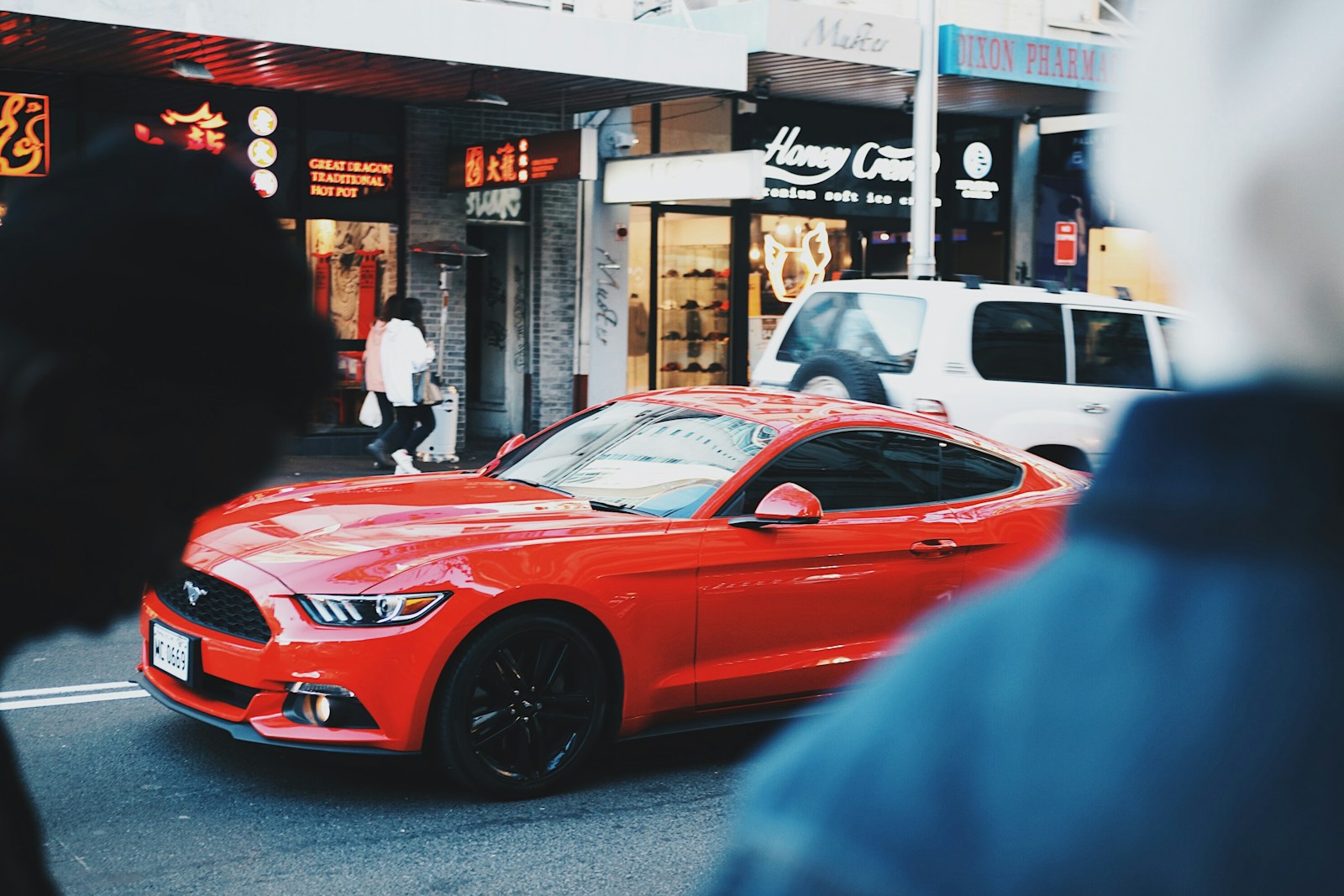

He’d only meant it as a half-joke when he said it out loud: if his son wanted to “handle real power,” he could start by handling the grocery run without treating the accelerator like a dare. But two days after that exact phrase got thrown around in their driveway, the dad was standing in the county impound lot staring at a crushed front bumper and a mailbox post embedded where a fog light used to be.
The Mustang wasn’t some exotic supercar, but it was the first thing in their household with a V8 and a rear end that didn’t forgive stupidity. The dad had owned it for years, kept it clean, and drove it like he remembered what insurance deductibles felt like. His teen son had been eyeing it like it was an unlocked level—more than a car, a status symbol he could pilot to school and instantly become a different version of himself.
And the dad, like a lot of parents, had been trying to walk that tightrope between “you need to learn” and “you’re going to get someone killed.” He’d said no for months, then maybe, then “only if we do it my way,” and somehow that became the kind of negotiation where everyone walks away thinking they won. Forty-eight hours later, it was a mailbox that took the hit, but it could’ve just as easily been a tree, a minivan, or a kid on a bike.
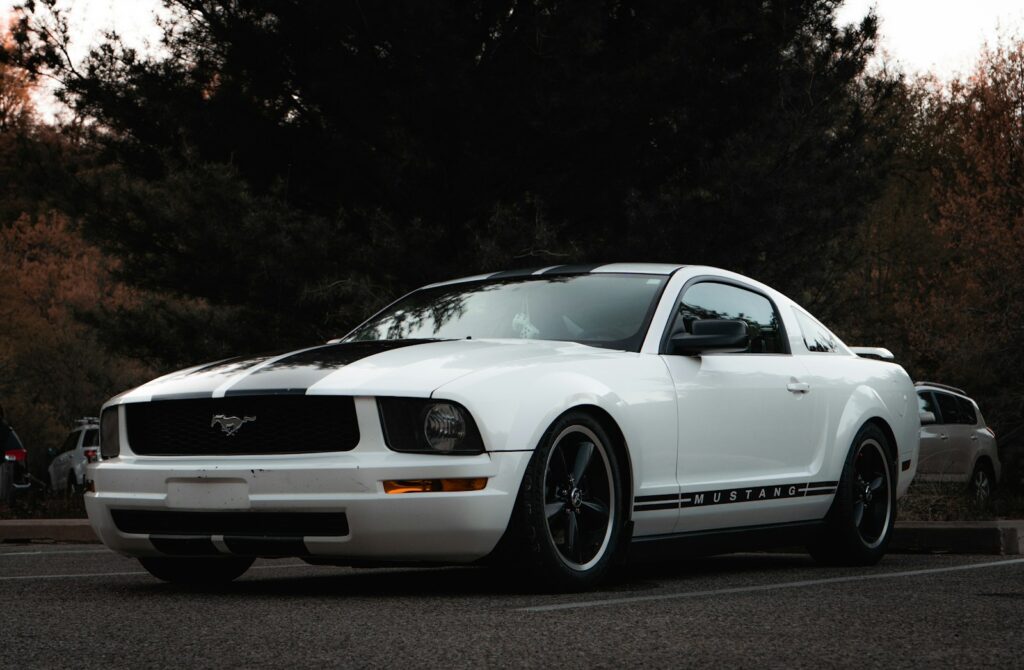
The driveway argument that started it
It began the way these things often begin: not with a grand decision, but with a casual flex. The son had been driving the family sedan for a while, and every successful trip made him more confident and less cautious. He’d gotten comfortable with the idea that driving skill was a personality trait, not something that can disappear the second a car behaves differently than the one you learned on.
The dad had come home one evening and found his son out in the driveway with the Mustang’s cover half-off, like he was already staging it for his own life. The son launched into his pitch—he’d be careful, he wouldn’t race, he “gets” cars, he wanted to feel what a real engine was like. The dad asked him, flatly, what he thought “real power” meant besides louder noise and worse decisions.
That’s when the son said it, with that specific teenage mix of certainty and impatience: he could handle it. Not “I’ll try,” not “teach me,” but “I can handle real power.” The dad didn’t yell, but he did the thing parents do when they’re trying to sound calm and end up sounding colder—he laid out rules like he was reading terms of service: no friends in the car, no night driving, no rain, no showing off, and absolutely no “testing it.”
The compromise that wasn’t really a compromise
In his head, the dad thought he was being strategic. He’d let his son drive the Mustang under controlled conditions, thinking a supervised taste would take the edge off the obsession. He framed it as a privilege, something earned, with a short leash attached.
The problem was the son heard “yes,” and the rest became background noise. The dad took him out the next morning to an empty industrial stretch—wide lanes, no traffic, nothing to hit except pride. He had his son practice starting smoothly, braking without nosediving, and taking turns without stabbing the throttle like it owed him money.
The son did fine, which was almost the worst part. He got that early success glow, the one that convinces a person the next step is to remove all constraints because “I’ve already proven it.” When they got back home, he kept glancing at the keys the way a dog looks at a leash, and the dad made the call that would haunt him later: a short solo drive, broad daylight, to the convenience store and back.
He told himself it was a controlled risk, like letting a kid use a sharp knife in the kitchen. Except knives don’t whisper to you when you’re alone that you’re a legend for pressing a pedal a little harder.
Two days of confidence-building and one bad idea
For the first day and a half, nothing happened, which only fed the story the son was telling himself. He drove it to the store once, then again, then asked if he could take it to school “just this once.” The dad stayed firm on the school rule, but he could feel the ground shifting—each uneventful trip made the son’s confidence louder and the dad’s caution feel more like paranoia.
On the second day, the son’s friend group got involved the way teen friend groups always do: not directly, but like a draft. A buddy wanted a ride. Someone mentioned the Mustang in a group chat. The son didn’t need to be explicitly dared; he just needed to imagine being seen.
The dad was at work when the request came through—another quick run, another promise. He said yes, with the same rules, and told his son to be back in thirty minutes. He went back to his meeting and tried to ignore the nagging thought that he should’ve just said no and eaten the argument at home.
About twenty minutes later, his phone rang, and he saw his son’s name. In that half-second before answering, he already knew it wasn’t going to be, “Hey, can I grab a snack too?” It was the kind of call that starts with breathing—too fast, too thin—and then words that don’t come out in a straight line.
The mailbox, the tow truck, and the shaky voice
The son didn’t say “crash” at first. He said, “Dad, I’m okay,” as if he’d been trained by every movie and every horror story to lead with the part that might prevent immediate screaming. The dad asked where he was, and the son gave a cross street near a residential road with a gentle curve—nothing dramatic, nothing that should’ve required hero-level driving.
The explanation arrived in pieces: the car “pulled,” there was “gravel,” he “didn’t even go that fast,” and then the admission that he might’ve “tapped it” coming out of the turn. The dad could picture it without trying—a little throttle, rear tires losing bite, the sudden sideways feeling, the instinctive overcorrection. On a car with real power, the line between “fun” and “gone” is basically one impulsive toe twitch.
When the dad got there, the scene was both mundane and humiliating. No flipped car, no ambulance, just the Mustang half on the shoulder, front end crumpled, a mailbox post splintered like kindling, and a small crowd of neighbors doing that tight-lipped stare people do when they’re trying to be polite and failing. The mailbox itself was a twisted metal cylinder on the ground, with the house number still visible like a caption.
The son was standing a few feet away, hands shaking, trying to look like he wasn’t shaking. He kept saying he was sorry, but he also kept repeating variations of “it wasn’t that bad,” which made the dad’s jaw clench harder because the car was literally kissing someone’s property line. A tow truck driver arrived with that practiced neutrality, making small talk that somehow made everything feel worse.
The aftermath: apologies, bills, and the fight that didn’t happen there
The dad handled the neighbor first, because there’s a specific adult dread that comes with damaging someone else’s stuff. The neighbor wasn’t screaming, but he wasn’t warm either—more annoyed than furious, which can be its own kind of judgment. They talked replacement costs, posts, and whether the dad wanted to just pay directly or go through insurance.
The son hovered behind his dad like a kid at the principal’s office, trying to make himself smaller. When the neighbor finally looked at the son and said, “You’re lucky it was just a mailbox,” the son nodded too fast, like agreeing could rewind time. The dad didn’t pile on in front of everyone, but his silence had weight.
Back at home, the fight didn’t explode immediately. That almost made it worse, because the dad got quiet in that way that signals a storm later. He collected the Mustang keys from his son’s hand without drama, put them in a drawer the son didn’t have access to, and told him to sit at the table.
Then came the inventory of consequences: insurance deductible, increased premiums, paying for the mailbox, and the fact that the Mustang might have frame damage that wouldn’t show until a shop tore it down. The son kept trying to thread the needle between apologizing and defending himself, insisting he wasn’t “racing,” insisting he “barely pressed it.” The dad finally snapped, not into yelling, but into something more cutting: “That’s the point. You barely pressed it.”
The tension that lingered wasn’t just about money or the car. It was about trust, and about the dad realizing he’d let his son treat a dangerous machine like a rite of passage, and about the son realizing his own confidence had been hollow. The dad didn’t know if the bigger problem was that his son made a bad decision, or that he still wanted to argue the decision wasn’t that bad because the worst outcome didn’t happen.
And that’s where things stayed stuck—between relief and anger, between “he’s okay” and “he could’ve killed someone,” between a teenager desperate to be seen as capable and a parent staring at the dented proof that capability isn’t something you declare. The Mustang sat in a shop bay waiting for an estimate, the mailbox waited on a receipt, and in their kitchen, the real damage was the quiet question neither of them could answer cleanly: if this is what happened after forty-eight hours, what exactly was the kid planning to do once nobody was watching?
More from Steel Horse Rides: