
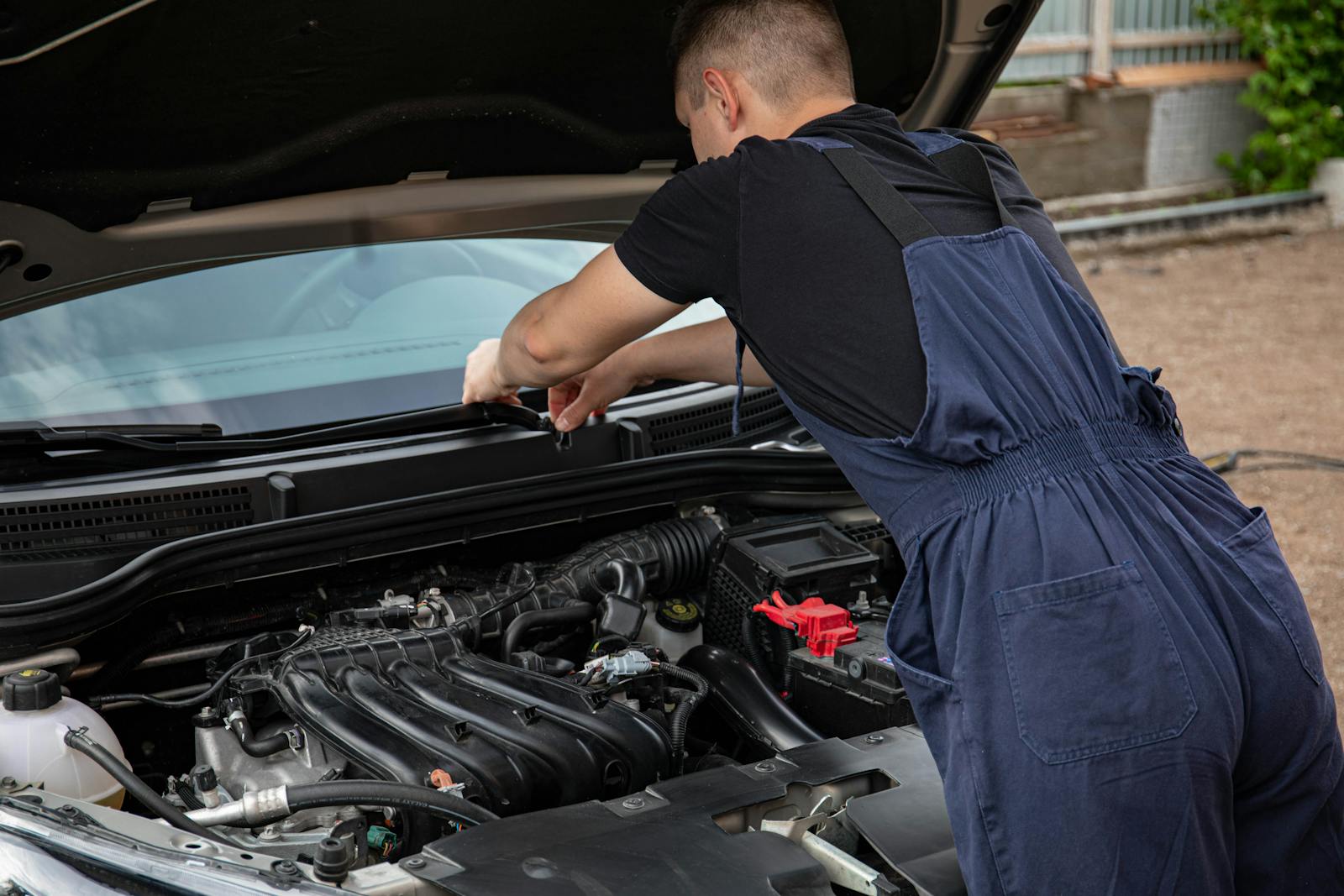

He’d been talking about the car the way some people talk about a family member. A late-60s muscle car, original color, numbers-matching engine, the kind of thing he’d spent years tracking down and then years more keeping “right.” When it started running hot and developed a weird stumble under load, he didn’t want a quick fix. He wanted a specialist.
So he took it to a local shop with a reputation for “classic restorations.” The place had old dealership signs on the wall, a couple of project cars half-covered in tarps, and that comforting smell of oil and old rubber. The owner-mechanic talked like he knew the language—date codes, casting marks, factory correct clamps—so the guy left the car there, a little nervous, but mostly relieved.
The first couple updates sounded normal. “We found a few things,” “we’re waiting on parts,” “these old systems can be finicky.” Then the bill arrived, and it was… a lot. The mechanic had a neat breakdown with enough technical terms to make it look serious, plus a casual mention that some parts had been “refurbished” and “exchanged” to keep costs down. The owner swallowed it because he wanted the car back and running, and he wanted to believe he’d picked the right shop.
The first weird little signs
When he got the car back, it did run cooler. It also felt slightly different, like the throttle response had a tiny delay that hadn’t been there before. He chalked it up to being paranoid because he’d just dropped a painful amount of money and was now hyper-aware of every noise.
But then came the little stuff that made him frown. The radiator cap looked newer than the rest of the bay, and not in a “freshly replaced” way—more like it belonged to a different car entirely. A hose clamp had the wrong style of screw head, and he was the kind of person who noticed that because he’d spent too many late nights staring at reference photos and factory manuals.
He emailed the shop about a couple minor things—an odd rattle near the fan shroud, a faint smell of fuel after a longer drive. The mechanic’s replies were quick and breezy, almost too dismissive: “Normal for these,” “give it a few heat cycles,” “you’re just getting used to it.” The owner tried to calm down, but his stomach kept doing that tight little flip every time he opened the hood.
The “expert friend” who wouldn’t let it go
A few weeks later he took the car to a weekend meet-up, the kind where people stand around with coffee and say “nice” while pretending they’re not judging your engine bay. He parked, popped the hood, and did his usual walkaround. That’s when an older guy—quiet, not flashy, the kind who doesn’t talk unless he’s sure—stopped and stared longer than polite.
At first, the owner was flattered. Then the questions started, and they weren’t the friendly kind. “When did you change that alternator bracket?” “Why’s the water pump casting look like an aftermarket run?” “Where’d your original carb tag go?” Each question landed like a pebble dropped into a still pond, making bigger ripples than it should.
The owner laughed it off, tried to keep it light, but the older guy’s face didn’t match the tone. He leaned in closer, pointed with a finger he kept pulling back like he didn’t want to touch anything. “This isn’t what you said it was,” he finally muttered, not accusing exactly—more like confirming something he didn’t want to be right about.
Uncomfortable questions become a checklist
They closed the hood and moved to the side, away from the crowd. The older guy asked where the car had been serviced and how long it had been out of the owner’s sight. The owner said the shop name, and the older guy’s eyebrows did that tiny lift people do when they recognize a bad smell.
Then the older guy started asking for specifics: did the shop give him back any replaced parts, did the invoice list serial numbers, did anyone mention “core exchanges,” did he see the old parts removed. The owner had answers that sounded fine alone—no, they didn’t return parts, yes there were “refurbished” line items, no serials, and he hadn’t gone back into the bay once while it was there. Put together, they sounded like a story you tell right before you admit you’ve been scammed.
Back at the car, the older guy asked for a flashlight. He pointed out things the owner hadn’t even known to check: inconsistent patina, bolt heads with fresh tool marks, paint overspray that didn’t match the car’s age. He showed him a spot where a stamp should’ve been, and how the texture around it looked like it had been ground and re-finished.
The owner’s face went pale in that slow way where you can see the moment he stops arguing with reality. It wasn’t just “someone used a different clamp.” It was the creeping possibility that the shop had swapped valuable original components with cheaper replacements—and that the owner had paid for the privilege.
The phone calls nobody wants to make
He called the shop that afternoon, sitting in his driveway with the hood up like he was trying to catch the car in a lie. He didn’t start with accusations. He asked simple questions: “Hey, can you tell me exactly what water pump you used?” “Do you still have the old carburetor parts?” “Was the alternator original or did you replace it?”
The mechanic’s tone changed fast, sliding from friendly to irritated like a switch. The mechanic said the owner was “overthinking it,” that classic guys “obsess over nothing,” and that replacements were normal. When the owner asked why the invoice said “refurbished exchange” on multiple items, the mechanic got defensive and started talking about industry standards and supply chains.
So the owner did the thing people do when they want to be reasonable but are done being talked down to. He asked for documentation—photos, part numbers, anything that showed what came off and what went on. There was a pause long enough to feel through the phone. The mechanic said he didn’t “take pictures of every bolt” and the owner could bring the car back if he was unhappy.
That invitation felt less like customer service and more like, “Put it back in my control.” The owner told him he’d get back to him and hung up, suddenly aware of how alone you can feel standing next to a machine you love when you’re not sure what’s been done to it.
Digging turns suspicion into a timeline
Over the next week he went into research mode, the grim kind. He pulled old photos of his engine bay from before the shop visit and compared them to current ones. He zoomed in on brackets, tags, hose routing, weird little casting bumps that shouldn’t matter—until they did.
He contacted a parts appraiser, then a marque specialist, then a guy who did concours restorations and sounded exhausted by the whole world. Each person asked for the same things: close-ups, date codes, casting numbers, any paperwork. And each time, the owner felt that horrible slide from “maybe I’m being dramatic” to “why does this keep not matching.”
The most damning moment wasn’t a single smoking gun. It was the pile-up: a distributor that didn’t fit the year it should, a carb body that looked like a rebuildable core rather than an original, and fasteners that were too fresh in too many places. Someone who didn’t care about correctness wouldn’t notice. Someone who cared as much as he did couldn’t unsee it.
He went back to the shop in person, not to scream, but to ask for the old parts. The mechanic said they were “disposed of” and suggested the owner was accusing him of theft. The owner said, carefully, that he was asking for his property back if it still existed, and if it didn’t, he wanted a written explanation of what had been done and why.
That’s when the mechanic stopped being offended and started being cold. No apology, no reassurance, just rigid politeness and an insistence that everything was “within standard practice.” The owner left with nothing but the invoice and a new awareness of how easy it is to hide behind the word “refurbished.”
By the end, the car still ran, and that almost made it worse. It meant the shop could shrug and say, “See? Fixed.” But every time the owner looked at the engine bay now, he wasn’t seeing the machine he’d spent years preserving—he was seeing missing pieces he couldn’t prove were gone, and a mechanic who knew exactly how hard it is to fight a swap you didn’t witness.
The last thing he told a friend was that the worst part wasn’t even the money. It was that sick feeling of having to question your own memory—your own photos, your own certainty—while someone else calmly acts like you’re crazy for noticing. And he still hadn’t decided if taking it further would get his parts back or just grind him down, one uncomfortable question at a time.
More from Steel Horse Rides: