


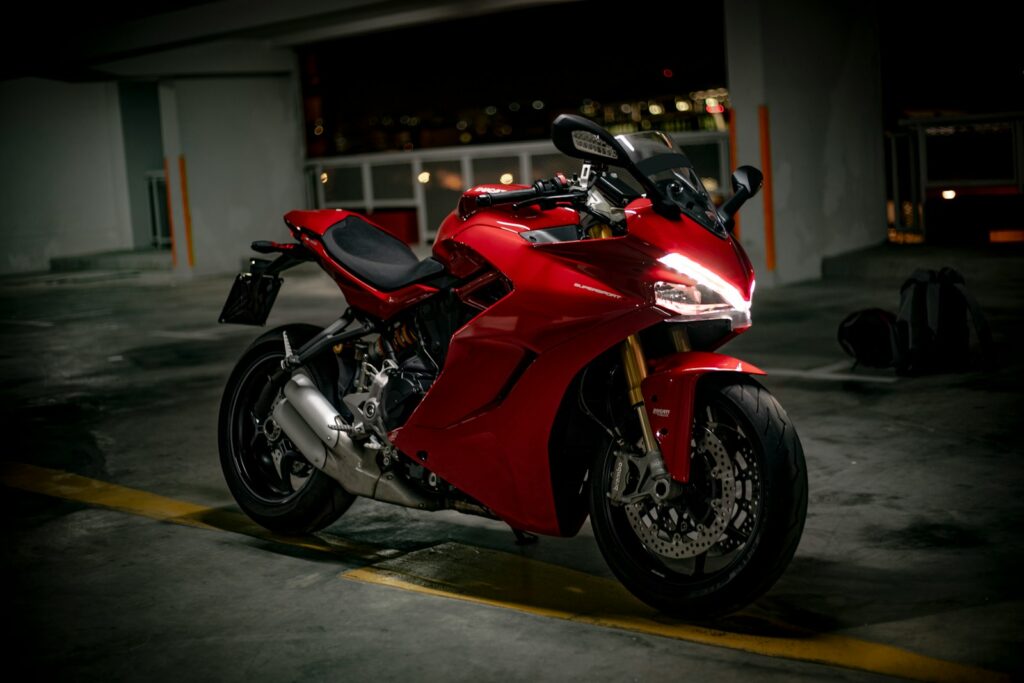
He told himself it was a “surprise,” not a secret. That’s the line he kept repeating while he stood in a dealership parking lot, helmet tucked under his arm, staring at a matte-black motorcycle like it was a puppy he’d just adopted on impulse. The paperwork was already done, the monthly payment already rationalized with the kind of math that only works when you don’t say it out loud.
At home, his wife thought their biggest weekend decision was whether they’d finally reorganize the garage or keep pretending the leaning tower of storage bins was “temporary.” She knew he’d been restless lately—watching videos, talking about “getting back into riding” like it was a phase he’d outgrown and was now trying back on. What she didn’t know was that he’d turned that restlessness into a new vehicle with a fresh plate and a not-so-fresh plan.
The plan, in his head, was simple: park it at a buddy’s place for a week, figure out how to break the news in a way that sounded responsible, and maybe lead with the safety course he swore he’d take. He even rehearsed a version where he framed it as a mental health purchase, a “hobby” that would keep him out of trouble. Then he rode it home anyway, because of course he did.
The “It’ll Be Fine” Phase
He timed it for mid-afternoon on a weekday, that sweet spot where he assumed she’d be on calls and the neighborhood would be quiet. He texted his friend to be on standby, the same friend who’d offered garage space and moral support, and got a reply that was basically: “Dude, just tell her.” He ignored that, because the whole point of bad decisions is that you don’t consult the people who are going to ruin them with sense.
As he pulled into the subdivision, he went full spy mode. He cut the engine early and coasted the last stretch like the sound itself would rat him out, feet skimming, eyes flicking toward every window. He’d already decided he’d roll it into the garage fast, shut the door, and then figure out the next step—maybe cover it with a tarp, maybe hide it behind the lawn mower like a full-size motorcycle could blend in with yard tools.
The garage door was closed, which he interpreted as a good omen instead of the obvious: he’d need to open it. He hit the remote, watched the door rise, and felt that little jolt of triumph, like he was in control of the narrative. All he had to do was glide in clean, kill the engine, and breathe.
When the Door Became the Main Character
The driveway was slightly sloped, the kind of thing you never notice until you’re trying to do something delicate. He eased on the throttle just enough to get rolling, but not enough to be loud, which meant the bike felt twitchier than he expected. He’d ridden before, years ago, but there’s a difference between “I used to do this” and “I can do this while sneaking and panicking.”
Halfway into the garage, his eyes caught on the clutter—rakes, a stroller, a cooler, a stack of paint cans that had been “temporary” for two years. He tried to correct his line to avoid clipping anything, and that’s when his hand did the stupid thing hands do when the brain says “don’t mess up.” He grabbed brake and throttle like he was trying to hold onto a ledge.
The front wheel jerked, the bike lurched, and the whole situation went from “secret purchase” to “property damage” in a fraction of a second. He smacked directly into the inside of the garage door as it was still coming up, hitting it with that awful metal-on-metal crunch that immediately tells you this is expensive. The door shuddered, bounced, and stopped moving like it had just decided it was done participating in his day.
He didn’t get launched across the garage like a movie stunt, but he did the world’s least graceful dismount—one foot down too late, hips twisting, helmet knocking against the handlebar. The bike toppled onto its side with a sound that felt personal, a brand-new machine getting its first scratch before it even got to exist in peace. For a few seconds he just stood there, one hand still on the grip, staring at the dented door like it might apologize.
The House Heard Everything
Inside, his wife heard the bang through two walls and a closed window. At first she assumed it was the trash bins falling over again or a shelf finally giving up. Then she heard the distinct scrape of something heavy being dragged, followed by an engine cough—an unmistakable mechanical throat-clearing that didn’t belong to any of their existing vehicles.
She opened the back door and stepped onto the little concrete pad that led to the garage, barefoot, because this was still her home and she didn’t think she’d need armor. The garage door was half-open, crooked on one side, like it had been punched. She didn’t even say his name at first; she just stared at the gap, then at him, then at the motorcycle lying on its side like a guilty dog.
He tried to speak first, which was his second mistake of the afternoon. “Okay—so—before you freak out,” he started, as if that phrase has ever prevented a freak-out. She walked closer, eyes scanning the bike’s pristine bodywork now decorated with driveway grit and a fresh scuff on the exhaust.
“Is that… ours?” she asked, because the mind reaches for the simplest explanation before it accepts the complicated one. He hesitated just long enough to make the answer worse. That’s when she looked past him at the dent in the door panel and the slightly twisted track, then back at the bike, and you could practically see the math happening in her face.
The Explanation Spiral
He went for a rapid-fire justification, the verbal equivalent of throwing towels at a leak. He said it was a good deal, said he’d been saving, said it wasn’t “that expensive” in the grand scheme, and said he was going to tell her once he “figured out the timing.” He even tried, briefly, to make the garage door the villain, like it had come down faster than expected.
She didn’t yell right away, which somehow made it tenser. She asked questions in that calm tone that means she’s cataloging details for later: How much? When? Did he finance it? Did he use the joint account? Did he seriously think he could keep an entire motorcycle hidden in the same garage where she stores holiday decorations?
He admitted he’d financed part of it, then quickly added that the payment was manageable. He said he didn’t use the joint card, like that was the magic phrase that would make it okay. Then he pointed at the bike and said he planned to take a safety course, which landed badly because the bike was already on the floor and the garage door already looked like it had been in a bar fight.
She walked around the motorcycle without touching it, like she was afraid she’d absorb the stupidity through contact. Finally she asked the question that always sits under these kinds of secrets: “Why didn’t you just tell me?” And his answer was honest in the worst way—he said he didn’t want to deal with the argument, that he knew she’d say no, and he wanted it enough that he decided her reaction was a problem for Future Him.
Two Damages, One Garage
After the initial standoff, the practical problems piled up. The garage door wouldn’t close all the way, which meant their house was now partially open to the world unless they jammed it down and hoped the track didn’t snap. The motorcycle wouldn’t start immediately either, not because it was totaled, but because it had tipped and needed a moment—and because his hands were shaking so badly he kept fumbling the controls.
He tried to lift it alone, doing the stubborn thing where pride overrides physics. His wife watched him struggle for a beat, then told him to stop before he threw his back out on top of everything else. She helped, but not in a supportive, bonding way—more in a “I refuse to let this get even worse” way, guiding him through the proper lift while maintaining a facial expression that said she was taking mental screenshots.
Once it was upright, he rolled it deeper into the garage, away from the door, like distance could reduce the offense. The bike looked smaller tucked between a stack of storage bins and a snow shovel, but it also looked absurdly out of place, too sleek and new for a space that smelled like fertilizer and old cardboard. The dent in the door was right at handlebar height, a perfect outline of the moment everything went sideways.
She stood with her arms crossed and told him, flatly, that they were calling someone about the door before night. Then she said they were also talking about the motorcycle, not today, not while she was still staring at it, but soon. He nodded too quickly, grateful for any structure, while also realizing that “soon” meant he’d be living in the same house as the consequences.
By evening the garage was half-secured with a temporary fix that looked as ugly as the situation felt. The motorcycle stayed inside, uncovered, because hiding it was no longer an option—it was now a monument to bad judgment sitting ten feet from their laundry machines. And when they went to bed, the door between the house and the garage felt heavier than usual, like it had its own gravity, holding all the stuff they still hadn’t said out loud.
More from Steel Horse Rides: