

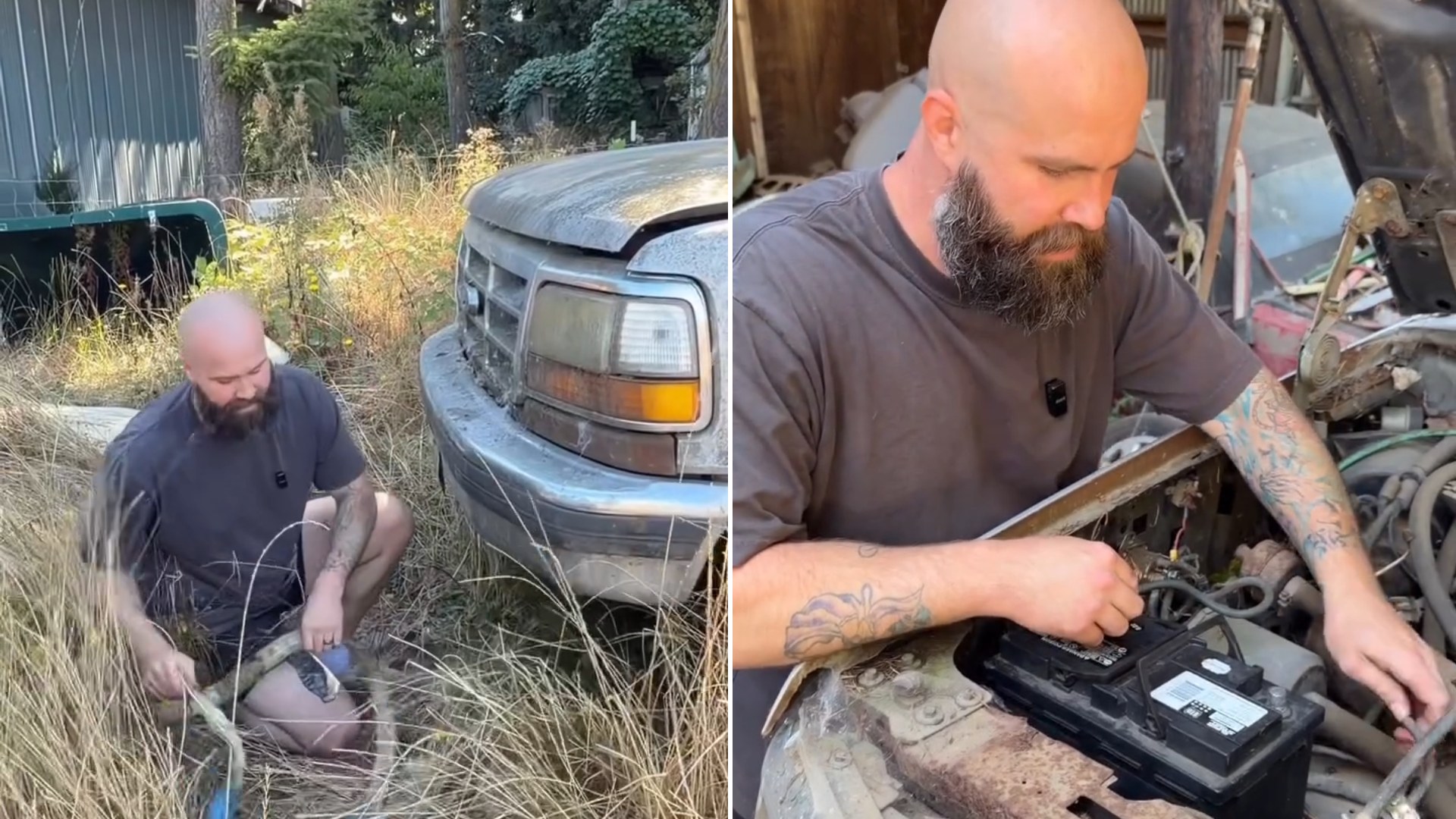
Family deals involving old trucks tend to come with a catch, and this one is no exception. An Instagram creator known online as @laserkuzmin says his uncle made him a simple offer: if he could get a 1990 Ford Bronco running again, the truck was his to keep, free of charge. The only problem is that the Bronco has sat abandoned for decades, and reviving it means starting essentially from scratch.
The creator announced the project with a caption reading “NEW SERIES ALERT‼️ MY uncle said I can have his 1990 @fordbronco if I can get it running👀 Wish me luck,” framing it as the launch of a new documented series rather than a one-off video. That framing matters. Restoring a vehicle that has been sitting untouched for years is rarely a quick fix, and by signaling this is the start of an ongoing story, the creator is setting expectations that followers should brace for a long, unpredictable process rather than a satisfying reveal in a single clip.
Ford Broncos from that era occupy a strange place in automotive culture. They were workhorse SUVs built for towing, hauling, and off-road duty, not luxury or performance, which is part of why so many ended up parked behind barns and sheds instead of in collector garages. A truck that has spent decades exposed to the elements typically arrives with a long list of problems well before anyone gets to the question of whether the engine will turn over: corroded fuel lines, a fuel tank full of varnish and sediment, a battery and electrical system that need to be rebuilt rather than repaired, and rubber components — hoses, gaskets, belts — that have simply dried out and cracked from age rather than use.
What makes the arrangement compelling as a story is the stakes attached to it. This isn’t a restoration funded by a shop budget or backed by a sponsor with parts on the way. It’s a personal challenge with a built-in reward: get the Bronco running, and it belongs to him. That kind of incentive tends to produce the most watchable kind of project content, because every small win along the way — a spark of life from the starter, an engine that finally turns over, a truck that limps but moves under its own power for the first time in years — carries real weight for the person doing the work.
There is also something quietly meaningful about the fact that this is a family vehicle rather than a stranger’s barn find purchased off a classifieds site. The uncle isn’t selling the truck or handing it over unconditionally; he’s testing whether his nephew is willing to put in the work to earn it. That structure turns an ordinary revival project into something closer to a rite of passage, the kind of arrangement that has quietly played out in families for generations wherever an old vehicle sits idle in a garage or field, waiting for someone younger and more stubborn to decide it’s worth saving.
For now, the project is just beginning. The creator has committed to documenting the process as a series, which means followers can expect updates covering everything from initial diagnostics to whatever setbacks inevitably surface once the truck is pulled apart. Vintage Broncos of this generation have a devoted following among restoration enthusiasts, in part because parts availability and aftermarket support have improved significantly in recent years, even for trucks that look, at first glance, like little more than scrap metal with four wheels.
Whether the Bronco ultimately roars back to life or turns into a more drawn-out ordeal than anyone anticipated, the premise alone has already resonated with a wide audience — proof that stories about reviving forgotten machines, especially ones tied to family history, still strike a nerve regardless of platform or format.
Takeaway: Reviving a Long-Dormant Vehicle
Anyone inheriting or acquiring a vehicle that has sat unused for years should treat the first inspection as a diagnostic exercise, not a repair job. Before attempting a start, check fluids, fuel system integrity, and the condition of belts, hoses, and wiring — cranking a dormant engine before confirming these basics can cause more damage than the years of neglect already did. Budget for surprises: rust, corrosion, and dried-out rubber components rarely reveal themselves all at once. Projects like this are also a reminder that some of the most rewarding restorations aren’t about the vehicle’s market value at all, but about the story and the people attached to it — which is often worth more than a clean bill of mechanical health.