

He’d been living in that garage for weeks in the way project people do: not literally sleeping on the creeper, but mentally. Every spare hour went into the rebuilt engine sitting on a stand like a trophy he didn’t trust yet, clean rags stuffed into openings, torque specs scribbled on a cardboard box, and that faint metallic smell that never really leaves your hands.
The mechanic wasn’t some kid winging it, either. He was the kind of guy who labels bolts in baggies and argues about assembly lube brands like it’s sports. But he’d also been rushing—because once an engine is “basically done,” your brain starts treating it like it’s already running, and you start making decisions like the hard part is behind you.
So when the time came to make it look good before dropping it in, he reached for the pressure washer. The outside of a fresh build always has fingerprints, dust, maybe some seeped oil from priming. He figured he’d blast it clean, let it dry, and then do that first start that’s half science experiment and half prayer.
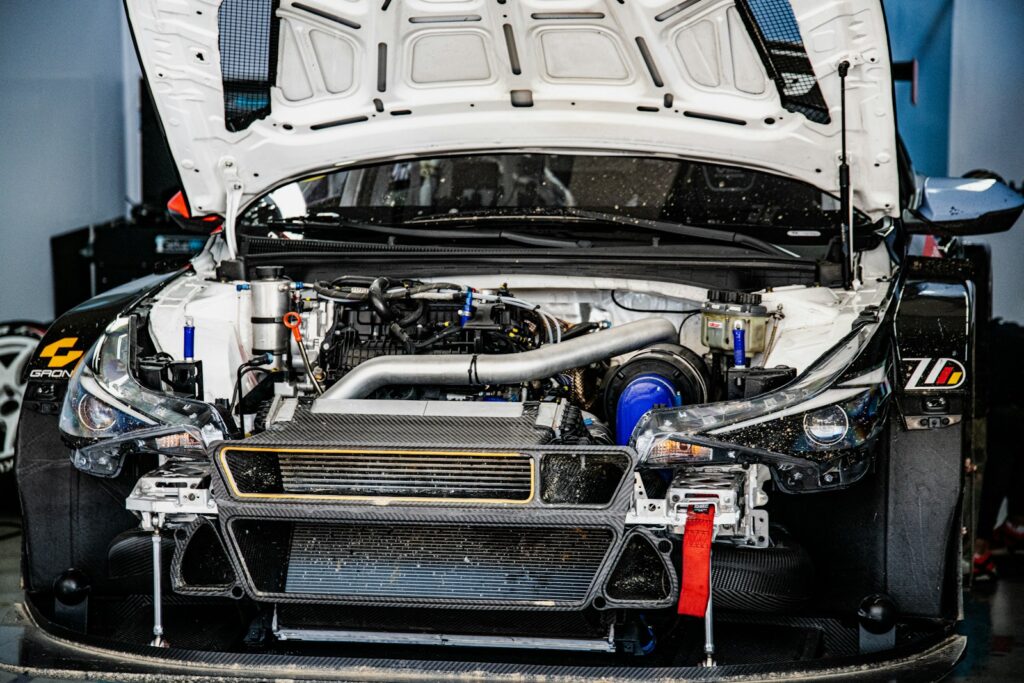
The “Quick Rinse” That Turned Into a Shower
It started as a reasonable idea: knock the grime off the block, rinse off the spilled coolant stains, make the aluminum pop again. He rolled the engine stand out to the driveway like he was prepping it for a photo shoot, not an autopsy. The pressure washer came out with the confidence of someone who’s cleaned engine bays before and lived to tell about it.
He tried to be careful, too, in his own way. He kept the wand moving, avoided directly hammering sensors, and didn’t go full nozzle-in-the-crevice. But pressure washers don’t do “a little,” and the spray got into places it had no business being, especially when you’re dealing with an engine that wasn’t fully buttoned up.
One spark plug was out. Not all of them, just one—because he’d been checking something earlier, maybe verifying piston position, maybe chasing a thread issue, maybe just forgetting. And with the plug out, that cylinder wasn’t an enclosed chamber anymore; it was an open invitation.
Drying Time, False Confidence, and the First Crank
After the rinse, he did the usual post-wash ritual: a few minutes of air, some shop towels, maybe a leaf blower if he had it nearby. He looked at the engine and saw a clean block, a clean head, and water beading in harmless places. Nothing screamed “you just filled a cylinder,” because water doesn’t announce itself when it’s sitting quietly on top of a piston.
He had that post-clean optimism, the kind that makes you miss obvious steps because everything feels orderly. He put the engine back under cover, went inside, grabbed whatever he needed for the next stage, and came back out ready to hear it turn over. The vibe in the garage shifted from “project” to “moment of truth.”
The plan was straightforward: crank it, build oil pressure, see if it sounded healthy. Maybe he’d even hear it catch for a second. The battery was charged, the starter was ready, and he was already imagining the clip he’d send to friends—the first churn of life from the thing he’d rebuilt with his own hands.
That Sound You Don’t Forget
When he hit the key (or the starter switch, depending on his setup), the engine didn’t spin the way it should. It started to rotate and then stopped with a hard, ugly resistance—like the crank hit a wall. There’s a certain noise engines make when they’re not supposed to move, and it’s not subtle; it’s a thick, mechanical “no” that makes your stomach drop.
He tried again, because most people do. Maybe the battery dipped. Maybe the starter gear didn’t mesh. Maybe it was just tight because it was fresh. The second attempt made it worse, and that’s where the tension turned physical—his face got hot, his hands got busy, and he stared at the engine like it had betrayed him personally.
Someone else was there, too—either a buddy, a neighbor, or a friend who’d been stopping by to see progress. That person heard it and instantly went into that uncomfortable spectator mode: wanting to help, not wanting to get blamed, not wanting to say the wrong thing. The mechanic, meanwhile, was already spiraling through the nightmare list: did he mess up bearing clearances, did he torque something wrong, did a rod bolt fail, is the whole build cooked.
Hydrolock isn’t the first thought if you’ve just rebuilt an engine and it refuses to crank. The first thought is always internal damage, because you’ve been waiting for the universe to punish you for your confidence. But the clue was in the way it locked—abrupt, solid, like the piston physically couldn’t travel.
The Realization: One Missing Plug, One Very Wet Cylinder
They started working backward, because that’s what you do when panic sets in. Pull the plugs, try to turn it by hand, see if anything feels gritty. The mechanic grabbed a ratchet and put it on the crank bolt, expecting the depressing feeling of a seized motor.
It moved a fraction and then stopped dead again. No springiness, no gradual resistance, just a hard stop. That’s when the missing spark plug hole became less of a minor oversight and more of a spotlight on the dumbest possible explanation.
When he pulled the rest of the plugs, one cylinder finally showed its secret. As he tried to rotate the crank again, water pushed up and out—enough to splatter, not just mist. It wasn’t a teaspoon; it was a real amount, the kind that can’t compress and won’t negotiate with your starter.
The garage got quiet in that specific way it does when the “how” becomes obvious and nobody wants to say the “why” out loud. He’d pressure washed the engine with a spark plug out and basically pressure fed the cylinder. It wasn’t a mysterious failure or a machining issue—it was water in the one place water absolutely cannot be during a crank.
Damage Control and the Awkward Aftermath
Now the problem wasn’t just embarrassment. Water sitting in a cylinder can do real damage fast, especially if the engine’s fresh and bare metal is still vulnerable. They had to get it out, and then they had to figure out whether he’d already bent something by trying to crank against it.
He did what most people do in that moment: spun it with the plugs out to expel whatever was left, then started thinking about oil contamination. If water got past the rings, it could be in the crankcase. Even if it didn’t, the cylinder walls and rings could flash rust if left wet, and a brand-new build doesn’t get many free mistakes.
The tension shifted from “is it ruined” to “how ruined is it,” which is its own kind of misery. The buddy hovered, offering tools and suggestions in a careful tone, like talking to someone holding a fragile object. The mechanic’s mood, though, wasn’t just frustration—it was that sour, self-directed anger you get when you realize the failure wasn’t complex enough to blame on bad parts.
They drained oil, or at least checked it, staring for any milky shimmer. They fogged cylinders, rotated by hand, tried to convince themselves that one or two ugly starter hits hadn’t bent a rod. But nobody could actually know without more teardown or at least compression and leakdown tests once it was truly dry and assembled.
And that’s where it stuck: he’d done so many things right during the rebuild—measured, cleaned, torqued, double-checked—only to nearly sabotage the whole thing during the cosmetic victory lap. The engine wasn’t a clean success story anymore; it was a question mark on a stand. He kept looking at that open spark plug hole like it was mocking him, because the worst part wasn’t the water—it was how close he’d been to hearing it run, and how easily he’d turned that moment into a sickening clunk he won’t forget.
More from Steel Horse Rides: