

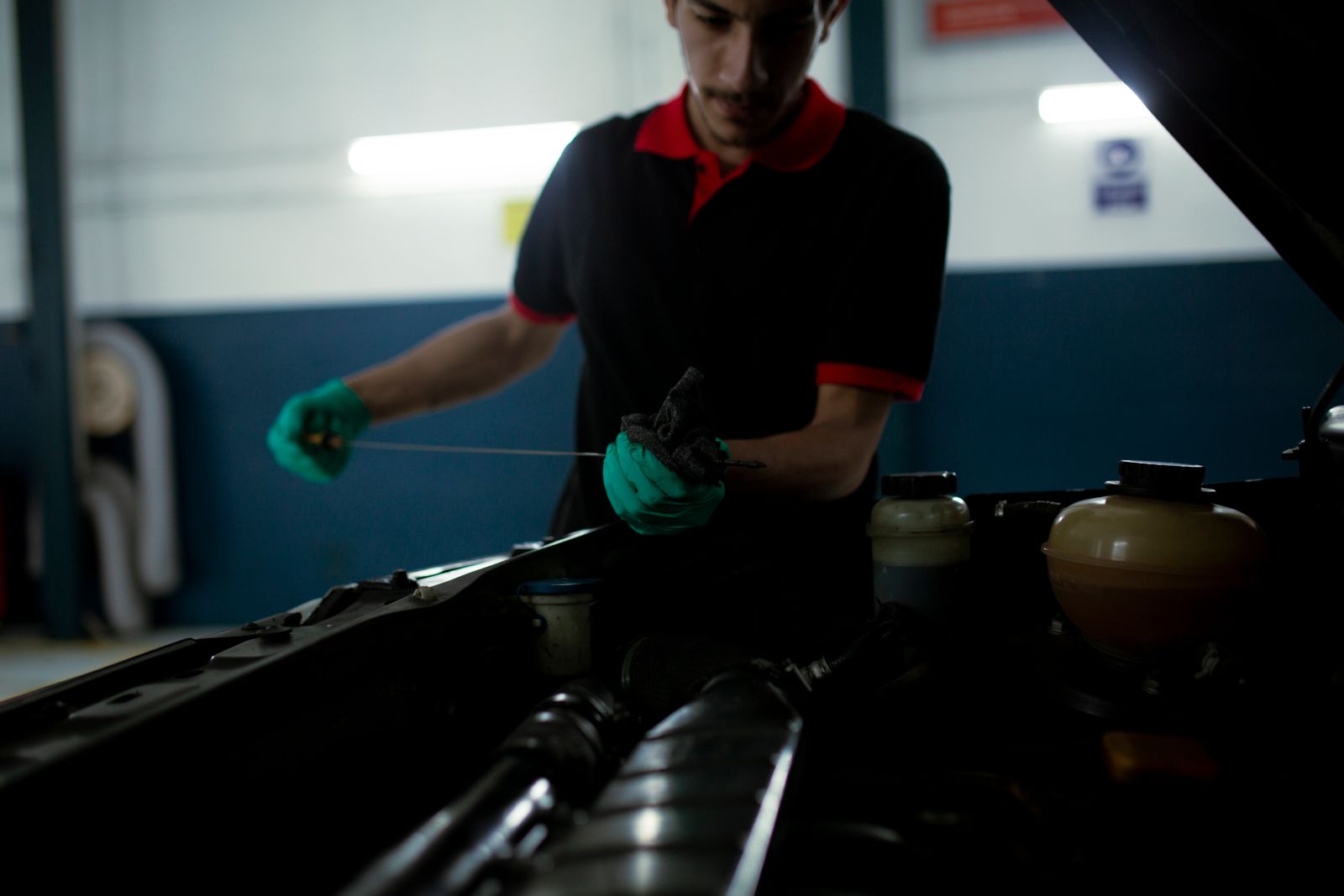
When the tow truck dropped the silver sedan in front of Marty’s shop, the owner hopped out like he’d won something. He was grinning, slapping the roof lightly, talking fast—classic “I found a steal” energy. The car wasn’t even dirty in a tragic way, either; it looked like someone had loved it right up until the moment they stopped loving it.
The guy, Caleb, had a stack of papers in his hand and a number already in his head. He didn’t ask if Marty could look at it, not exactly—he asked how soon Marty could “just do the oil change and a quick once-over” so he could start commuting in it Monday. He kept repeating the price, like if he said it enough times it would become a magic spell that prevented bad news.
Marty didn’t argue with optimistic customers anymore. He just nodded, wrote the mileage down, and listened while Caleb explained the seller’s story: “Older couple, barely drove it, only selling because they bought an SUV. It started making a little noise, but they said it’s probably just needs fresh oil.” Marty had heard a hundred versions of “probably just needs,” and none of them ended with “and then it was fine.”
The “great deal” walk-in
Caleb kept hovering by the bay door while Marty pulled the car in, watching like a proud parent at a school recital. He pointed out the new tires, the clean interior, the fact that the dash wasn’t lit up “like a Christmas tree.” He even mentioned how the seller threw in a set of floor mats like that was a sign of moral character.
Marty asked the simple questions first: any service records, any recent work, any oil consumption. Caleb’s answers were half-confident, half-guessed, because he hadn’t wanted to “annoy the seller” with too many questions and lose the deal. Marty didn’t say anything to that, but the pause he took before reaching for the keys made it clear he’d already filed Caleb into a familiar category.
The first start told Marty more than Caleb’s whole speech. The engine caught, then settled into a lumpy idle with a faint rattle that came and went like someone flicking a spoon against a mug. Caleb tried to laugh it off, standing too close, acting like he didn’t hear it.
When the drain plug tells the truth
Oil changes are usually boring, and that’s the point. Marty got it up on the lift, pulled the splash shield, and cracked the drain plug like he’d done ten thousand times. The first trickle looked normal, dark but not tar, and Caleb—still lingering—relaxed like he’d passed a test.
Then Marty noticed the sparkle. Not the harmless “a little metallic sheen on a high-mile engine” sparkle, but the kind that catches the shop lights and looks wrong in a way your brain registers before you even name it. He let the oil run into the pan and swirled it slightly, and the shimmer moved like a school of tiny fish.
He took a magnet and dipped it in, slow and deliberate. When he pulled it out, it had a furry halo of fine metallic dust clinging to it, and there were bigger flakes stuck near the tip. Marty didn’t make a face for Caleb’s sake, but he stopped moving for a second—because he already knew what part of the story they were in.
Caleb leaned in, still smiling, and asked, “Is that normal?” Marty didn’t answer right away. He just set the magnet on a rag and said, “Let’s drop the pan.”
The oil pan comes down, and the mood goes with it
Caleb’s posture changed the moment Marty said it. Dropping the pan isn’t a “quick once-over” move; it’s what you do when you’re trying to confirm something you don’t want to confirm. Caleb started asking how much that would cost, whether it was really necessary, whether maybe they could just “flush it” and see.
Marty kept his voice calm and neutral, but he didn’t budge. He told Caleb he wasn’t going to put fresh oil in a motor that was already throwing glitter, not without looking inside. Caleb agreed, but it was the kind of agreement people give when they’re bargaining with reality.
Bolts came out, the pan seal broke with that sticky crackle, and the smell hit first—burnt oil and heat-soak, the scent of something that’s been cooking too long. When the pan finally lowered, it didn’t drip; it slumped, heavy with sludge. In the bottom sat a shallow pile of metal shavings like someone had emptied a pencil sharpener into it.
Caleb’s face went blank in a very specific way, like his brain was trying to re-label what he was seeing. He said, “That’s… from normal wear, right?” and his voice went up at the end like he was asking a teacher for partial credit. Marty pointed with a screwdriver and said quietly, “Normal wear doesn’t look like this.”
Marty checked the pickup screen next, and it was partially clogged with metallic debris. That’s when the “little noise” story made sense: starvation, low pressure, bearings getting eaten alive. Marty didn’t need to be dramatic; the evidence was already doing that job.
The argument: “But it drove fine yesterday”
Caleb immediately went defensive, not at Marty, but at the universe. He kept repeating that the car drove fine on the test drive, that he didn’t see any warning lights, that the seller seemed honest. He said the engine only started rattling “a tiny bit” on the way home, like a tiny rattle couldn’t be the start of a big bill.
Marty explained it in plain language: metal in the pan means something inside is shedding itself. Once that happens, you’re not talking about an oil change, you’re talking about bearings, crank journals, possibly a whole replacement. Caleb nodded while Marty spoke, but it was the tight nod of someone not actually accepting it yet.
Then Caleb switched strategies and started hunting for a loophole. He asked if a thicker oil would quiet it down, if an additive would “buy time,” if they could just drive it “carefully” for a few months. Marty didn’t lecture him; he just said the engine was already on borrowed time, and the interest rate was brutal.
The most awkward moment was when Caleb asked Marty if he could “put it back together like it was” so he could go talk to the seller. Marty stared at him for a second, like he was deciding how honest to be. He told Caleb he’d reassemble it, but he wasn’t going to pretend it was fine—Caleb would be driving a car with a dying engine, and now he’d know that for sure.
Calling the seller with greasy hands
Caleb stepped outside and called the seller right there in the parking lot, pacing between the dumpsters and the tow hitch. Marty could hear the rhythm of the conversation even without the words: the initial polite tone, the quick explanation, the “mechanic says,” and then the sharp pause when the seller pushed back. Caleb’s shoulders rose and stayed there.
At one point Caleb turned toward the bay and mouthed, “They’re saying it’s normal,” like he wanted Marty to argue with a stranger through the phone. Marty just shook his head and went back to wiping down the pan, letting Caleb have his fight. The seller’s voice got louder through the speaker, and then softer again, the way people get when they’re trying to sound reasonable while staying slippery.
Caleb tried the angle that always sounds good in your head: “If you didn’t know, then help me out,” followed by the number he’d paid, followed by an offer to “split” the repair. The seller didn’t bite. Caleb’s face reddened, and he said, “So you’re telling me you had no idea the engine was eating itself?” and Marty could practically hear the seller’s shrug over the line.
When Caleb hung up, he didn’t say anything for a few seconds. He just stared at the car like it had betrayed him personally, like it had lured him in with clean seats and decent tires and then revealed the trap door. Marty handed him the magnet wrapped in a rag, and Caleb looked at the metal dust like it was proof in a case he didn’t know how to prosecute.
He asked Marty to write it up—everything—because he was going to “see what he could do.” Marty agreed, but he didn’t offer optimism. There were too many ways this ends: small claims, a shrug from the seller, a car that becomes an expensive lawn ornament while someone learns what “as-is” really means in the harshest possible terms.
When Caleb finally left, he didn’t drive the sedan out. He called for another tow and stood there watching the car get strapped down, quieter now, not even trying to joke. Marty went back inside, and the shop felt normal again—tools clinking, air compressor cycling—except for the oil pan sitting on the bench with its little pile of glittering shavings, like the engine had signed a confession no one wanted to read.