

She only took the Equinox in because it had started doing that annoying modern-car thing where the battery goes “fine, fine, fine” and then suddenly it’s dead in a grocery store parking lot. No warning, no slow decline, just a click-click and a dashboard lighting up like a slot machine. It was the kind of problem you want a mechanic to handle, because chasing electrical gremlins on your own is how you end up buying tools you’ll never use again.
The customer was a woman who’d already done the hard part of her life a while ago: she’d left her husband, untangled what she could, and gone no-contact. Not dramatic no-contact—just the exhausted, clean kind where you stop replying and eventually stop checking your phone to see if there’s anything new. Eight months had passed without a single conversation, which in her mind meant the worst of it was behind her.
So she dropped the Chevy off, handed over the key, and went about her day expecting a call about a corroded terminal or a bad alternator. Instead, the call she got had that tone mechanics use when they’re trying to stay professional while also not being implicated in whatever weirdness just showed up under your hood.
The “battery issue” that didn’t look like a battery issue
At first the shop treated it like any other parasitic drain. Someone checked the battery health, ran the standard tests, and started tracing where the power was going when the car was off. The Equinox wasn’t just losing charge; it was losing charge like something was actively sipping it 24/7.
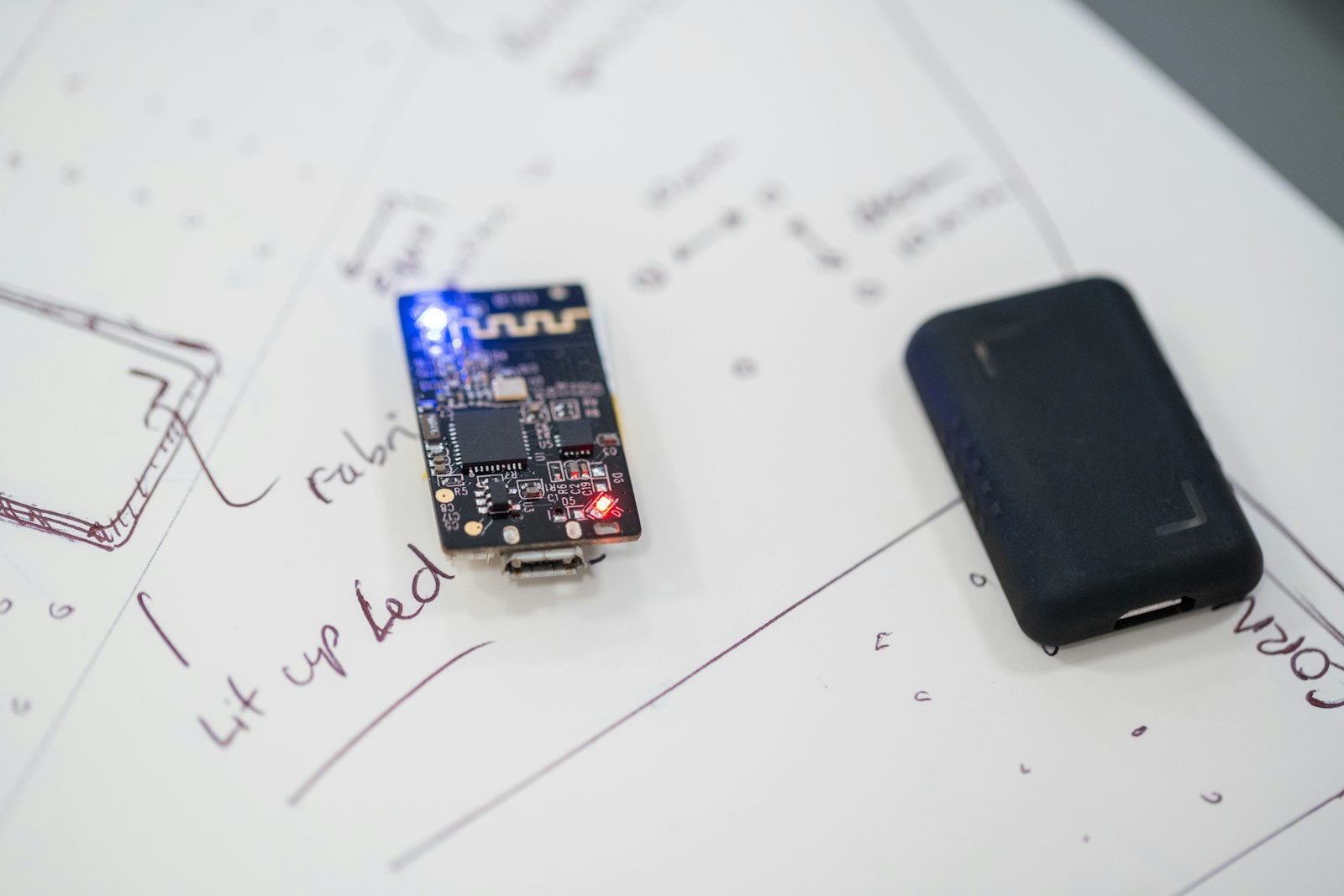
When the tech popped the hood and followed the wiring around the battery, he saw it: a little black box tucked out of the casual glance zone, with fresh-looking leads tied into the battery connection. Not OEM. Not part of any alarm system the shop recognized. It wasn’t dangling like a sloppy DIY job, either—somebody had taken the time to mount it and hide it like they didn’t want it found.
He did what mechanics do when they find something that smells like a legal problem: he stopped, took a couple photos for the work order, and went to get the customer. Not to scare her, not to upsell her—just to put the decision in her hands because removing mystery electronics from a car can turn into a whole thing fast.
“Do you have any kind of tracker on your car?”
She came back to the shop expecting a lecture about leaving the dome light on. Instead, the mechanic asked, carefully, if she had a GPS tracker installed. The question landed weird because the only people who talk about GPS trackers in real life are either fleet managers or people with a reason to be suspicious.
Her first reaction wasn’t fear. It was confusion, the kind that makes you laugh once because your brain thinks it’s a misunderstanding. She told him no—absolutely not—and then, because her mind was already scanning through plausible explanations, she asked if it could be something from the dealership or insurance.
The mechanic didn’t argue. He just pointed, showed her the wiring, and explained what “wired into the battery” meant. This wasn’t a plug-in device that fell out of someone’s glovebox; it had been installed to stay alive and keep reporting even when the car was off.
That’s when the other emotion kicked in. She went still, staring at a thing she couldn’t unsee now that she knew to look for it, and her face did that subtle shift from “huh?” to “oh.” The kind of “oh” people get when a name surfaces in their mind and they don’t want it to be the correct one.
The ex-husband who wasn’t supposed to be in the story anymore
Eight months of silence sounds peaceful until you realize it can also be a vacuum—no updates, no arguments, no reminders that the other person is still out there with opinions. She hadn’t heard from her ex-husband, hadn’t run into him, hadn’t gotten any “just checking in” texts. She’d been telling herself that meant he’d moved on or at least moved away from her life.
But a tracker rewrites that narrative instantly. It suggests presence without contact, attention without accountability. And once that possibility opened up, she started replaying the last year like a security camera feed: the separation logistics, the times he still had access to the driveway, the day she left the car at a friend’s place, the moment he “needed to grab something” and was alone with the vehicle for a few minutes.
She didn’t have proof it was him, not in the satisfying, courtroom sense. She just had a device that didn’t belong there and the uncomfortable fact that he’d be the first person with motive, opportunity, and enough familiarity with her routines to make tracking her useful.
The mechanic, trying to stay in his lane, asked what she wanted done. Keep it, remove it, call the police, don’t touch it until authorities see it—those are all different choices with different consequences. She stood there long enough that the shop air felt loud, then asked if they could disconnect it without destroying it.
The awkward logistics of handling something that might be evidence
Shops aren’t crime labs. They’re places with coffee-stained counters and old calendars and techs who just want to finish the next job without getting subpoenaed. But the mechanic also understood that yanking it out and tossing it in the trash could erase information—serial numbers, SIM cards, whatever made it traceable.
They ended up taking the cautious middle route. The tracker was disconnected from power, but kept intact, put in a bag, and documented with photos and notes like it was a part they’d removed for warranty reasons. The customer asked to see it up close, and when it was in her hand, the thing looked both tiny and heavy—small enough to hide, heavy enough to change how safe she felt in her own skin.
Her next step wasn’t cinematic. She didn’t burst into tears or scream on the phone in the waiting room. She walked out to her car with a kind of control that looked calm until you noticed how tightly she held her keys.
On the drive home, her mind did that spiraling math people do when they’re trying to quantify a violation. How long had it been there? Had it been following her to work? To therapy? To friends’ houses? Had it been there for months while she’d been congratulating herself on getting her life back?
The not-so-simple part: reporting it and dealing with the “well, are you sure?” questions
She debated calling her ex-husband directly, then remembered why she hadn’t spoken to him in eight months. Confrontation can feel like closure, but it can also be exactly what someone wants—a response, a hook back into your day, proof they can still pull a string. Plus, if this turned into a police report, she didn’t want to give him time to invent an explanation before anyone else heard about it.
So she did the boring, stressful thing: she called non-emergency and explained it as calmly as she could. A mechanic found a GPS tracker wired into the battery. She didn’t install it. She suspects her ex-husband. She has the device. She has photos. She wants to know what to do next.
And here’s where reality can get ugly in a very quiet way. Unless there’s an obvious threat attached, a tracker can become a gray-area argument about ownership, consent, and how the device was used. If his name was on the car at any point, if it was bought during the marriage, if he’s ever had legal access—those details become obstacles she now has to climb while also feeling watched.
Even just telling friends became complicated. Some people immediately got it, no questions asked. Others defaulted to the maddening practicalities: “Are you sure it wasn’t from the dealer?” “Maybe it’s an old finance thing?” “Could it be for theft recovery?” Every alternative theory sounded reasonable until you remembered the part where it was hidden and wired in like a secret.
By the time she had the report started, she’d done three new things she never wanted added to her routine: checking the underside of her car, scanning the wheel wells with her phone flashlight, and looking for unfamiliar Bluetooth devices on her screen. Safety became a checklist, not a feeling.
And the part that stuck with her—more than the black box itself—was how cleanly it fit into the gap of those eight months. He didn’t need to text her if he could quietly know where she was. He didn’t need to show up if he could map her patterns from a distance. The Equinox sat in her driveway like it always had, but now every drive carried the same question she couldn’t answer yet: was the tracker a leftover from the past, or proof the past had been keeping up with her the whole time?