

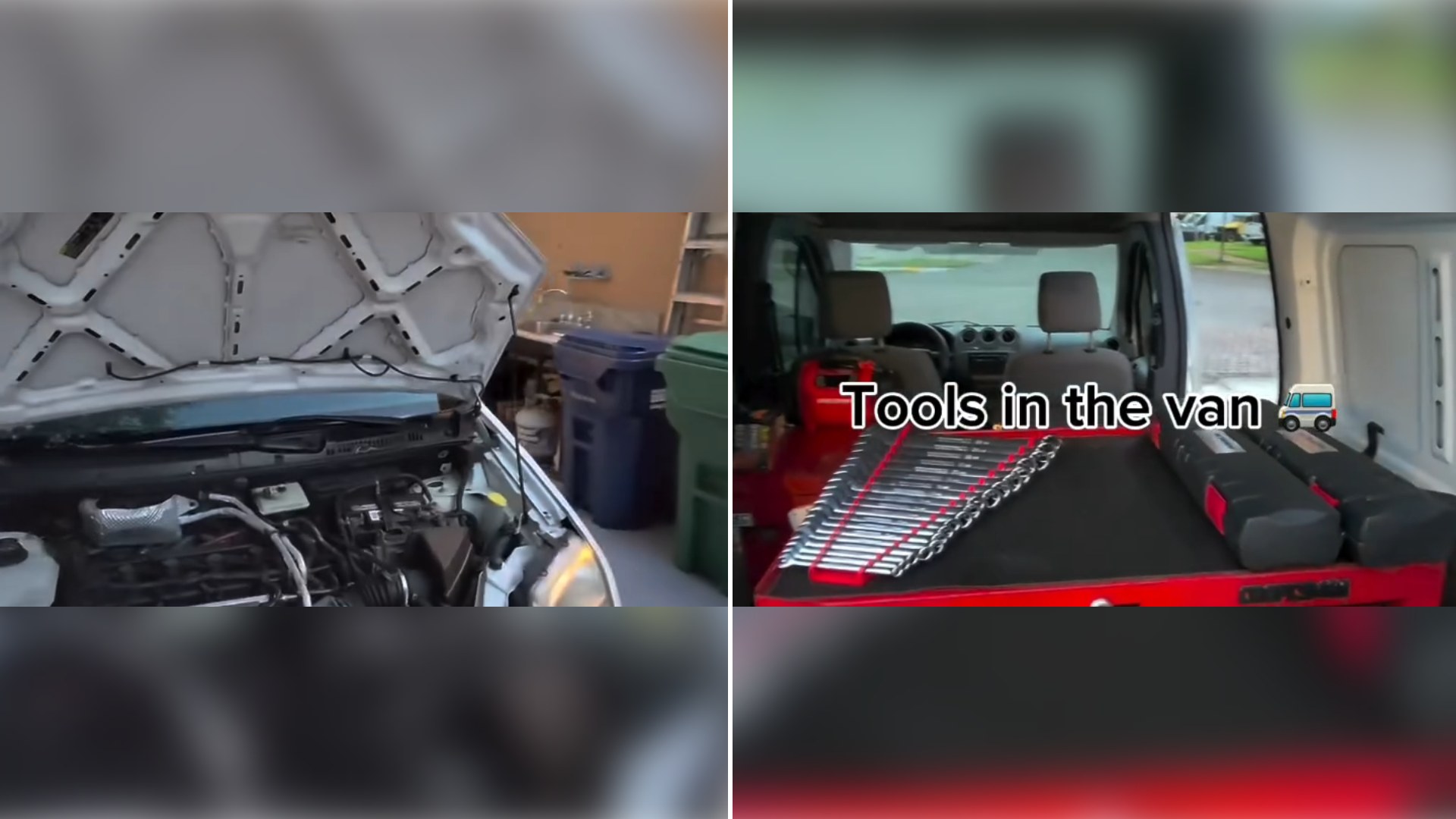
Leaving the stability of a dealership paycheck to strike out on your own is a leap plenty of mechanics think about and few actually take. The Instagram creator behind @transparentauto_305 made that jump, documenting his transition from a traditional dealership job into launching his own mobile repair business, and summing up the uncertainty ahead with a caption as honest as it is understated.
“I have no idea how much coffee this new chapter will take, but we’re doing it anyway,” the caption reads — a line that manages to capture both genuine excitement and real apprehension in a single sentence. There’s no pretense of having it all figured out, no polished business plan flaunted for the camera. Just an acknowledgment that starting something new is exhausting, unpredictable, and worth doing regardless.
Dealership work, for all its frustrations, offers something a lot of independent mechanics eventually find themselves missing once they’ve left it: predictability. A steady paycheck, an established customer base walking through the door, equipment and lift space already provided, and none of the administrative overhead that comes with actually running a business. Trading that in for a mobile repair operation means taking on an entirely different set of responsibilities — not just diagnosing and fixing cars, but marketing, scheduling, invoicing, sourcing parts on tighter timelines, and building a client base essentially from scratch, all while still being the one holding the wrench.
The mobile repair model itself has grown considerably in popularity over recent years, driven by customers who increasingly value the convenience of having a mechanic come to them rather than dropping a car off and arranging alternate transportation for a day or more. For a mechanic transitioning out of a dealership environment, mobile repair also offers a kind of independence that a shop floor simply doesn’t — no manager dictating which jobs to prioritize, no dealership sales targets shaping which repairs get recommended, just a direct relationship between the mechanic and the customer.
That independence comes at a cost, though, and the caption’s nod to an uncertain amount of coffee ahead speaks to a reality that anyone who has started a service-based business will recognize: the early days are frequently longer and harder than the job being left behind, even when the long-term payoff looks better on paper. Building a reputation from zero, figuring out pricing that’s both fair to customers and sustainable for the business, and handling every logistical detail personally rather than relying on a dealership’s existing infrastructure all take a toll that no amount of enthusiasm fully offsets — hence the coffee.
There’s something quietly compelling about a mechanic choosing to document this transition publicly rather than making the leap quietly and letting the business speak for itself later. Sharing the uncertainty in real time, rather than only the eventual success story, gives followers — including plenty of other tradespeople who have considered the same jump themselves — an honest look at what it actually takes to walk away from a stable job and bet on building something independently.
Takeaway: Starting an Independent Service Business
Anyone considering leaving a stable job to start an independent service business, mobile repair or otherwise, should plan for a transition period longer and more demanding than expected — build a financial cushion before making the leap, and be realistic about the non-technical work involved, from scheduling and invoicing to marketing and customer acquisition, none of which a traditional employer typically requires an employee to handle. Lean on word of mouth and transparency early on, since trust is the primary currency of any service business built directly with customers rather than through an established storefront. And expect the first stretch to be genuinely hard; the mechanics who make it through that early period tend to describe it less as smooth sailing and more as simply deciding, day after day, that the trade-off is worth it.